Israel just put Netanyahu's future in the hands of Arab voters
2 hours ago · 28 October 2026Share
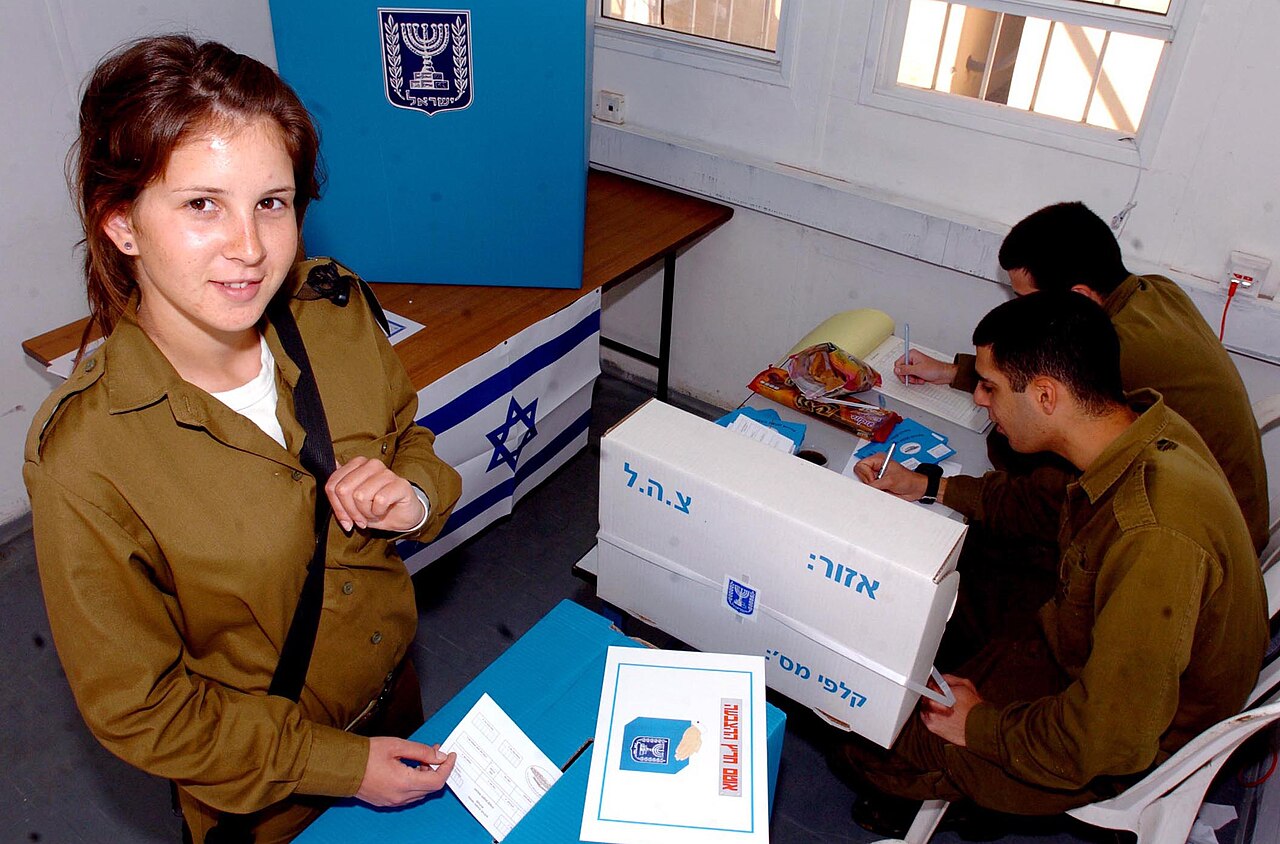
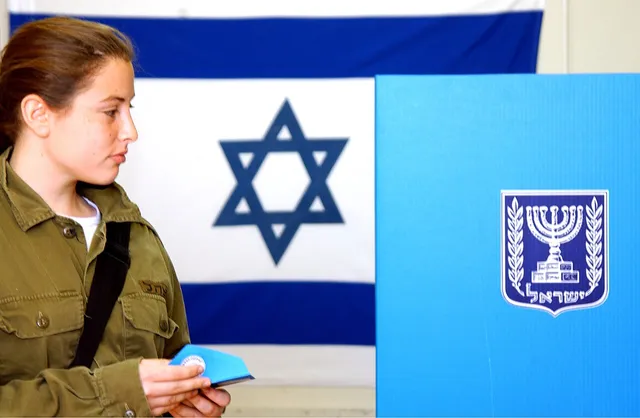
Soldiers from an Israeli military base voting on election day. File photo. Israel Defense Forces · CC BY 2.0
Israel just voted. And the count so far shows Benjamin Netanyahu losing his grip on power.
Polls closed about 12 hours ago. So far, somewhere between 37 and 42 per cent of votes are counted. And the numbers are already moving from what the exit polls showed when voting ended.
Here's where it stands. Benjamin Netanyahu, Israel's Prime Minister for nearly 19 years on and off, leads a bloc now projected at 56 to 57 seats. Gadi Eisenkot, a former Israeli military chief of staff who now leads the opposition Yashar party and the so-called change bloc, is projected at 47 to 49 seats.
Neither one gets near 61. That's the number needed for a majority in Israel's 120-seat parliament, the Knesset.
So what changed? Netanyahu's bloc is shrinking. It held 64 seats in the outgoing Knesset, according to Israel Hayom. Daily Sabah and CNN, citing AFP, say it was 68. Either way, it's smaller now.
Now here's the twist. Arab parties — the Joint List and Ra'am, also called the United Arab List — were projected in exit polls at a record 17 to 19 seats combined. The real count has them lower, at 15 to 16 seats.
But that's still enough to decide everything.
Here's why. Neither Netanyahu's bloc nor Eisenkot's bloc can reach 61 on its own. So Arab parties are now the only path to a majority for either side.
And turnout tells you why this is happening. It hit 77.7 per cent, the highest since 1999, about seven points above 2022. Arab turnout rose sharply as part of that surge.
But here's the problem. Both men have ruled out working with Arab parties. Netanyahu is calling for what he describes as a national right-wing government, and says his bloc has a decisive majority. Eisenkot says the public delivered its verdict on Netanyahu directly. He says quote "a worthy leader would accept the people's vote of no confidence".
The rest of this story is for members.
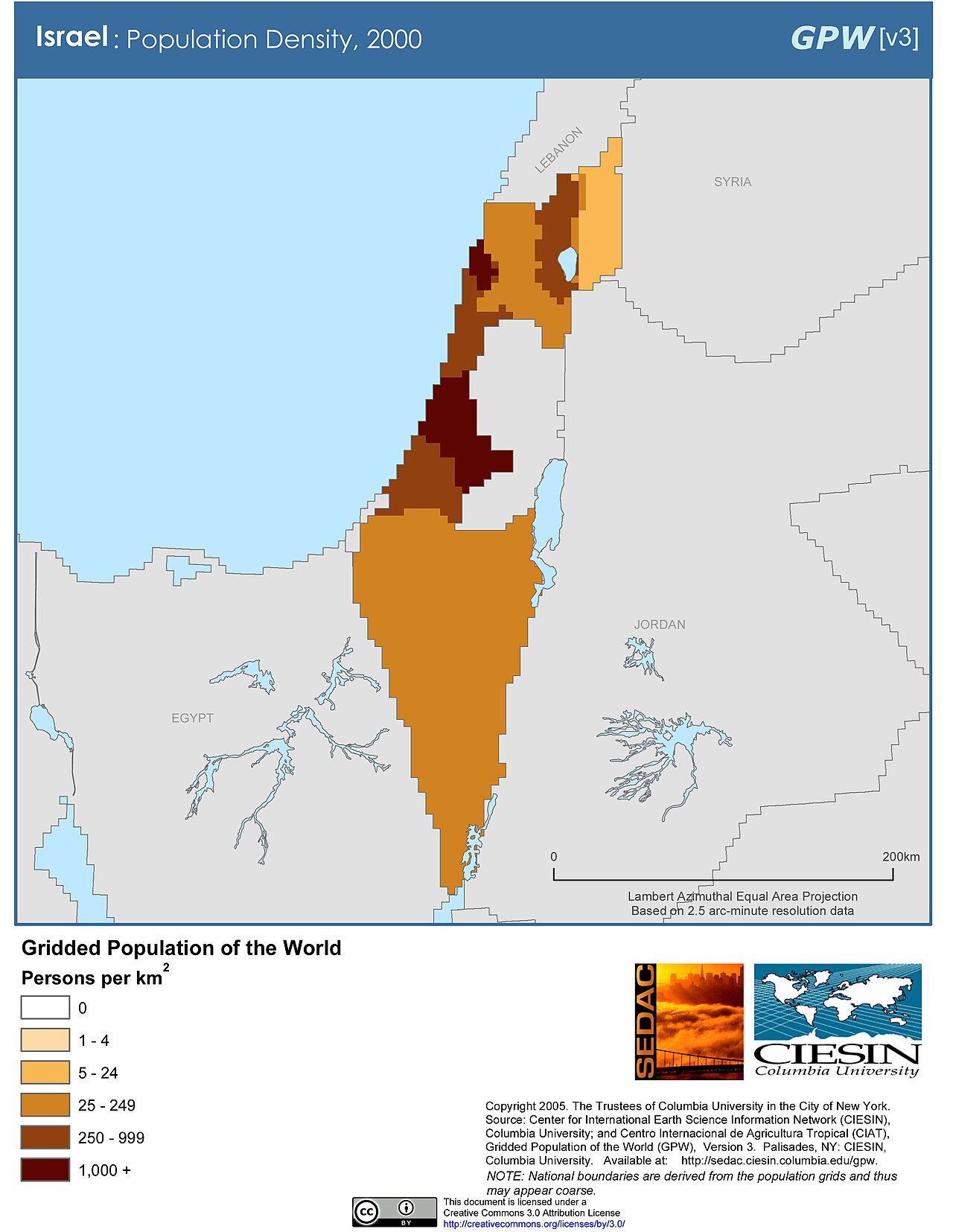
Israel population density map showing distribution across the country in 2000. File photo. SEDACMaps · CC BY 2.0
Mansour Abbas, the leader of Ra'am, says quote "with the numbers we have now, there is no government". He says he hopes his party and the opposition bloc together can reach 61 seats.
So you've got an Arab party leader saying he's willing to help form a government. And both big blocs saying they won't have him.
And there's more. Netanyahu spent the campaign attacking the same voters he may now need. He accused Arab voters of trying to steal the election and of raiding the polling stations. He also alleged that three senior United Arab List officials were arrested in southern Israel carrying envelopes of cash. Election authorities called it an isolated local case.
Donald Trump, the US President, is already taking credit for the result. He wrote on Truth Social that his endorsement of Netanyahu turned what would have been a decisive defeat into a big come-from-behind stalemate, or even a win.
Likud, Netanyahu's own party, is the largest single party in the new Knesset, projected at 27 to 28 seats. Eisenkot's Yashar party comes second, at 21 to 22 seats. Bezalel Smotrich, the far-right Finance Minister, had his party projected at seven seats.
This is the first election since the Hamas-led attack of 7 October 2023, in which Israeli figures say about 1,200 people were killed and 251 people taken hostage. The war that followed, and Netanyahu's handling of Iran, sat at the centre of this campaign.
So what happens now? Isaac Herzog, Israel's President, will task a candidate with trying to form a government. That candidate then has up to 42 days to do it. The final tally is expected within days, with official results published about a week after the election.
What we don't know yet is whether Netanyahu or Eisenkot will bend and work with Arab parties, or try to peel off individual lawmakers instead. Up to 650,000 special and double-envelope ballots are still to be counted, and could move the final numbers either way.
For the first time, neither of Israel's two big blocs can form a government without the voters both of them spent the campaign trying to shut out.
Nothing here was paid for by an advertiser. Members are the entire business model. Bronze is where it starts, and it opens the last seven days in full.