Israel just put Netanyahu on the ballot over the October attack
4 hours ago · 26 October 2026Share
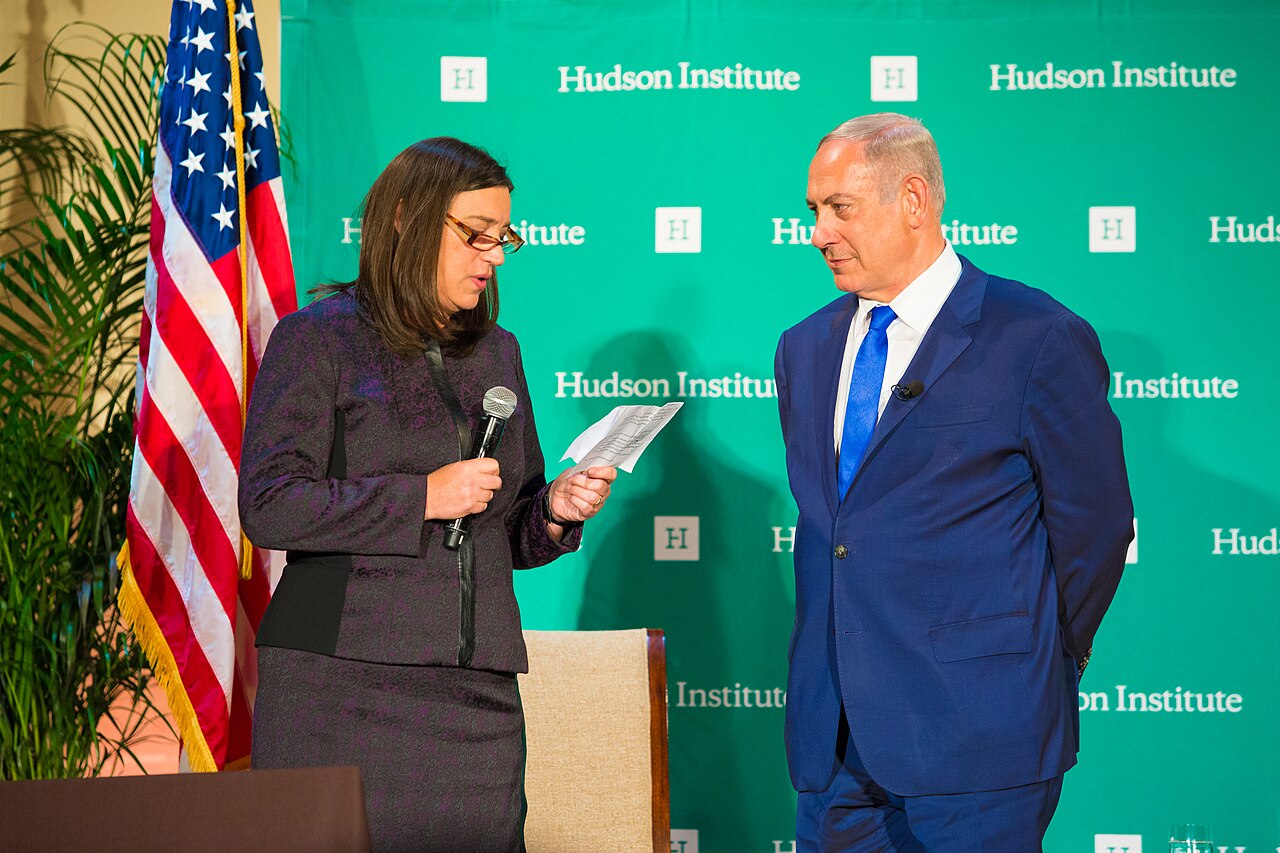
Benjamin Netanyahu receives an award at a formal event. File photo. Rick Gilbert/Hudson Institute · CC BY 2.0
Israelis are voting right now.
It's the first national election since Hamas attacked on 7 October 2023, three years ago. And for a lot of people, this vote is really about one man: Benjamin Netanyahu.
Polls are open. They close at 10pm Israel time. That's when exit polls drop, and we get our first real sense of what happened.
So here's the backdrop. About 1,200 people were killed on that day three years ago. 251 were taken hostage. It's the deadliest single day in Israeli history. The last living hostages came home about a year ago, under a ceasefire the United States brokered.
And Benjamin Netanyahu is still here. He's Israel's Prime Minister. He's now held that job longer than anyone else in the country's history — 19 years, total.
He's also on trial for corruption, which he denies. And the International Criminal Court has a warrant out for him over alleged war crimes in Gaza. That's why he avoids travelling to most of Europe.
This is Israel's sixth election since 2019. But it's the first in 38 years to actually arrive at the natural end of a full term, instead of a government collapsing early.
Now, the numbers. Netanyahu's coalition — Likud, Religious Zionism-Zehut, Otzma Yehudit, Shas and United Torah Judaism — is averaging just over 50 seats in a poll-of-polls. That's short of the 61 needed to govern.
Al Jazeera's own count has the opposition narrowly ahead of Netanyahu's alliance. CNN puts Netanyahu's bloc in a wider range. The New Arab has both sides level.
So why don't the numbers agree? Different pollsters, different methods, all working in the final days before the vote. That's not an error. That's just how close this is.
No single party has ever won a majority outright in Israel. A government needs 61 of the Knesset's 120 seats. And a party needs just over three per cent of the vote to get in at all.
So who's trying to beat him? Gadi Eisenkot. He used to run the Israeli military as chief of staff. Now he leads a party called Yashar, and it's topping the opposition polling average — ahead of Netanyahu's own Likud.
The rest of this story is for members.
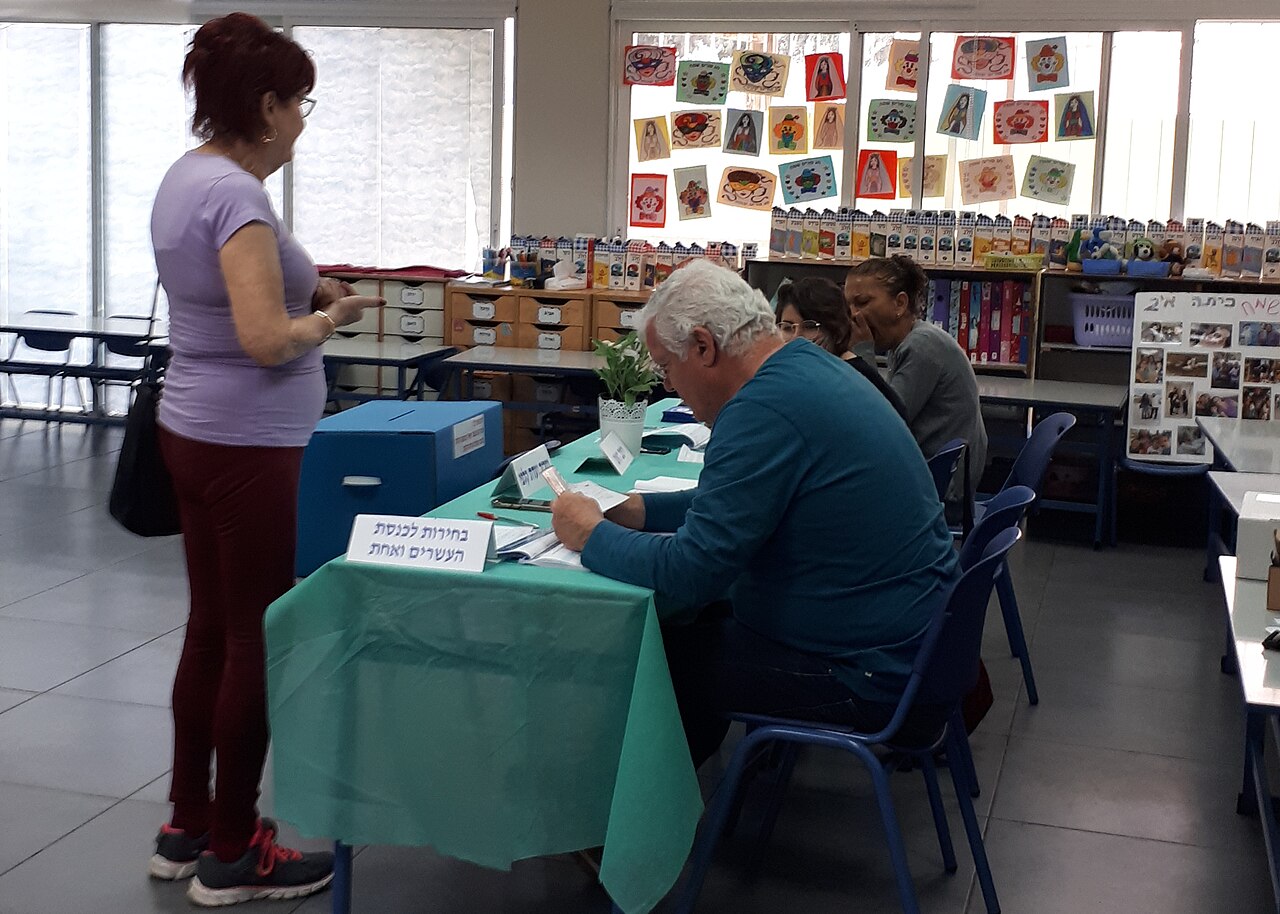
A polling station in Israel. File photo. Rakoon · CC0
Four opposition parties — Yashar, the Democrats, Yisrael Beytenu and the Together alliance — signed a pact about a month ago. They agreed not to attack each other. The goal: unseat Netanyahu. Together is led by Naftali Bennett, a former Prime Minister, alongside Yair Lapid. And Mansour Abbas, who leads the Arab party Ra'am, has said he'd join an opposition government if one can be built.
For a lot of people here, this isn't abstract. Gal Cohen is 61 and lives in Kibbutz Be'eri, where one in ten residents were killed on 7 October 2023. He told Reuters that if this government stays in power, many hearts and minds will be broken, and it will be really hard to carry on.
Danielle Alony was taken hostage from Nir Oz with her five-year-old daughter. She was later freed. Two days before the vote, at a rally in Hostages Square, she urged Israelis to vote, saying it was a chance to start a new chapter for their children.
Netanyahu rejects the blame. He's resisted every call for an independent investigation into the security failure. His pitch is different. He says Israel's wars against Hamas, Hezbollah and Iran will leave the Middle East safer. He says the job isn't done until Iran's clerical government falls. And he says only he has the standing to finish it.
And he's leaned into that hard this week. Two days ago, he posted an AI-generated image of a nuclear blast over Tel Aviv. He warned of what he called a second Holocaust if voters pick a leader who can't stop Iran's nuclear programme.
He also said Israeli intelligence thinks Iran and its allies might try to disrupt the election. He told them directly: he says quote "you will suffer disproportionately severe blows."
Two Israeli soldiers were shot dead at a checkpoint in Hebron over the weekend before the vote.
Eisenkot isn't holding back either. At a Tel Aviv rally two days ago, he told supporters Netanyahu would use any trick, lie or spin to hold on to power.
And Donald Trump, the US President, has publicly endorsed Netanyahu ahead of the vote.
So what happens tonight? Whatever the result, Netanyahu stays on as caretaker Prime Minister until a new government is sworn in. That could take weeks. Official results aren't confirmed until 4 November.
Nobody knows yet if any bloc reaches 61 seats. Nobody knows if a unity government is even possible. And nobody can rule out Israel heading for a seventh election.
Nothing here was paid for by an advertiser. Members are the entire business model. Bronze is where it starts, and it opens the last seven days in full.