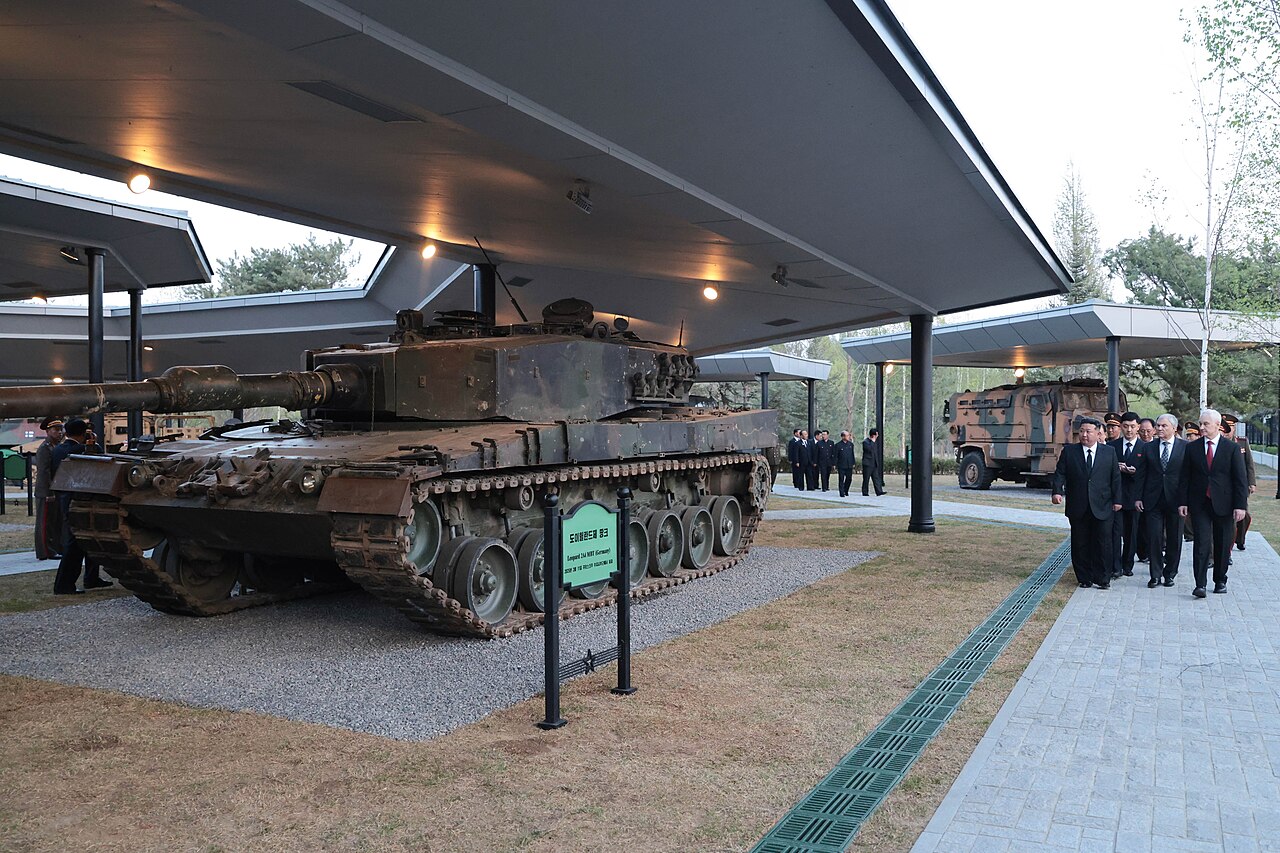
Here's how it played out. Kim held a conference with army company commanders in Pyongyang on 22 and 23 October. Then, four days later, a separate photo session with the same commanders. State media, KCNA, reported that photo session two days after it happened.
And this wasn't a small meeting.
It's the first time North Korea has brought its entire army together since February. That's when the Workers' Party held its ninth congress. Kim used that moment to call for stronger conventional forces and said the nuclear weapons and missiles keep coming.
So what did he actually say this time?
At the commanders' conference, Kim said companies across the army need to be stronger ideologically, better trained in military skill, and sharper in combat — strong enough that nobody could fault them. That's a paraphrase of KCNA's wording.
Then, at the photo session, he went further. He said the main job of company commanders now is to finish getting their units fully ready to fight a war. He wants it done through a big step up in training.
Four senior military men stood with him. Pak Jong-chon, vice chairman of the Workers' Party's Central Military Commission. Kim Song-gi, the Defence Minister. Ri Yong-gil, chief of the General Staff. The Korean outlet Seoul Economic Daily also names a fourth man, Yu Kwang-u, first deputy director of the army's General Political Bureau — but no other outlet has reported he was there.
Now here's the catch.
Every single word of this comes from KCNA, North Korea's own state news agency. Nobody outside North Korea has confirmed Kim actually said these things. And no Western government has said anything about either event yet.
The rest of this story is for members.
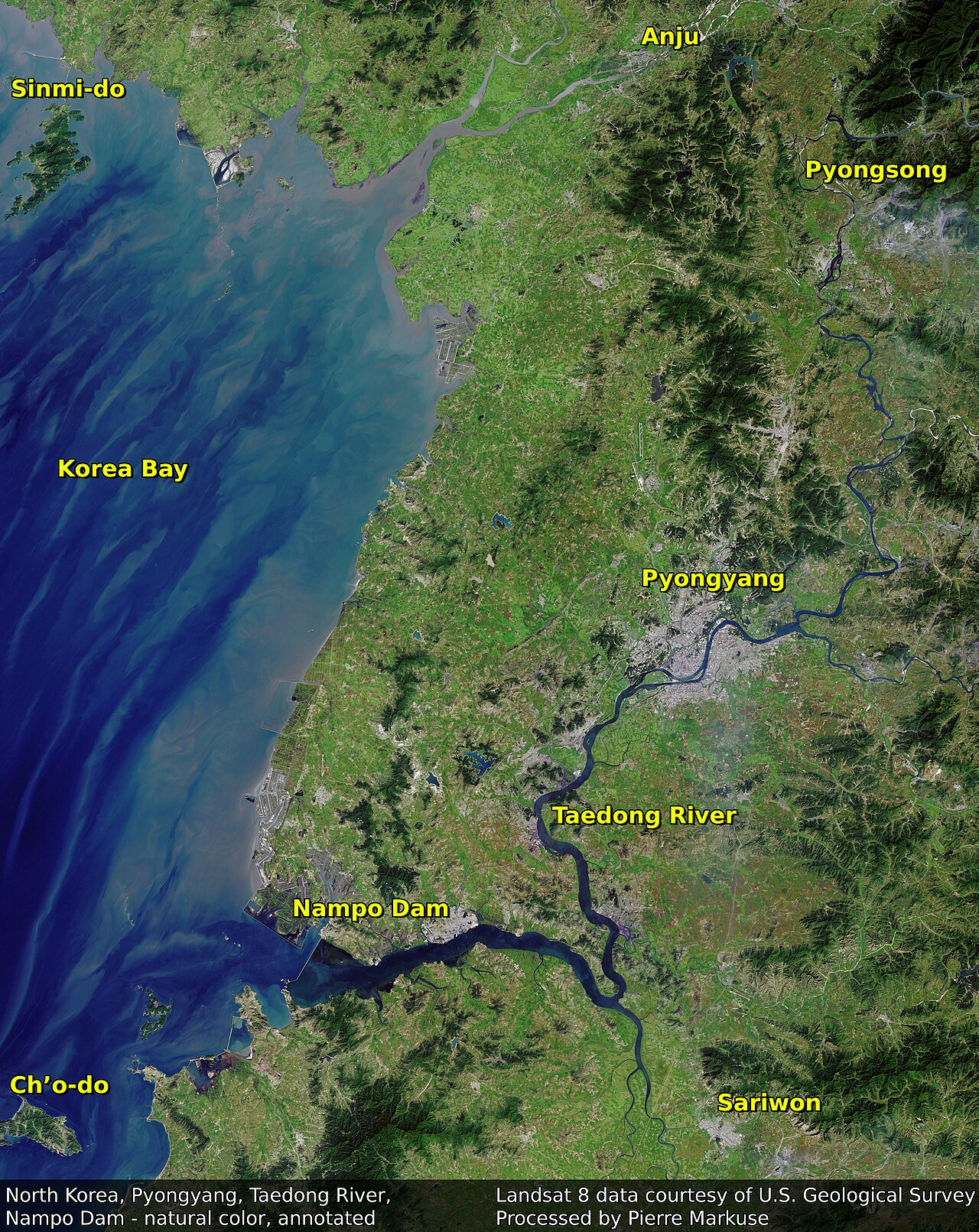
Contains Landsat 8 imagery showing North Korea including its capital Pyongyang and the Nampo Dam. File photo. Pierre Markuse from Hamm, Germany · CC BY 2.0
So is this connected to the tension already building on the border? Nothing in North Korea's own statements says so. But the timing sits right in the middle of it.
Five weeks ago, three South Korean soldiers were hurt by landmine explosions inside the Demilitarized Zone. Two of them seriously. South Korea's military says North Korea planted those mines. North Korea rejects that, and it has refused to apologise.
A week ago, Kim Yo Jong, Kim Jong Un's sister, said North Korea had moved new military units into firing positions along the border. South Korean lawmakers have been told North Korea has planted around 960,000 land mines along the inter-Korean border since 2024.
Then, five days ago, South Korea offered talks. Kim Hong-cheol, a deputy defence minister, proposed them — to pin down exactly where the Military Demarcation Line sits, reopen communication lines, and cut the risk of an accidental clash. South Korea says it made the same offer last November and never got an answer.
It hasn't got one this time either.
And North Korea has been testing weapons on top of all this. On 15 October, a new AI-guided torpedo system, called Zam-2.0. On 3 October, what it says was an intermediate-range hypersonic missile.
Pyongyang has barely spoken to Seoul in years. Back in late 2023, Kim Jong Un named South Korea the North's principal enemy. His sister has already dismissed South Korea's President, Lee Jae Myung, and his calls for dialogue, as the climax of the farce.
So what don't we know? What this training push actually means on the ground. Whether this conference was planned long before the landmine dispute or is some kind of answer to it. Whether South Korea's government will respond publicly at all. And no Western military has said whether this is a real jump in readiness, or just North Korea's normal training cycle.
Right now, North Korea's answer to South Korea's offer of talks is silence.
Its answer to its own army is a direct order: get ready for war.
Nothing here was paid for by an advertiser. Members are the entire business model. Bronze is where it starts, and it opens the last seven days in full.