America just pulled its staff out of Saudi Arabia and kept its soldiers in

America just pulled non-essential staff out of its embassy in Saudi Arabia.
And its two consulates too.
The order kicked in six days ago, on 23 October. Two days ago, the Riyadh embassy made it official in a security alert.
Tommy Pigott, the State Department's spokesperson, confirmed it. He says it only applies to non-emergency staff and their families. He says their safety is the highest priority.
So what about the staff who stay?
They're boxed in. They need special sign-off just to use an airport in the kingdom. They can't go within 20 miles of the Yemen border. And several provinces, including Jizan, Asir and Najran, need separate clearance. That detail comes from one embassy alert, and nowhere else yet.
Now here's the official reason. The Houthis.
Pigott says Iran-backed Houthi fighters have been hitting Saudi Arabia harder, including civilian airports, and that's hurt people and disrupted travel.
So that's the public story. A Yemeni armed group, not Iran itself.
But there's a second story running underneath it.
CNN reports that on the same day as the order, an unclassified memo went to Marco Rubio, the Secretary of State. It said American intelligence has found Iran has sharply increased its efforts to target US staff, with plots in the Middle East and beyond already in advanced stages.
That memo doesn't mention the Houthis once. It's a different threat. Iran itself. And it never made it into the public statement.
And here's where it gets messier. Reuters and AFP reported the same kind of family-departure order was spreading to the UAE, Jordan, Qatar and Bahrain too. Pigott called that wrong, and said Saudi Arabia is the only country covered.
But CNN says the US is quietly tightening staffing at embassies in Jordan, Bahrain, Kuwait, Qatar, the UAE and Lebanon anyway. Just not a full evacuation. A lower status called restricted operations.
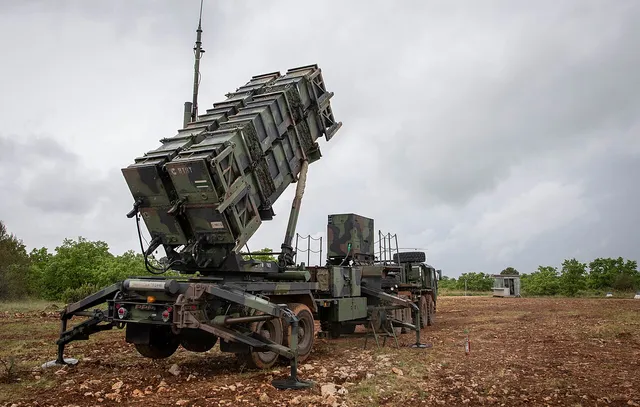
So while staff are leaving Saudi Arabia, the military is not pulling back. It's doing the opposite.
More than 100 US military advisers are working inside a joint command in Saudi Arabia right now. They're giving intelligence and targeting help to the Saudi-led fight against the Houthis. That was first reported seven weeks ago, and confirmed again in the middle of October. One US official puts the total number of Americans involved, advisers and support staff together, at around 200.
The US isn't flying strikes itself. It isn't refuelling Saudi jets either.
And there's more. Six weeks ago, on 17 September, the State Department told Congress about a proposed arms sale. $24.3 billion. 48 F-35A fighter jets. 49 engines. All going to Saudi Arabia.
Comments
None yetAlready a member? Log in.