Yemen's Houthis just cut off Taiz and the government may have to surrender it
1 hour ago · 4 October 2026Share
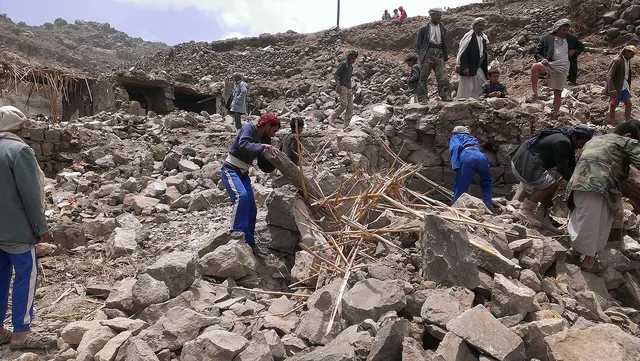
Houthi militants stand near a school in Yemen. File photo. VOA/Almigdad Mojalli · Public domain
Houthi fighters cut the only paved road between Taiz and Aden three days ago.
And the government still hasn't reopened it.
So here's what happened. On 1 October, Houthi fighters snuck into al-Muharraqah village in Lahij Governorate. Two anti-Houthi Yemeni sources told Critical Threats the fighters planted an explosive device, then pulled back once government-aligned troops hit back. Residents told Arab News the fighters packed explosives into a culvert under the road and blew it.
That road is called Hijat al-Abd. And it's the only paved route into Taiz.
Taiz is Yemen's third-largest city. It's the biggest government stronghold left in the north. With the road gone, government forces now have one option: a much longer route south of al-Turbah. Nobody has said how long repairs will take.
And here's the thing. The Houthis already tried this once.
On 24 September they attacked the same road. Government forces pushed them back. This time, they got through.
So what does that mean? Critical Threats says long-term Houthi control of this road could force government troops in Taiz to surrender or retreat.
Ahmed Nagi, a Yemen analyst at the International Crisis Group, says the Houthis aren't trying to fight their way into the city. He says quote "cut its main supply route and put pressure on it from outside".
That's because taking Taiz directly is hard. Nagi calls a direct assault a very difficult operation for the Houthis right now, one that would cost them heavily in fighters and time. Cutting the road is the cheaper option.
But the prize is big. Taiz sits between the Houthi-held north, the government-held south, and Yemen's Red Sea coast. Whoever holds it controls how weapons and supplies move between fronts and the port city of Aden. Nagi says capturing Taiz would open a much clearer path for the Houthis to push further south.
The rest of this story is for members.
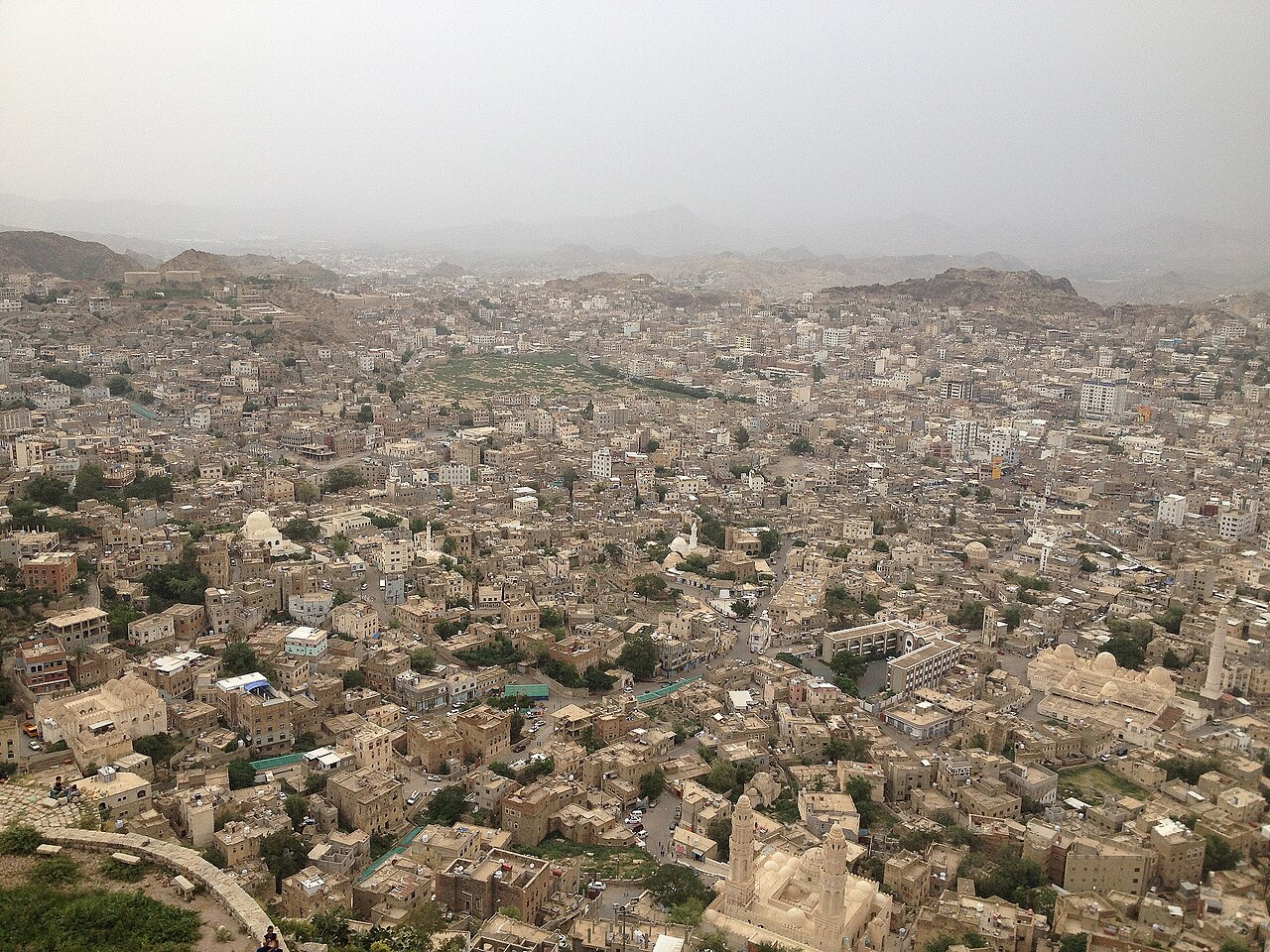
A view of Taiz city, Yemen from AlQahirah Castle. File photo. SharabSalam · CC BY-SA 4.0
Taiz has held out for more than a decade. Local fighters stopped a Houthi takeover of the city back in 2015, and it's been seen as a symbol of resistance to the group ever since.
Dina El Mamoun, Yemen director for the civil-protection group Civic, says the fighting now feels like 2015 again. She says many residents won't flee this time. They're telling her they'll quote "fight to the bitter end".
Life inside the city was already brutal before the road was cut. The World Food Programme says 74% of households in reachable parts of Taiz can't meet their basic food needs. That's the worst level recorded this year.
Hans Grundberg, the UN's Special Envoy for Yemen, says he's alarmed by what's happening in Taiz, where fighting has sharply intensified. He's urging the Houthis to stop the offensive. He says Taiz is now holding most of the Yemenis newly displaced by this fighting.
But how many people, exactly? Nobody agrees. The National, citing the International Organization for Migration, has given two different numbers in the same report — 133,000 and 149,000. Al Jazeera reported roughly 97,000 displaced from Taiz plus 50,000 from Lahij on 1 October. Two days later, Al Jazeera cited a Yemeni government tracking unit putting the total at 197,906 displaced since early September. The UN says the number will keep climbing.
Rashad al-Alimi, chairman of Yemen's Presidential Leadership Council, has praised his troops for repelling the offensive. He's told army commanders to isolate infiltrators, protect roads and secure facilities. He says the militias started this war, and his forces will end it and take back the Yemeni people's state, security, freedom and dignity. He's pledged to push the Houthis back from Taiz and keep working to retake Sanaa and other Houthi-held areas.
Yemen's army says it carried out 474 strikes in 24 hours around 3 October and says it killed about 1,540 Houthi fighters. Colonel Majed Abdullah al-Nazili, who speaks for Yemen's government forces, says they ran 257 precision targeting operations on 3 October and killed at least 700 Houthi fighters.
Here's the catch. Critical Threats, the group that first reported the road attack, says it cannot confirm any of the Yemeni army's figures. So treat those numbers as unverified.
There's also talk of something bigger. Regional and Western officials speaking to Reuters say Saudi Arabia is planning a major new offensive against the Houthis, weighing a coastal push along the Red Sea or a wider multi-front assault. The same reporting says Pakistan sent four cargo planes of military equipment to Aden last month — air-defence systems, light artillery, drones and anti-drone systems. Pakistani military advisers are reportedly on the ground now working with Saudi forces, and Saudi-bought Turkish drones have reportedly been flying over Yemen. Neither Saudi Arabia nor Pakistan has confirmed any of this directly.
All of this follows the collapse of a 2022 UN-mediated truce in July this year, after which full-scale fighting resumed. In mid-September, the Houthis seized the Red Sea port of Mocha and islands in the Bab al-Mandeb strait, before turning towards Taiz.
So what happens next comes down to a road that still isn't fully open. Government forces say they're holding the city. The road they need most is still cut.
Nothing here was paid for by an advertiser. Members are the entire business model. Bronze is where it starts, and it opens the last seven days in full.