Argentina just put its Falklands oil fight to a vote
12 hours ago · 18 November 2026Share
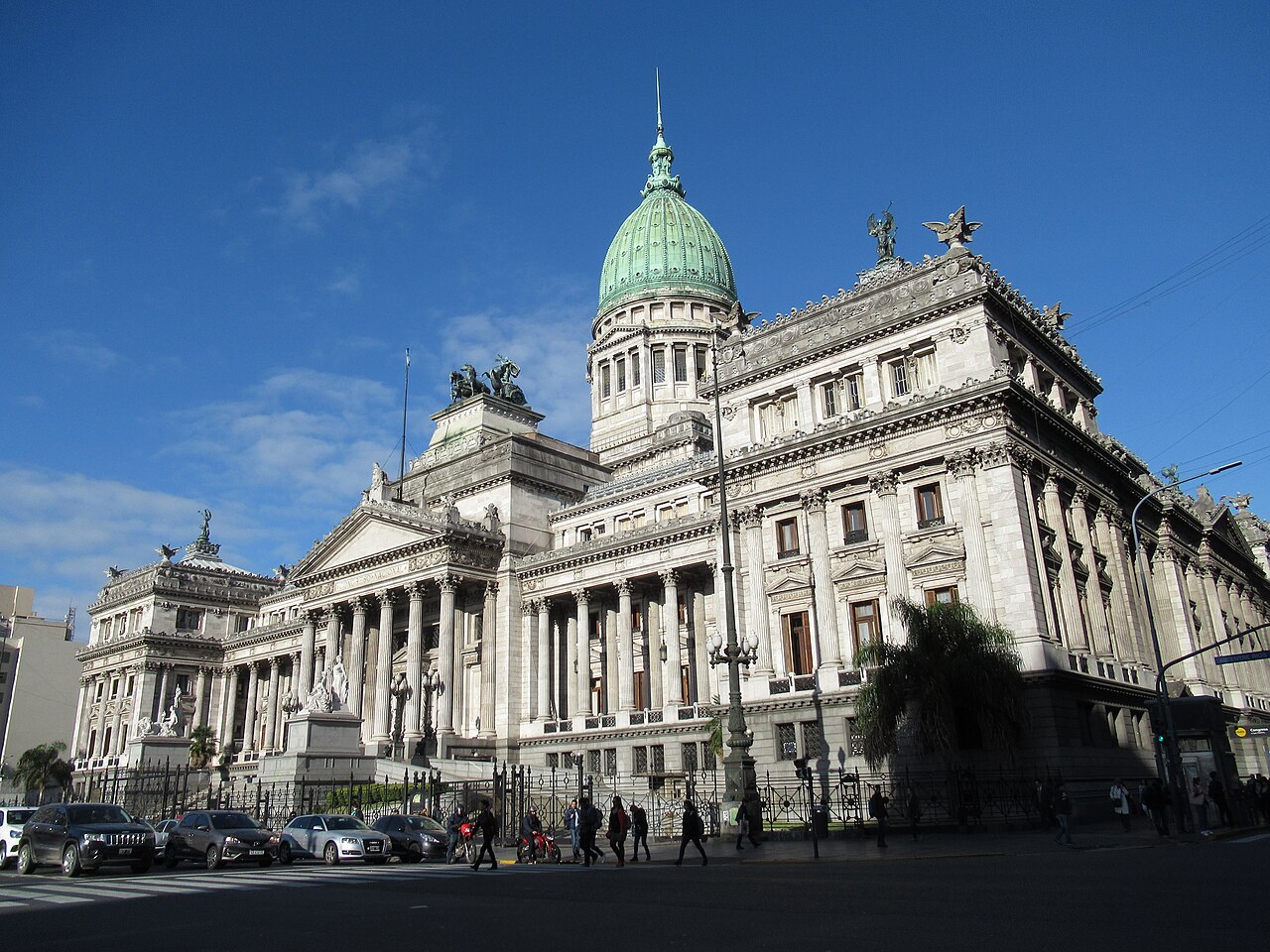
Palacio del Congreso de la Nación Argentina. File photo. Felipe Restrepo Acosta · CC BY-SA 4.0
Argentina's Congress is voting on a Falklands bill right now.
The session started at noon in Buenos Aires. That's 15:00 GMT.
So what's actually in this bill? Two big things.
First, tougher punishment for anyone using the Falklands' oil and gas without Argentina's permission. Second, a separate chapter about foreign interference in Argentine elections.
Javier Milei's government expects the bill to pass overall. But one piece of it is stuck.
That piece is Title VII, the foreign interference chapter. Because it touches election law, it needs a special majority. 129 votes out of 257 deputies. The ruling party doesn't have that number locked in yet.
Now, Title I is the part aimed straight at the Falklands. It punishes anyone who explores for or uses natural resources there, or in South Georgia and the South Sandwich Islands, without Argentina's permission. Licences can get suspended or cancelled. The companies supplying those operators can get held liable too. The exact fine amounts aren't confirmed yet.
And here's the thing. This bill has already been watered down once.
Three weeks ago, a committee cleared it after the ruling party narrowed the sanctions so they only hit operators, licence holders and direct suppliers. Why? The United States raised concerns its own companies could get caught up in it. Christopher Landau, the US Deputy Secretary of State, said in Buenos Aires at the time that Washington was watching what impact the bill could have on American firms.
So Milei's government already gave ground once. And the bill is going ahead anyway.
La Libertad Avanza, Milei's party, is now talking to PRO, the Radical Civic Union, Argentina Federal and Provincias Unidas to close the gap on Title VII. One deputy, Karina Banfi, has raised concerns about the criminal-law changes inside that chapter. The government says it's open to revising some articles. But no new wording had been agreed as of the day before this vote.
The rest of this story is for members.
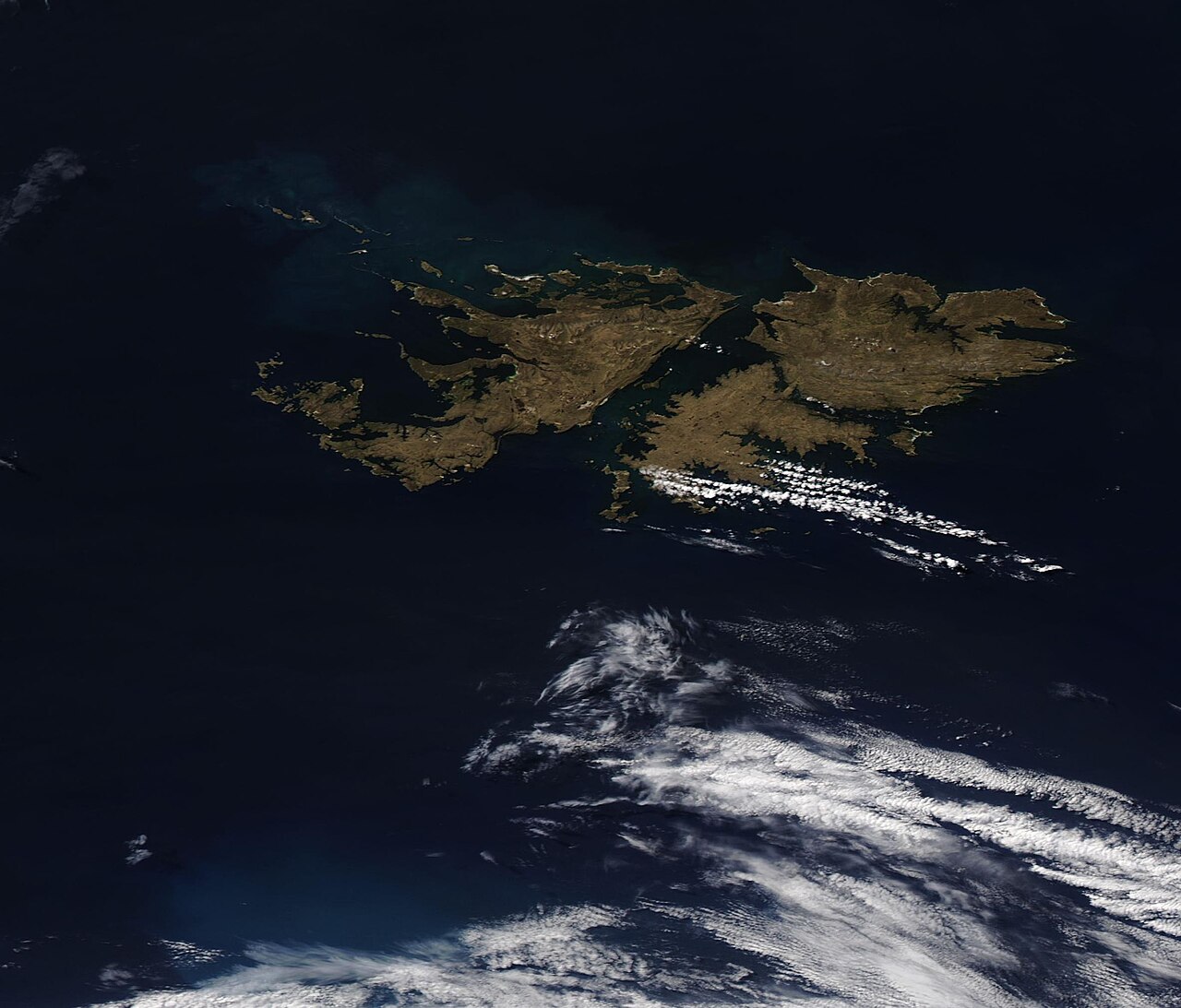
The Falkland Islands, situated about 400 miles east of Argentina in the South Atlantic Ocean. File photo. MODIS Land Rapid Response Team, NASA GSFC · Public domain
And this isn't happening in isolation.
A day before this vote, Argentina's Foreign Ministry rejected a visit by Princess Anne to the Falklands and South Georgia. It called the visit a provocation. The statement said it comes while Britain is advancing what Argentina calls the illegal unilateral exploitation of hydrocarbons through illegitimate licences. Princess Anne has been in the Falklands since 9 November, visiting as Patron of the South Georgia Heritage Trust. Her trip runs until 20 November. Neither the British government nor the Falkland Islands government had said anything back at the time of writing.
And in ten days, something even bigger lands.
The International Tribunal for the Law of the Sea, in Hamburg, will announce on 28 November whether it orders Britain to halt the Sea Lion oil project north of the Falklands while a full case is heard. Hearings wrapped up in Hamburg about a week ago. Argentina's agent, Ambassador Mario Oyarzábal, asked the tribunal to stop new drilling and new production infrastructure at Sea Lion. Sally Langrish, acting for the United Kingdom, asked the tribunal to reject every one of Argentina's requests.
Ellie Reeves, the UK's Attorney General, led the British side at the hearing. She argued the tribunal has no jurisdiction over sovereignty questions at all. And she warned that halting Sea Lion would hurt the islanders badly.
Marcelo Kohen, representing Argentina, told the tribunal Britain cannot behave quote "like a 17th-century colonial power treating vast expanses of the ocean as its own".
Sea Lion is run by Israel's Navitas Petroleum and Britain's Rockhopper Exploration. Drilling is expected to start in January 2027.
Pablo Quirno, Argentina's Foreign Minister, has defended the sovereignty bill. He says it aims to make companies choose the Argentine mainland instead of what he calls illegitimate licences in the Falklands.
So this one week carries three separate flashpoints. A sovereignty bill that could pass today. A royal visit Argentina is calling a provocation. And a tribunal ruling in ten days that could stop a British oil project before it even starts.
Nobody yet knows how many votes the government actually holds for Title VII. Nobody knows if today's session will even reach the quorum of 129 needed to proceed.
Today's result decides whether Argentina's parliament, not just its foreign ministry, has formally raised the stakes over the islands.
Nothing here was paid for by an advertiser. Members are the entire business model. Bronze is where it starts, and it opens the last seven days in full.