Yemen's government just gave up the strait that controls world shipping
1 day ago · 15 November 2026Share
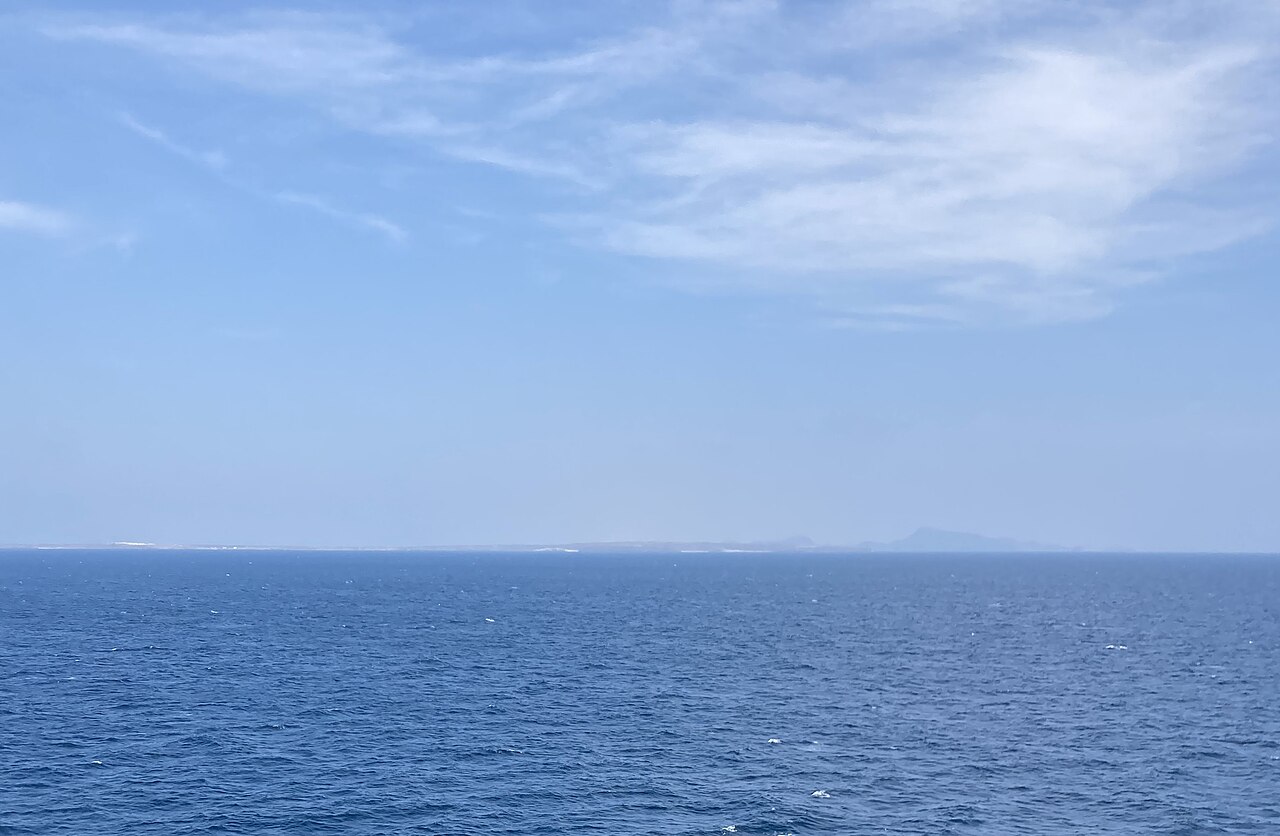
The Strait from mid-channel, December 2003, with Yemen in the distance and the Djibouti coast visible beyond. File photo. Richard Weil · CC0
Yemen's government forces just walked away from the Bab el-Mandeb Strait.
And that hands Iran-aligned Houthi fighters total control of one of the busiest shipping routes on Earth.
So what happened? The Southern Armed Forces, who fight for Yemen's internationally recognised government, announced today they're pulling out of Dhubab Airport and the whole Bab el-Mandeb area.
They say they need to focus on defending Aden instead. That's the southern city that's been the government's base since the Houthis took the capital, Sanaa, back in 2015.
This ends a six-week government campaign to win back the Red Sea coast near the strait. And that campaign was already struggling.
Saudi-backed troops retook Dhubab and a few other spots last month. But they never pushed the Houthis out of the wider area. They never even got back the port town of al-Mocha.
Now they're giving up the ground they had. Troops have pulled back to al-Suqyah, a town just south of Dhubab, about 150 kilometres from Aden.
The Southern Armed Forces says this is about securing Aden and the provinces around it, and strengthening the front lines.
But here's the real reason. Taiz.
That's Yemen's third-biggest city, 80 kilometres from Aden, and Houthi forces have been advancing there. Yemeni military commanders say those Taiz gains are what forced the government to give up on the coast. Houthi fighters are now sitting just outside Tur al-Bahah in Lahj governorate, roughly 80 kilometres from Aden.
Taiz itself is under siege right now. The city holds about half of the 300,000 people driven from their homes by this latest fighting. Aid can't get in. Civilians can't get out.
And this isn't the first time this strait has changed hands this year.
The rest of this story is for members.
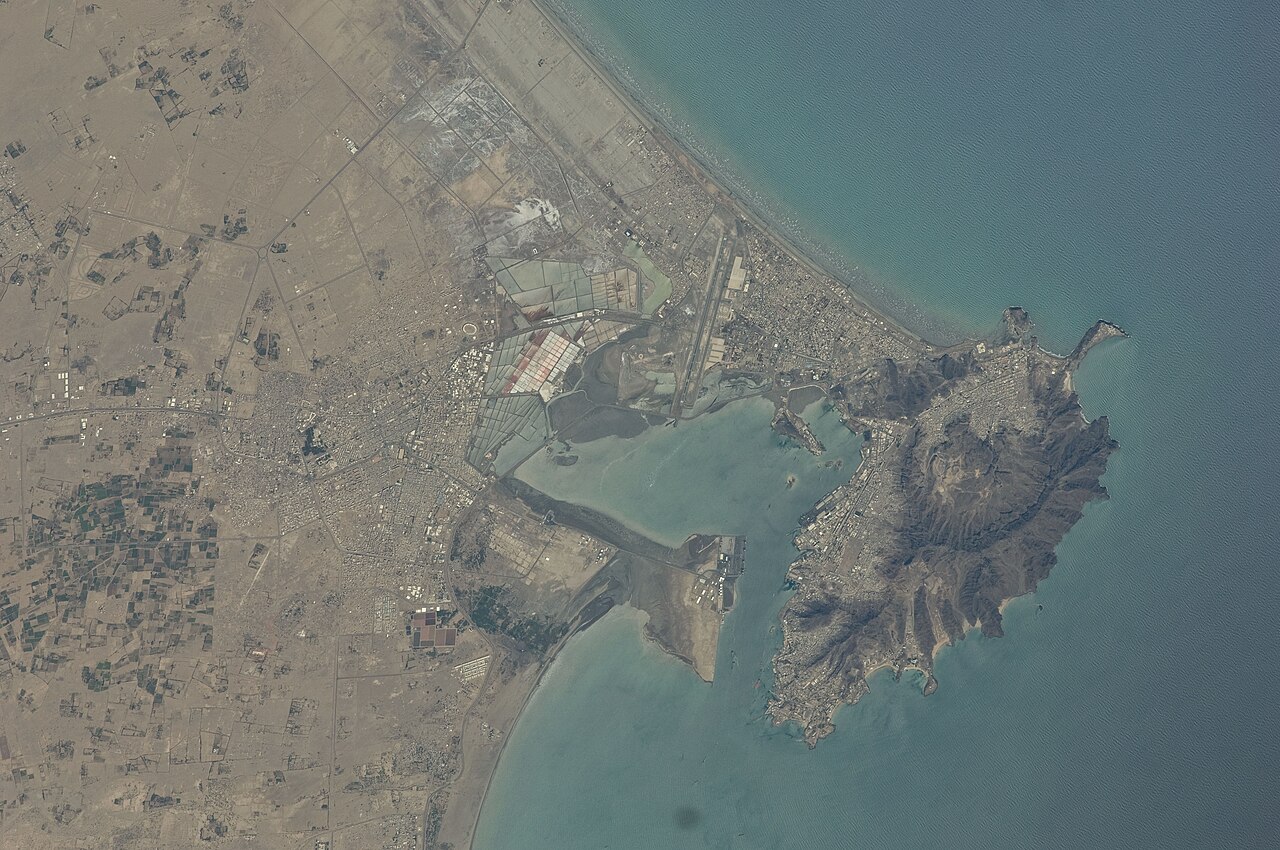
View of the Aden Peninsula taken during ISS Expedition 22. File photo.Earth Science and Remote Sensing Unit , Lyndon B. Johnson Space Center · Public domain
The Houthis seized the Red Sea coast, Bab el-Mandeb included, in a rapid advance two months ago, in September. Houthi military spokesperson Yahya Saree said at the time that the operation pushed Saudi-backed forces out of six districts covering 5,400 square kilometres.
The government's October counteroffensive was meant to reverse all of that. It had around 100 Saudi-coalition fighter jets behind it. It has now ended without doing the job.
So why does any of this matter outside Yemen? Because Bab el-Mandeb is one of the world's major chokepoints for oil and shipping.
Before the US-Israel war on Iran started in February, around a fifth of the world's energy shipments passed through either Bab el-Mandeb or the Strait of Hormuz, on the other side of the Arabian Peninsula.
Iran has spent months disrupting ships through Hormuz. Now the Houthis hold Bab el-Mandeb with nobody left to challenge them. That means Iran-aligned forces have a hand on both of the region's major chokepoints at the same time.
The Houthis have already used that position against Saudi Arabia directly. They've hit ports, airports and oil sites, including the Red Sea export hub at Yanbu, in recent months.
Neither the Houthis nor Saudi Arabia, the Yemeni government's main international backer, had responded to the withdrawal by the time of the announcement.
Separately, the International Committee of the Red Cross said today that the Houthis released 600 prisoners.
Yemen's civil war has run since 2014, when the Houthis forced the government out of Sanaa. It had gone mostly quiet after a 2022 truce, before flaring back up this summer as the fight between the US, Israel and Iran spilled over the border.
So what happens now? Nobody knows what the Houthis plan to do with the strait. Nobody knows if Saudi Arabia will try to take it back. And nobody knows what this means for ships trying to pass through Bab el-Mandeb in the weeks ahead.
The Southern Armed Forces put it this way: the redeployment is happening quote "based on the priority of securing the capital, Aden, and the neighbouring governorates".
I think thats good news, If they are aligned with Iran they cant be all that bad ?
laurimillerjade.com
7 hours ago
Readers, not advertisers
This reporting was funded entirely by readers.
Nothing here was paid for by an advertiser. Members are the entire business model. Bronze is where it starts, and it opens the last seven days in full.