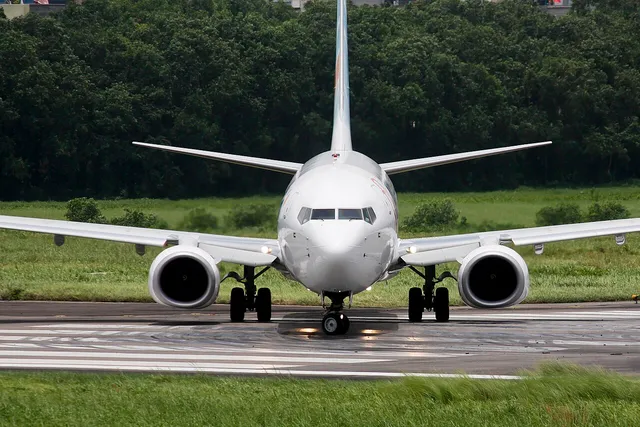
Saudi Arabia told everyone in Riyadh to stay indoors just before 3am. AFP reporters on the ground heard two explosions during that time. No one is reported hurt.
That's everything we know.
Why this mattersSo think about that for a second. Saudi Arabia says the missile was destroyed.
And yet a real fire broke out, at a real fuel depot, at the exact airport that was just put under alert.
Nobody has explained that yet.
Here's why this matters. Riyadh hasn't been hit like this since the war with the Houthis restarted two months ago. And it just happened at the country's main airport.
The Houthis say they fired ballistic missiles, cruise missiles and drones at what they call sensitive sites in Riyadh. They also say they hit Aramco facilities in Yanbu, on the coast. Saudi Arabia says its defences stopped separate attacks aimed at Bisha, Taif, Farasan and Yanbu too.
So this wasn't one missile. It was a wave.
And it didn't come out of nowhere. The Houthis have spent this month grabbing territory across Yemen, including a push for the entire Red Sea coast. That coast controls the Bab al-Mandab strait, the narrow gap every ship into the Red Sea has to pass through.
Saudi Arabia has run dozens of air strikes against the Houthis this month. None of them worked.
The ceasefire that held since 2022 fell apart two months ago, after the Houthis let an Iranian plane land in Yemen against Saudi orders.
Saudi Arabia wants America in this fight. America has said no. Twice. It turned down one Saudi request to strike the Houthis last week, and Donald Trump has separately rejected direct military help.
So what is America doing instead? Selling weapons. Three days ago, the US approved a $24.3 billion sale of 48 F-35 jets to Saudi Arabia.
And a few hours ago, Donald Trump cut his weekend at Camp David short and went straight back to the White House. Nobody has said why.
At the same time, the US State Department warned that this conflict could escalate fast, and named Houthi attacks on Saudi airports as part of that risk.
This sits inside an even bigger war. America and Iran have been fighting for seven months, and Iran says it has sent conditions through Qatar to end that war on every front — Yemen included.
So what don't we know? Whether the fire was caused by the missile, or by falling debris from the interceptor. Why Donald Trump rushed back to Washington. And whether this strike just changed America's answer on getting involved.