Why this mattersSo why does this base matter?
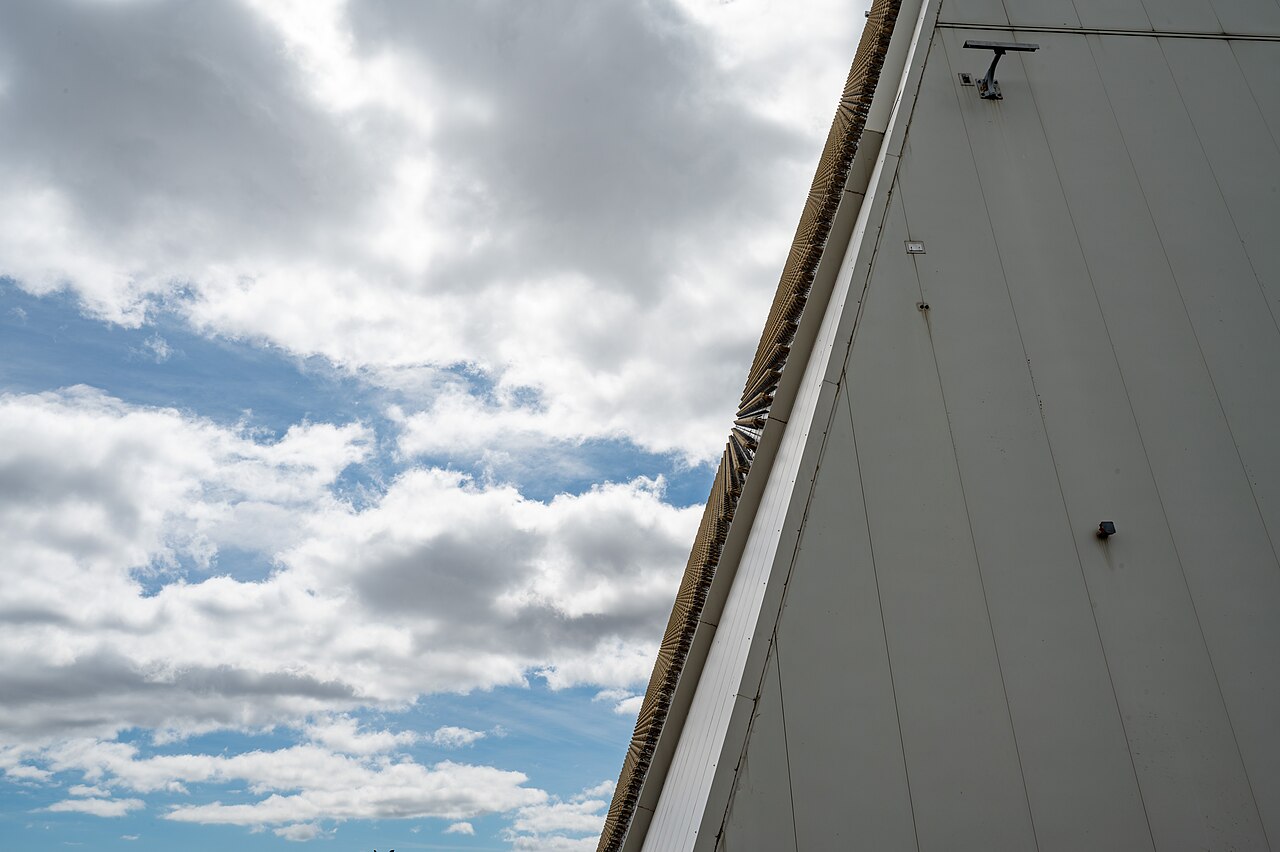
Al-Rifaa sits inland on Bahrain's main island, south of the capital Manama. It's not the same base as the US Navy's Fifth Fleet headquarters. That's a separate site at Juffair.
But Bahrain hosts that headquarters too. So this is one of the most sensitive American footholds anywhere in the Gulf.
Now, the first strike. Two days ago, America's military confirmed it shot down two Iranian drones aimed at this same base. No injuries. No damage. Iran said that one was payback for a US strike on a telecoms tower in Sirik, in southern Iran.
So in under three days, Iran has gone from one strike to a second. And it's framing both as one ongoing campaign, not two separate incidents.
And this sits inside a much bigger war. America and Israel have been fighting Iran since February. Nearly nine months now. A Pentagon report in September found Iranian attacks had already damaged or destroyed buildings at US bases in eight countries, Bahrain included, in just the first four months of that war.
Before two days ago, Iran hadn't said it attacked a Gulf-state US base since early September. More than two months of quiet.
Both sides are now disputing what actually happened. Iran says it hit the radar. The US and Bahrain say nothing got through.
Bahrain's government says it won't let its territory become, in its words, an arena for settling scores. It holds Iran fully responsible. Iran's foreign ministry said that is baseless and says Iran will keep responding to attacks on its own territory.
Saudi Arabia has joined in too, condemning the strikes and demanding they stop immediately. On the same day, Saudi Arabia's own military says it intercepted two Houthi ballistic missiles aimed at Riyadh, plus three drones in its Eastern Province. Iran isn't the only front open in the Gulf right now.
Saeid Golkar, a political scientist at the University of Tennessee at Chattanooga, says both sides may prefer to avoid a full-scale war, but that the danger lies in miscalculation.
That's the risk, in one line. Two narrow strikes. Two flat denials. Neither side can be sure what the other actually did.
But it isn't all pointing toward war. Donald Trump has told advisers he might hold off further attacks on Iran, so long as Tehran and the Iran-backed Houthis avoid new provocations. He says the US naval blockade of Iran stays in place either way.
And Iran's parliamentary speaker, Mohammad Bagher Ghalibaf, told Al Jazeera a week ago that Tehran wants to move past what he called no war, no peace, with seven conditions sent through a Qatari mediator.
So what don't we know? Whether the radar was actually hit. Whether Iran is planning a third phase. And what America does next.