Israel just lost its path back to Netanyahu and the opposition has the votes
1 hour ago · 5 November 2026Share
Gadi Eisenkot, Knesset member. File photo. Ronen Horesh · CC BY-SA 4.0
Israel's biggest Arab-led party group just handed the opposition a path to power.
The Joint List says it will recommend Gadi Eisenkot to form the next government.
So what does that actually mean? Eisenkot now has the backing of 67 lawmakers. That's six more than he needs.
The Joint List announced it a few hours ago. It holds 11 seats in Israel's 120-seat parliament. Its delegation was due to hand the recommendation to Isaac Herzog, Israel's President, later the same day.
67 beats the 61-seat majority needed to govern. And Benjamin Netanyahu, Israel's Prime Minister, cannot get there. His bloc won 53 seats in the election on 27 October. Right now, even that number isn't solid.
So what changed since election day? Back then, nobody had a majority. Netanyahu's bloc had 53 seats. Eisenkot's had 48.
Since then, the numbers have moved. Against Netanyahu, not towards him.
Here's how. Ra'am, the other Arab-led party, recommended Eisenkot earlier the same day. Arab-led parties won a record 19 seats this election, the most ever. Yisrael Beytenu, led by Avigdor Liberman, and the Democrats, led by Yair Golan, have also recommended Eisenkot.
The rest of this story is for members.
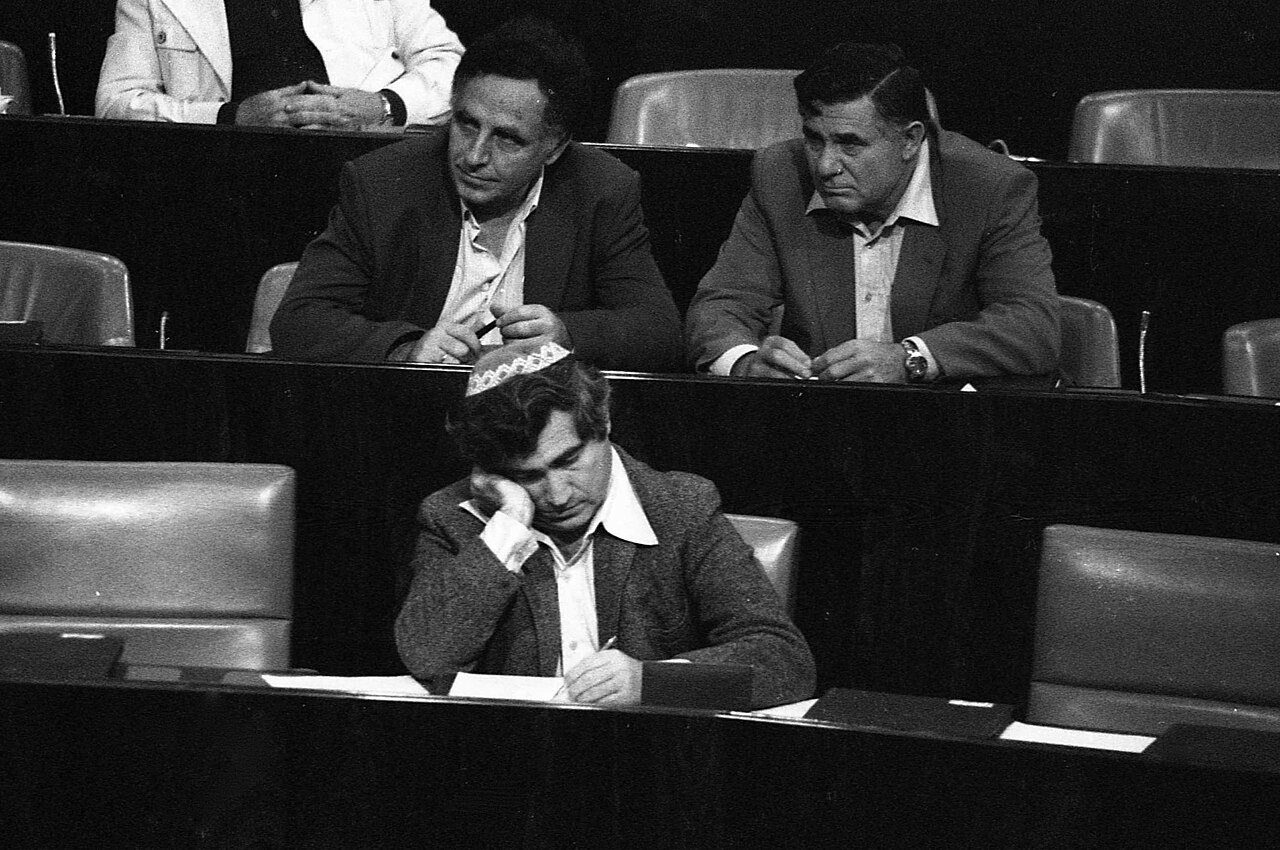
The Knesset holding a session, showing members listening to debate. File photo. IPPA photographer · CC BY 4.0
And Netanyahu is losing people from inside his own camp. Degel HaTorah holds four of United Torah Judaism's seven seats. It says it won't recommend either candidate. Why? Netanyahu failed to pass a law exempting ultra-Orthodox men from military service.
The Joint List says its decision reflects public demand to keep Netanyahu's government from coming back. It also says the opposition bloc hasn't done enough to confront Netanyahu or fight incitement against Arab citizens.
So that's a party backing Eisenkot, and warning him at the same time. This isn't a blank cheque.
And here's the catch in that number 67. A recommendation to Herzog is not a seat in a coalition. The Times of Israel reports that having more recommendations than Netanyahu doesn't mean those parties will actually join Eisenkot's government once real talks start. His own bloc of 48 seats is fractious. Some of his allies, including Avigdor Liberman, don't want to rely on Arab parties to govern at all. Eisenkot himself hasn't said whether he'd accept their support, even though he needs their numbers to reach a majority.
Netanyahu's camp has its own story for why it's losing ground. He and his Likud party have repeatedly alleged, without evidence, that Arab parties committed fraud in the election, in some cases pointing to foreign backing. But Israel's Central Elections Committee certified the results two days ago and found no evidence of fraud. Gali Baharav-Miara, the Attorney General, separately rejected a request to question elected officials without supporting evidence.
Herzog has been meeting party leaders since the start of this week to decide who gets the job of forming a government. He has said not every commitment and promise can be fulfilled, and has urged compromise to avoid another election. Talks with the remaining parties, including Likud and Eisenkot's own Yashar party, were still going on this evening.
Once Herzog picks someone, the clock starts. They get four weeks to form a government, and can ask for two more. If neither Netanyahu nor Eisenkot pulls it off, Israel goes back to the polls early next year.
So right now, the recommendations favour Eisenkot. But turning 67 names on paper into an actual working government is a different question entirely. And nobody has answered it yet.
Nothing here was paid for by an advertiser. Members are the entire business model. Bronze is where it starts, and it opens the last seven days in full.