The Houthis just promised to spare American and Israeli ships and not Saudi ones
17 September 2026 · 17 September 2026Share
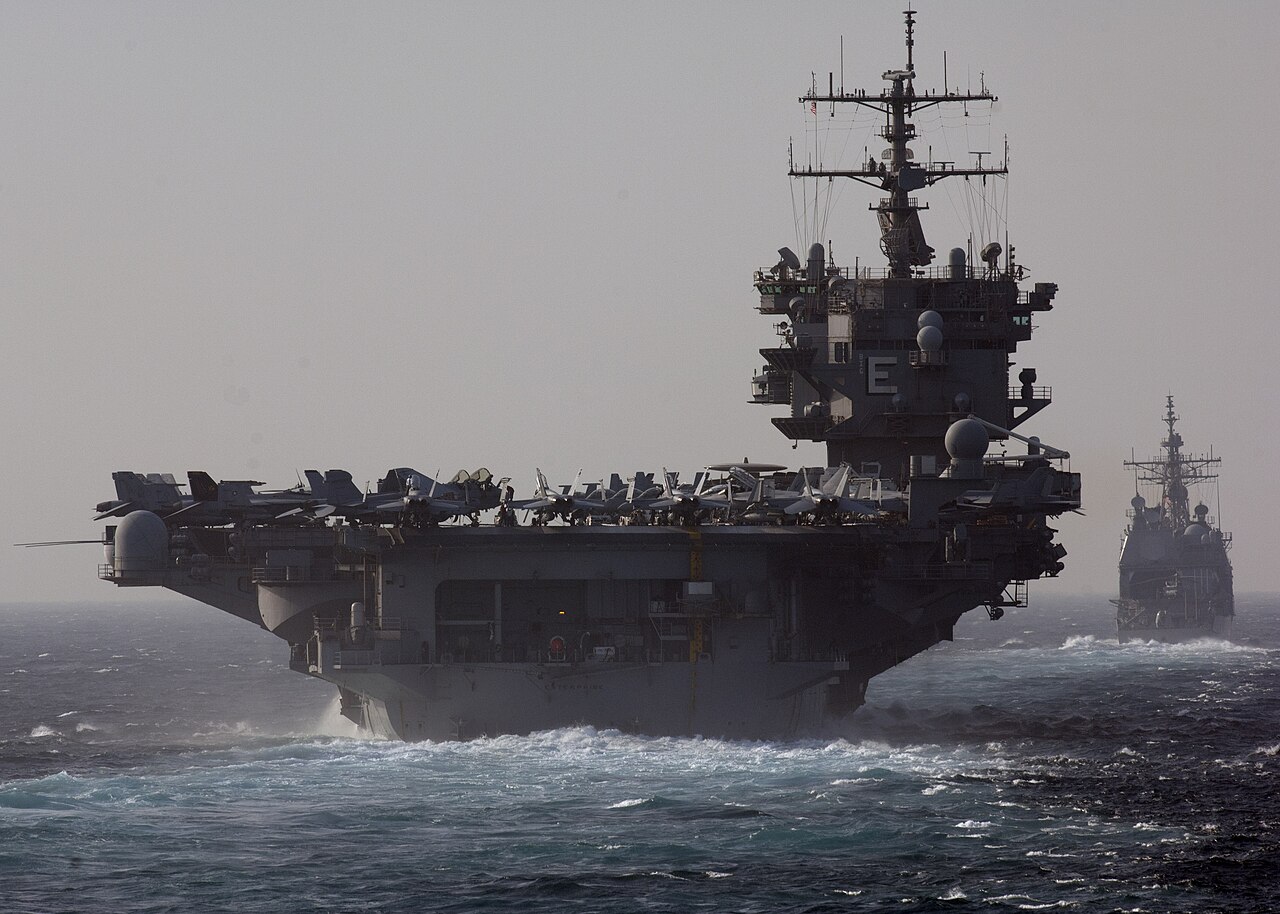
The aircraft carrier USS Enterprise and the guided-missile cruiser USS Vicksburg transit the Bab el-Mandeb Strait in April 2012. File photo. Official Navy Page from United States of America MC3 Daniel J. Meshel/U.S. Navy · Public domain
The Houthis have told American officials they won't attack American or Israeli ships.
And the only ships they named as fair game belong to Saudi Arabia.
So where did this happen? At the US Embassy in Muscat, in Oman, four days ago.
Reuters reported it a day ago, citing five people who knew about the meeting. Nobody had made it public before.
Oman's government helped set it up.
On the Houthi side: Mohammed Abdulsalam, a senior Houthi official based in Muscat who is under US sanctions. And Abdelmalik al-Ajiri, another senior figure. On the American side, embassy staff.
Two of those people say the Houthis told the Americans they have no intention of attacking American vessels. And that they're still committed to the ceasefire they signed with the United States in May 2025.
Then one Yemeni source went further. That source told Reuters the Houthis also said they wouldn't attack Israeli ships or other commercial ships.
Except Saudi ones.
Now, that single detail is the story. And it needs care.
The National says it could not confirm the Saudi exclusion from its own reporting. The US State Department has not confirmed the meeting happened at all.
But here's the thing.
The Houthi slogan is quote "Death to America, Death to Israel, [and] a Curse on the Jews".
That's a group promising to spare the two countries it's named after hating. And pointing at a third instead.
And the promise is worth something right now. Because of where the Houthis are standing.
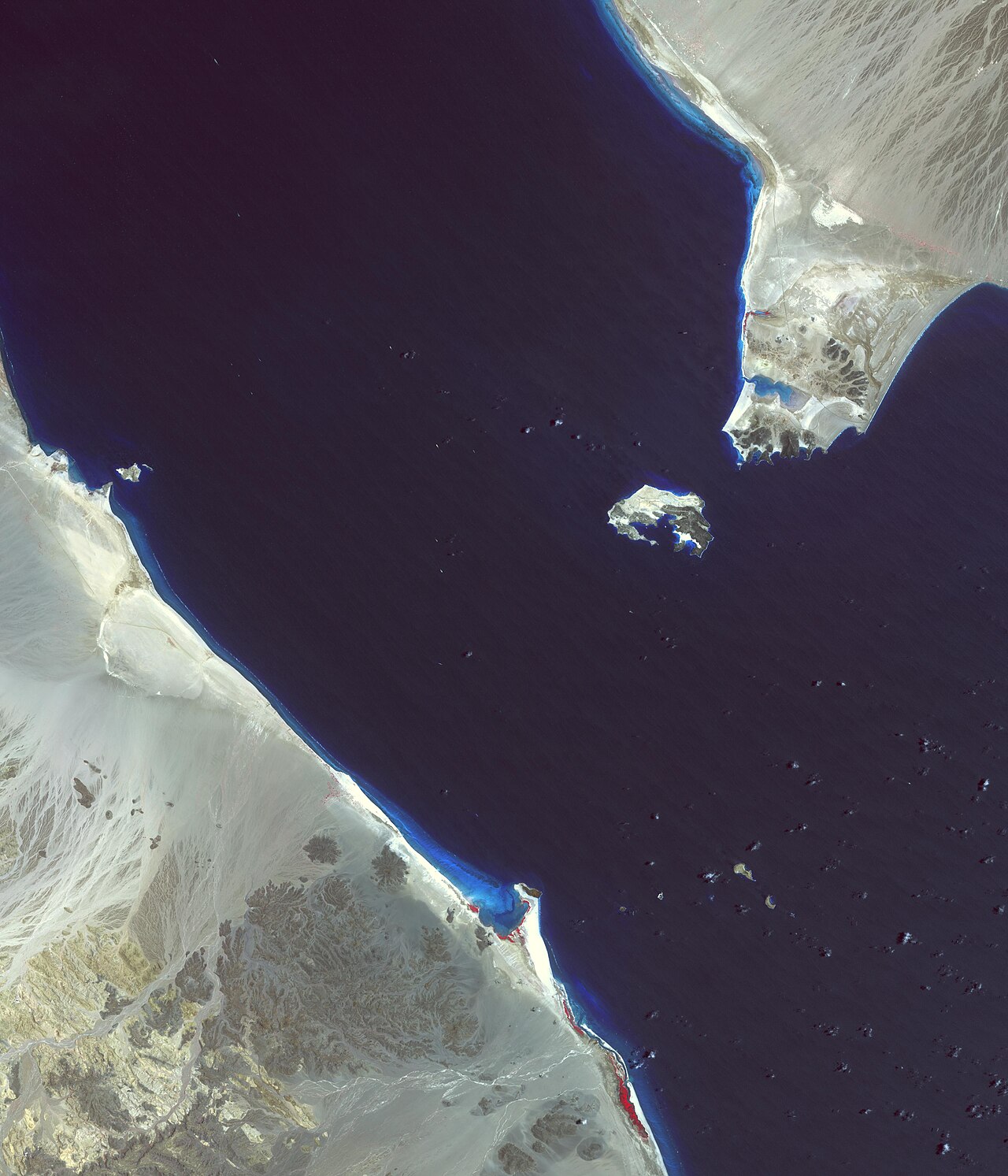
About eight days ago they took effective control of Yemen's entire Red Sea coastline. That includes Mokha, and Perim Island, which sits in the Bab el-Mandeb strait.
That strait is the mouth of the Red Sea. Everything sailing between Europe and Asia through the Suez Canal has to pass it.
So the group that now controls the door is deciding who gets through.
And Saudi Arabia has been fighting that group for more than a decade.
The Houthis seized Yemen's capital, Sanaa, in 2014. The war that followed has killed more than 100,000 people.
Fighting restarted about two months ago, in July 2026. The Houthis declared a blockade on Saudi shipping in the Red Sea, answering a Saudi blockade of Yemeni ports.
And it's getting worse by the day.
A day ago the Houthis said they hit an Aramco facility at Yanbu and the Khamis Mushait air base in southern Saudi Arabia.
Yahya Saree, who speaks for the Houthi military, says the Saudi-led coalition flew more than 450 airstrikes in a week. He also says the Houthis shot down a Saudi F-15. He has presented no evidence.
The rest of this story is for Silver and Gold members.
The Bab-el-Mandeb strait, which connects the Red Sea to the Gulf of Aden between Yemen and the Horn of Africa, is a strategic chokepoint for global shipping. File photo. NASA/METI/AIST/Japan Space Systems, and U.S./Japan ASTER Science Team · Public domain
Two days ago the Saudi-led coalition accused the Houthis of sending a drone at Mecca. First time in this round of fighting. Saudi air defences say they destroyed it south of the city. The Houthis deny firing it.
Saudi Arabia's foreign ministry called it a cowardly terrorist attack, and says it reserves the right to take all necessary measures to defend Mecca, pilgrims and Saudi territory.
So Saudi Arabia asked for help.
Mohammed bin Salman, Saudi Arabia's de facto ruler, phoned Donald Trump about a week ago and asked for American military support.
Washington said no to getting directly involved. It offered intelligence and targeting help instead.
And Saudi Arabia's other allies are quiet too. Turkey and Pakistan signed a defence pact with Saudi Arabia about a month ago, the Mecca Alliance. Both have condemned the attacks. Both say the pact is not operational yet.
So the country with the most to lose in that strait is the one with nobody in it.
Now, the American position is that none of this is a relationship.
The Trump administration designated the Houthis a foreign terrorist organisation in March 2025. Then bombed them for two months. Then signed a ceasefire with them in May 2025.
Five days ago Donald Trump said the Houthis had phoned his administration, asking the United States to stay out of the Yemen war.
Three days ago JD Vance, the US Vice President, said the United States is in direct contact with the Houthis. He gave no detail.
The Houthis tell it differently. People in Sanaa told The National that every message goes through Omani mediators, and there has never been direct contact with the Americans.
A US State Department spokesperson would not confirm the meeting, and said protecting freedom of navigation in the Red Sea, and stopping terrorism spreading from the Middle East, are core American interests.
Which reads like a country that has been told its own ships are safe.
And behind all of it is Iran.
People in Tehran, Aden and Cairo told The National that Iran is using Yemen as a new pressure point. Linking the Strait of Hormuz at one end of the Gulf to the Bab el-Mandeb at the other.
Two days ago only four ships went through Hormuz. The ten-day average is 18.
A separate meeting in Oman between Iran and Gulf states about Hormuz shipping was postponed three days ago. No new date.
And the Houthis aren't standing still either. Conflict Armament Research says they're experimenting with new weapons, including loitering torpedoes.
Nobody knows whether the pledge will hold.
Saudi Arabia has not said a word about being the one country left off it.
The Houthis own the strait now.
And they've just told Washington which flag isn't welcome through it.
Nothing here was paid for by an advertiser. Members are the entire business model. This story is Silver's: it opens everything we have ever written, and our investigations first.