Congress just moved to block Trump's Russia sanctions waiver
1 hour ago · 17 October 2026Share
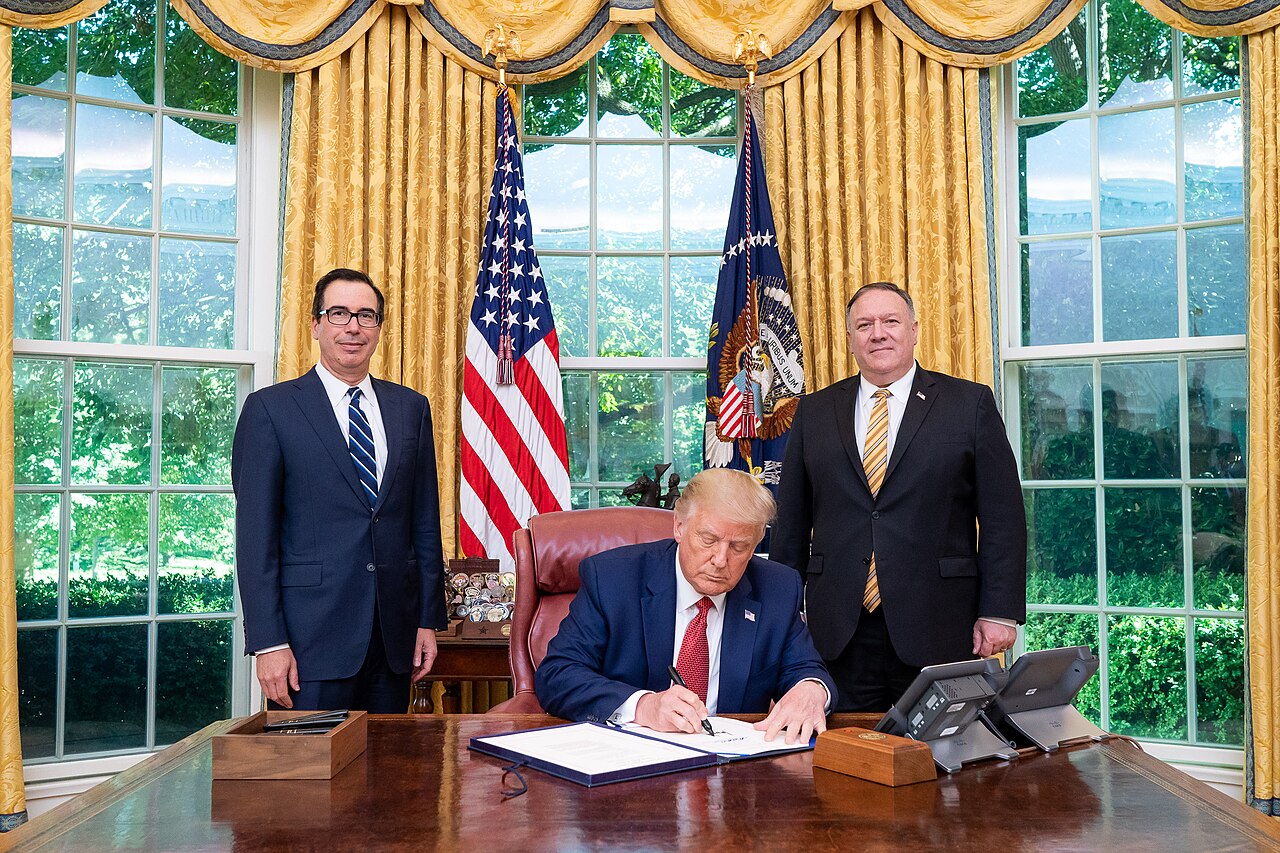
President Donald J. Trump, joined by Secretary of the Treasury Steven Mnuchin and Secretary of State Mike Pompeo, signs an executive order at his desk in the Oval Office of the White House. File photo. The White House from Washington, DC · Public domain
Donald Trump just waived Russia sanctions that Congress itself wrote into law a month ago.
And a few hours later, Congress hit back.
Gregory Meeks, the top Democrat on the House Foreign Affairs Committee, introduced a bill to undo it. Same day.
So what did Trump actually sign?
The law is called the Lindsey O. Graham Sanctioning Russia and Iran Act. Named after the South Carolina senator who died in July.
Lindsey Graham wrote it with Democratic Senator Richard Blumenthal. It passed the House and Senate by huge margins. Trump signed it himself, a month ago, on 18 September.
Here's what it does. Tariffs of up to 100% on goods from the five biggest buyers of Russian oil and gas. A 500% tariff on Russian goods. Rules targeting Russia's shadow fleet of tankers.
Those sanctions were due to kick in two days after Trump's waiver.
He stopped them with hours to spare.
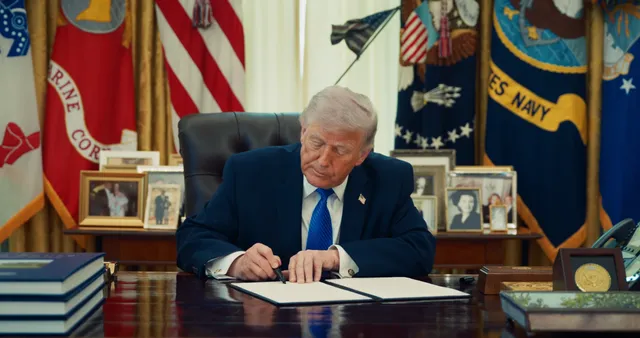
Trump used a get-out clause buried in his own law, called Section 115. It lets him waive the sanctions if he tells Congress it's in the national interest. So he did.
His order puts it plainly. He says he is waiving the sanctions, restrictions and duties in the Graham Act, and that he has told Congress the waiver serves America's national interest.
The waiver doesn't touch sanctions already running. And it never expires. It stands until Trump, or someone senior in his administration, decides to end it.
Now here's why this matters so much.
A week before the waiver, Trump struck a deal with Vladimir Putin. Russia gets to sell diesel to the world again. 300,000 metric tons straight away. 500,000 tons in November. A million tons a month after that.
The deal runs on a single licence. Treasury's sanctions office issued it the same day the deal was announced.
And that licence is exactly what Meeks' bill goes after.
The rest of this story is for members.
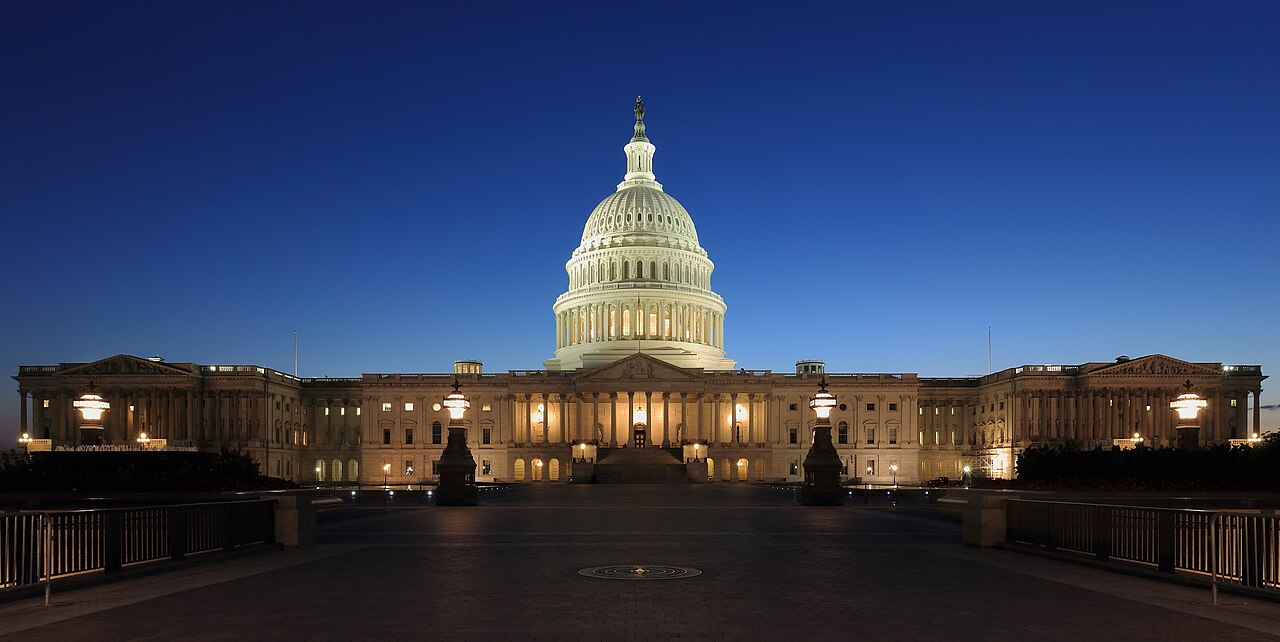
US Capitol at dusk as seen from the eastern side. File photo. Martin Falbisoner · CC BY-SA 3.0
The bill would wipe out that licence. Stop Treasury issuing any new ones. Block a US government finance agency from investing in Russia's energy sector. And force the Trump administration to put sanctions on Russian energy instead.
So this isn't just Congress complaining.
It's Congress trying to pull the legal floor out from under the deal.
The bill already has 17 co-sponsors in the House. Sixteen Democrats — names like William Keating, Ami Bera, Dina Titus, Ted Lieu, Jonathan Jackson, Jim Costa and Gabe Amo. And one Republican: Don Bacon of Nebraska.
Meeks says quote "It will hand Putin millions of dollars to continue slaughtering Ukrainian civilians."
He also said Trump is cosying up to Putin and striking deals that enrich himself instead of standing with Ukraine.
Don Bacon, the only Republican backing the bill, said after the waiver that Trump was prolonging the war, not ending it.
Democratic Representative Don Beyer called the waiver a surrender to Putin that betrays Ukraine and ignores what Congress clearly intended.
And this isn't only a House problem for Trump.
Days before the waiver, a dozen senators from both parties wrote to him directly. Republicans Mitch McConnell, Thom Tillis, Susan Collins, Lisa Murkowski and John Cornyn were among them. They told him to drop the diesel deal and enforce the sanctions Congress had passed.
Michael McCaul, the Texas Republican who used to chair the House Foreign Affairs Committee, raised the same worry around the time the diesel deal was first announced — that lifting sanctions on Russian oil would fund the Kremlin's war machine.
The Trump administration has said nothing about the bill.
And here's the problem for Meeks. Republicans control both the House and the Senate. His bill needs a committee hearing and a vote in both chambers before any of it becomes real. Neither is scheduled.
So a lot is still unknown. Whether the bill gets a hearing at all. Whether more Republicans join Don Bacon. Whether Trump would veto it if it somehow passed. And whether his administration will argue the bill oversteps the very waiver power Trump signed into law himself.
Trump gave himself that power a month ago.
Now Congress is asking whether it can take it back.
Nothing here was paid for by an advertiser. Members are the entire business model. Bronze is where it starts, and it opens the last seven days in full.