Sudan's capital just welcomed millions home and they are already leaving again
4 days ago · 27 September 2026Share
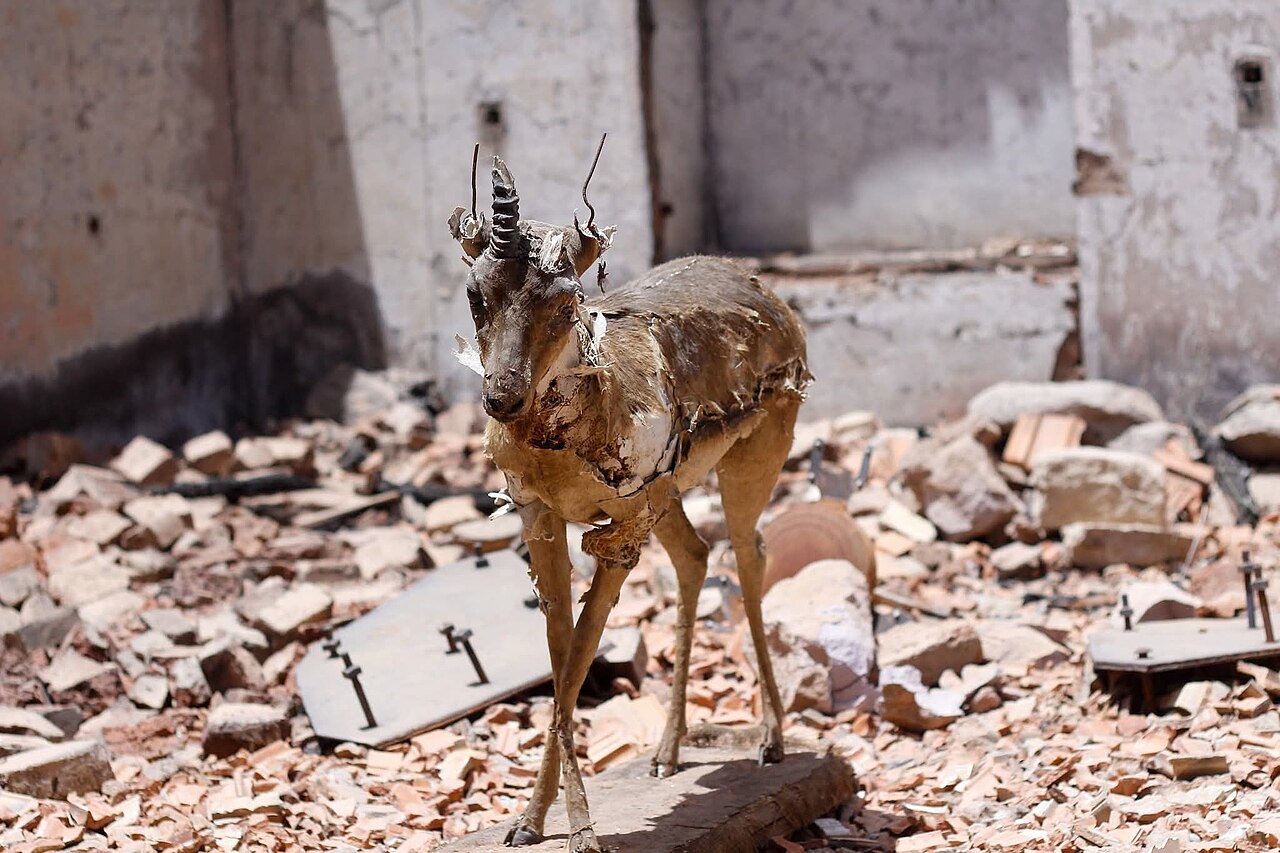
A taxidermied gazelle stands amid the ruins of Khartoum's Natural History Museum, with collapsed walls and broken glass around it. File photo. Moiz mubark · CC BY-SA 4.0
Four million people ran from Khartoum when war broke out in April 2023.
Sudan's army and the paramilitary Rapid Support Forces have been fighting ever since.
The army took back the capital last year. And 2.7 million people have now gone home.
So here's the problem. Many of them are already trying to leave again.
The army pushed hard for this. It rebuilt Khartoum's airport, reopened it for flights inside Sudan, and patched up roads and buildings. It wanted the return to look like proof the city was healing.
But the power still cuts out for days at a time. So does the water.
Markets have reopened. But most people coming home have no job and no money to spend in them.
And by June this year, the United Nations had only declared one per cent of Khartoum safe.
One per cent.
Emad Khaled is a 43-year-old businessman. He's sending his family back to Egypt. He's staying in Khartoum for work.
He says quote "Bringing my family back was a mistake".
He's not the only one. Government officials ordered back to the capital have told AFP they are keeping their own families out of the country too.
Thuraya Babiker is 86. She's leaving for the United Arab Emirates with her husband and youngest daughter, just three months after coming home.
She says quote "We don't want to leave". But she says there's no medical care left, and that makes staying impossible.
So here's the contradiction. The army brought people home to show Khartoum was recovering. Instead, the people it brought back are packing up again, for the opposite reason.
Medicine is one of the biggest problems. Haifa Omar is a physician in Khartoum. She says doctors are now telling patients to buy some of their own medicine, out of their own pocket. She says it gives her a lump in her throat, because she knows how hard things already are for people.
Imam Babiker is a 34-year-old college professor. He has to check ten pharmacies just to find his father's blood pressure pills, and the price changes every day.
The rest of this story is for members.
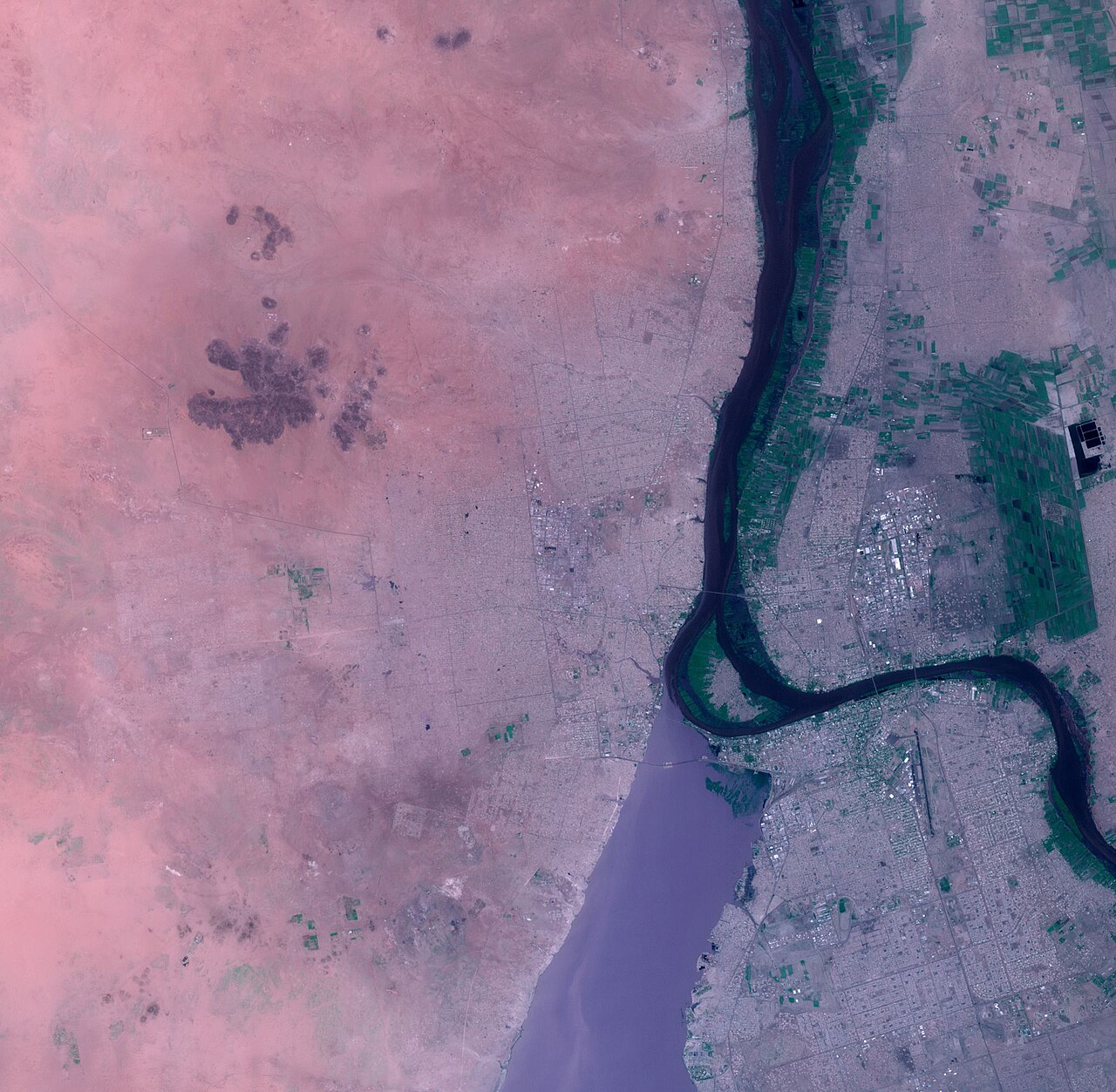
Contains NASA satellite imagery showing the cities of Omdurman, Bahri and Khartoum divided by the Nile River. File photo. NASA/GSFC/MITI/ERSDAC/JAROS, and U.S./Japan ASTER Science Team · Public domain
He bought a fridge to keep his mother's insulin cold. But the power goes out for around 12 hours a day, so the insulin keeps spoiling anyway.
Souad Mohamed is 49. Looters stole her fridge while she was away. She can't afford a new one, so now she buys food fresh, every day, while prices keep climbing.
Khartoum used to have more than eight million people living in it. AFP now calls it a shell of its former self.
Most of the people coming back are settling in working-class areas. The wealthier parts of the city, like Khartoum 2, are still mostly empty. Villas stand gutted, blown open by missiles.
One veteran UN official told AFP the destruction in the city centre is worse than anything they'd seen before. Worse than Ukraine.
And the danger hasn't gone. Booby-traps and unexploded shells are still hidden in walls and on street corners. They've killed and injured dozens of children.
The Rapid Support Forces still hit Khartoum with the occasional drone strike, even though the actual front line has moved on, to Darfur, Kordofan and Blue Nile, where the fighting rages on.
The push to make Khartoum look normal has reached the universities too. Authorities ended remote learning in July. Students were ordered back to campus.
Medical professors at Khartoum University are now threatening to resign as a group, in protest.
One master's student told AFP the university won't let her defend her thesis online, even though her own supervisor, who lives abroad, doesn't want to come back either.
An undergraduate student put it bluntly. She said university authorities wouldn't listen to students. All they cared about was people coming back, whatever the reality on the ground looked like.
Almost half a million of the returnees came from Egypt. 1.5 million Sudanese had sheltered there, but faced soaring living costs, racial persecution, arrests and deportations.
Some parts are getting better. Sudanese charities rushed to rebuild hospitals once people started coming home last year. Health workers say some are now better equipped than before the war.
But zoom out, and the scale is enormous. An estimated 33.7 million people — around two-thirds of everyone in Sudan — are expected to need humanitarian help this year. More than 20 million need health assistance. 21 million don't have enough food.
So what happens next? Nobody knows how long the army can keep pushing people back into a capital it still can't properly supply. Nobody knows if donors will put real money into rebuilding Khartoum itself, rather than the wider crisis.
For now, the people who came home talking about the joy of seeing their city again are the same people quietly packing to leave it a second time.
Nothing here was paid for by an advertiser. Members are the entire business model. Bronze is where it starts, and it opens the last seven days in full.