Saudi Arabia just told the UN the world abandoned it to Iran
26 September 2026 · 26 September 2026Share
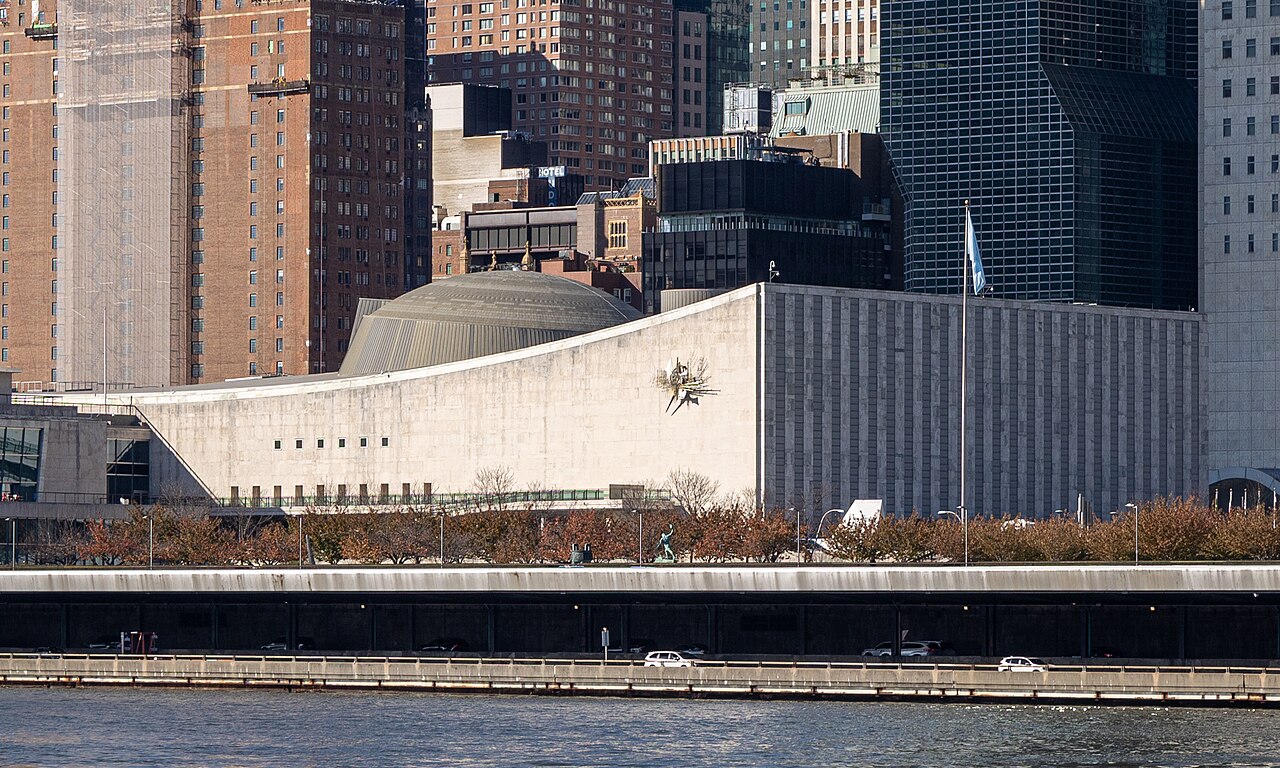
United Nations General Assembly Building, Headquarters of the United Nations, East river in New York City. Superbass · CC BY-SA 4.0
Saudi Arabia just told the UN something big.
Its Foreign Minister, Prince Faisal bin Farhan, stood up at the General Assembly a few hours ago and said Iran and the Houthis are threatening global energy security.
And he said the world has basically stopped doing anything about it.
He was in New York today, leading Saudi Arabia's delegation. He condemned what he called flagrant Iranian and Houthi attacks on his own country.
Then he named four waterways that need protecting. Hormuz. Bab Al-Mandab. The Red Sea. The Gulf of Aden.
Those four stretches of water carry a huge share of the world's oil and gas.
Prince Faisal bin Farhan says quote "the international community has been absent from assuming its responsibilities in confronting all that threatens international peace and security".
That's Saudi Arabia's top diplomat telling the UN, to its face, that it has failed.
He also rejected any attempt by Iran to charge fees or set conditions on ships passing through Hormuz. He wants shipping back to how it was before 28 February. That's the day the US-Israeli war on Iran started.
That war has now run for nearly seven months.
Since it began, Iran has disrupted shipping through Hormuz. Its ally the Houthis have done the same thing at the other end of the region, at the Bab Al-Mandab crossing.
The Houthis have seized parts of Yemen's Red Sea coast. They've imposed a naval blockade that has hit Saudi tankers. And their attacks have pushed at least 125,000 people out of their homes in Yemen since the start of this month, according to the UN's humanitarian office.
Here's the thing about the timing.
Just a few hours before Prince Faisal spoke, Saudi-led coalition forces said they'd shot down two Houthi drones heading for Riyadh and two ballistic missiles aimed at Khamis Mushait.
So this speech landed on a day Saudi Arabia was still shooting things out of its own sky.
He wasn't speaking alone, either. A day earlier, the UN Security Council put out a statement, read by France's UN envoy Jerome Bonnafont, condemning Houthi attacks on Saudi Arabia. It backed Saudi Arabia's right to defend itself and demanded the Houthis stop escalating immediately.
The rest of this story is for Silver and Gold members.
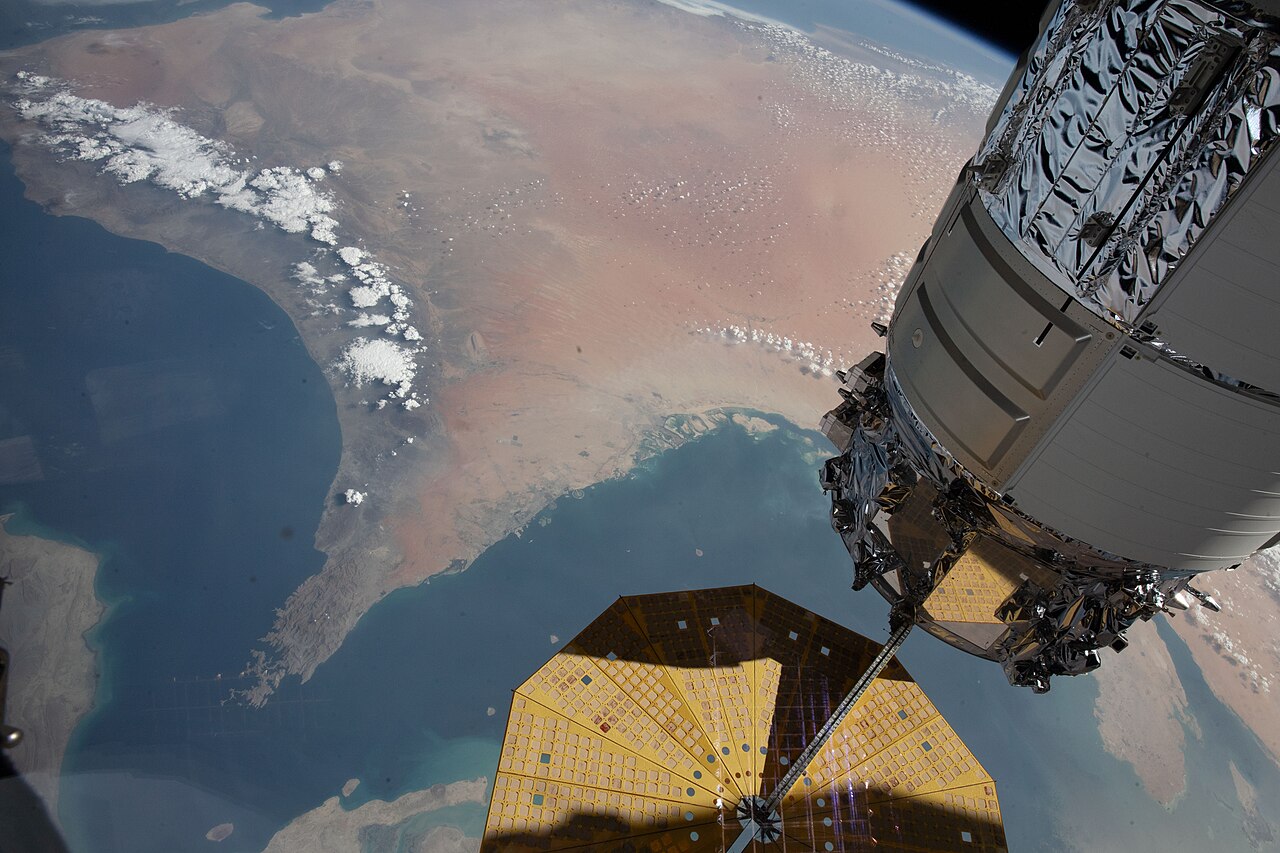
Contains NASA imagery from the International Space Station showing the Strait of Hormuz, which connects the Gulf of Oman with the Persian Gulf. NASA Johnson Space Center · Public domain
And there's something bigger happening on the very same day.
Donald Trump rejected Iran's latest offer to reopen the Strait of Hormuz. He called it unacceptable. He said he rejected the deal himself.
Iran's Foreign Minister, Abbas Araghchi, had said a day earlier that Tehran sent a seven-day roadmap through Qatar. It would reopen Hormuz and restart talks — if the US met Iran's conditions.
Those conditions: the US lifts its naval blockade on Iranian ports. Waives oil sanctions. Releases about $12 billion in frozen Iranian assets. And agrees to a regional ceasefire that covers Lebanon too.
Donald Trump said Iran wants the strait open immediately because it is losing the war so badly.
So on the same day, from opposite sides of the same argument, one of the world's biggest oil producers and the US president both rejected the idea of easing up on Iran.
But Iran tells it differently.
Iran's President, Masoud Pezeshkian, told Al Jazeera the Hormuz crisis can be solved through negotiation, not force. He denied Iran was the one blocking the strait. He said the US closed the routes first.
Abbas Araghchi said Iran will not give up its sovereign rights despite pressure and threats.
That's Iran's strongest argument. The closure follows from a war the US and Israel started. And Iran says it has already offered a way to end it.
Neither Iran nor the Houthis has answered Prince Faisal's speech directly yet.
Prince Faisal pointed to what Saudi Arabia says it has already done. More than $29 billion in humanitarian and development aid to Yemen. The largest single donor there. And he said Saudi Arabia has kept oil flowing through the war by investing in alternatives like the East-West Pipeline, which lets Saudi crude reach the Red Sea without going anywhere near Hormuz.
So what don't we know?
Whether Saudi Arabia plans anything beyond talking and intercepting. Nothing in the speech announces new military action.
We also don't know what, if anything, the rest of the world plans to do about it. Or whether this speech was coordinated with Washington.
What's clear is this. Saudi Arabia just stood in front of the UN and asked the rest of the world to pick a side.
Nothing here was paid for by an advertiser. Members are the entire business model. This story is Silver's: it opens everything we have ever written, and our investigations first.