Russia just upgraded its missiles to split Kyiv in two
2 days ago · 14 November 2026Share
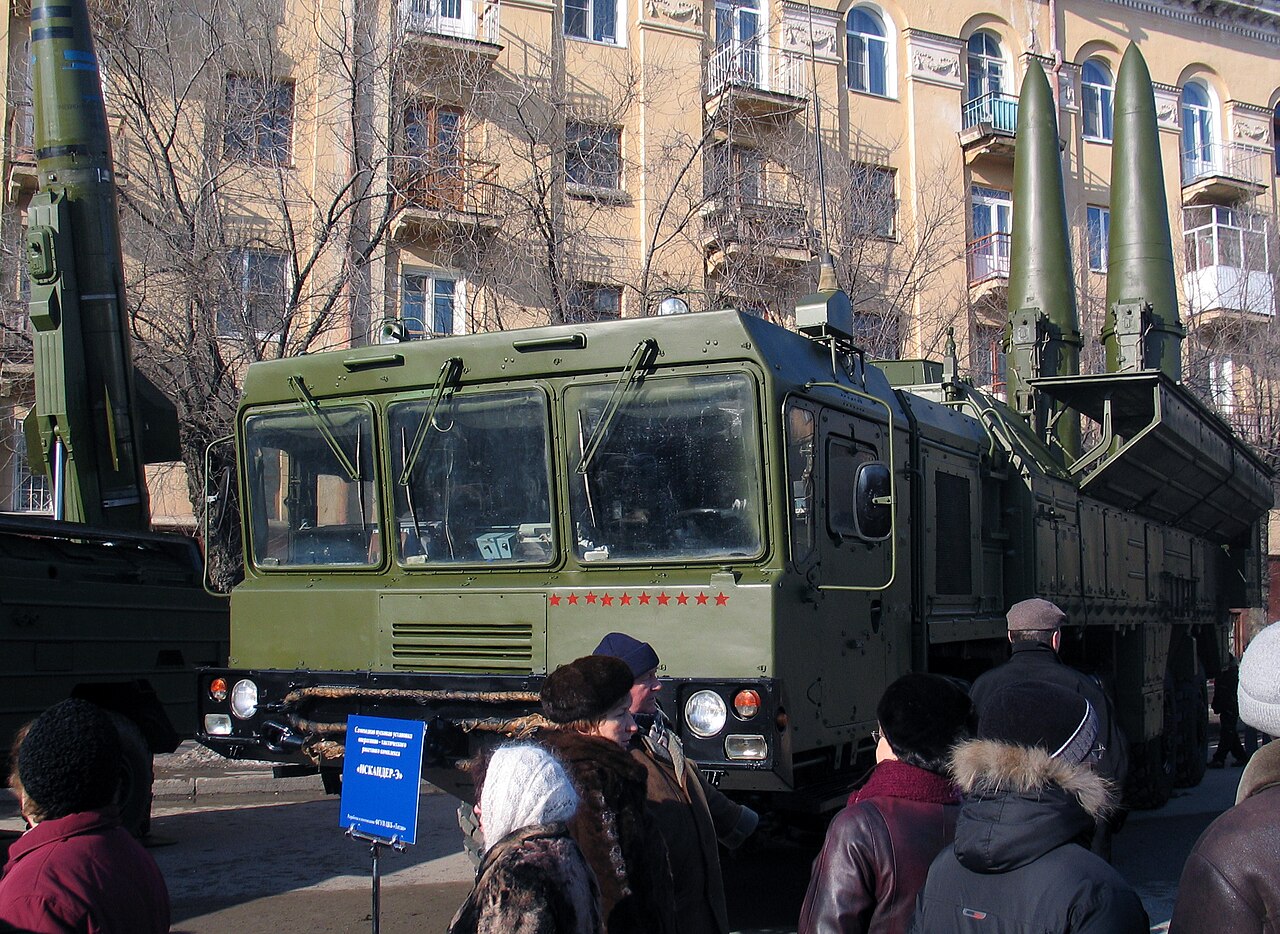
A Transporter erector launcher Iskander-E with two missiles displayed at a military equipment exhibition in Volgograd. File photo. Leonidl · CC BY-SA 3.0
Russia just gave its missiles a way to steer themselves in the final seconds before they hit.
That means an Iskander ballistic missile can now adjust course right before impact and land within a few metres of its target. Things like bridges.
Serhii Beskrestnov confirmed it. He's a Ukrainian presidential adviser, known by the callsign Flash, and he's also described elsewhere as a radio-technology expert. Either way, he's the one who explained how this works.
Kyiv Post and the Telegraph reported the detail about a day ago. Beskrestnov first posted it on Telegram around six days ago.
So how does an old missile suddenly get this accurate?
A normal Iskander flies a curved path. A computer steers it most of the way. Then gravity takes over for the last stretch, and that's always been the weak point. Wide margin of error.
Not anymore.
In the final seconds before the warhead goes off, the missile now scans the ground with radar or a camera, checks it against a stored image, and corrects its own course.
Beskrestnov and Ukraine's War and Sanctions database, run by Defence Intelligence, say the missiles are carrying one of two new heads. Either a 9E436 optical seeker or a 9B918 radar seeker. Both built for the 9M723 Iskander-M.
And here's why that's such a problem for Ukraine.
Ukraine jams GPS and other navigation signals constantly during air raid alerts. That's supposed to blind a missile that relies on satellites.
Beskrestnov says that jamming makes metre-level accuracy almost impossible through inertial navigation alone. So Russia stopped relying on a signal from space and built a seeker that just reads the ground instead.
Mauro Gilli teaches military strategy and technology at the Hertie School in Berlin. He says ballistic missiles have always had a margin of error because of their curved flight path, with the final stretch down to gravity alone. He told the Telegraph quote "Now, this has changed."
So what is Russia actually aiming this at? Kyiv's bridges over the Dnipro river.
Volodymyr Zelensky says six ballistic missiles hit the North Bridge in one night, about a week ago, with four confirmed hits.
The rest of this story is for members.
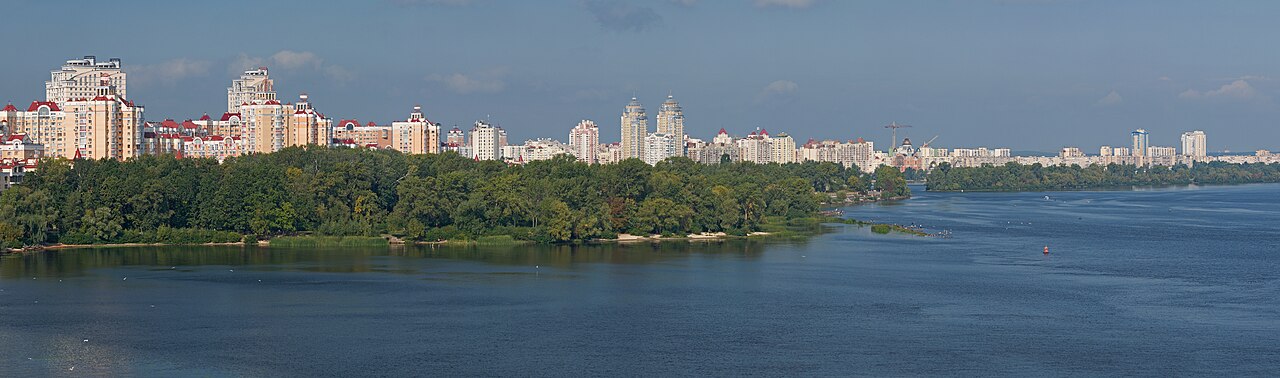
Bank of the Dnieper River near Obolon in Kyiv, Ukraine. File photo. Ввласенко · CC BY 4.0
And that's not a one-off. Russia hit Kyiv's South Bridge in early October. The North Bridge again days later. A bridge in Zaporizhzhia. The Central Bridge in Dnipro city at the end of October.
Russia hadn't touched Kyiv's Dnipro crossings at all since the full invasion started, until this campaign began around six weeks ago. It started with jet-powered drones. Then it became ballistic missiles.
Zelensky met Ukraine's commander-in-chief, Mykhailo Drapatyi, and said Russia is running a coordinated operation against bridges and power grids. The goal, he says, is to split Ukraine along the Dnipro and make life as hard as possible for people in Ukraine's cities and towns.
A Ukrainian official told the Financial Times the plan goes further. It also means disrupting power distribution from west to east, which could cut electricity for millions of people.
Maksym Beznosiuk, a fellow at the think tank GLOBSEC, told the Telegraph this isn't new. He says Russia's effort to split the power grid this way, sometimes called islanding, actually started about 11 months ago.
Now, Gilli says the strikes haven't destroyed Kyiv's bridges, and probably won't. But they've disrupted crossings, crippled public transport, and caused hours-long traffic jams. Strikes on energy infrastructure have cut electricity, heating and water to large parts of the city too.
Vitali Klitschko, Kyiv's mayor, says an overnight attack closed traffic across the South Bridge and stopped metro trains between two stations.
Kyiv residents told the Telegraph they now cross bridges on foot, out of fear. Hours-long commutes. As little as two hours of electricity a day on the left bank.
So Ukraine isn't just repairing the damage anymore. It's planning around it.
Mykola Kalashnyk, Ukraine's Infrastructure and Recovery Minister, says Ukraine plans 21 alternative river crossings, including over the Dnipro. The first one in Kyiv is due in early 2027.
A new traffic lane also opened on the South Bridge about nine days ago, according to Kyiv's city administration.
Russia hasn't confirmed any of this. No new guidance systems, nothing. Moscow calls its strikes military necessity. Ukraine calls this campaign an attempt to split the country and wear civilians down through infrastructure warfare.
And here's what's still unclear. Beskrestnov's exact title isn't agreed on. Some call him a presidential adviser, others call him a radio-technology expert. What's not in doubt is that he's the main source behind this whole story, and Russia has offered no account of its own.
No source gives a death toll tied specifically to the bridge strikes. Nobody has said whether Ukraine has found a way to beat the new seekers.
But this much is clear. A missile that used to scatter wide on its way down can now be aimed at a single lane of a single bridge. And Russia is using that precision on the crossings holding Kyiv together.
Nothing here was paid for by an advertiser. Members are the entire business model. Bronze is where it starts, and it opens the last seven days in full.