Poland just accused Russia of deliberately bombing its own airspace
7 hours ago · 25 November 2026Share
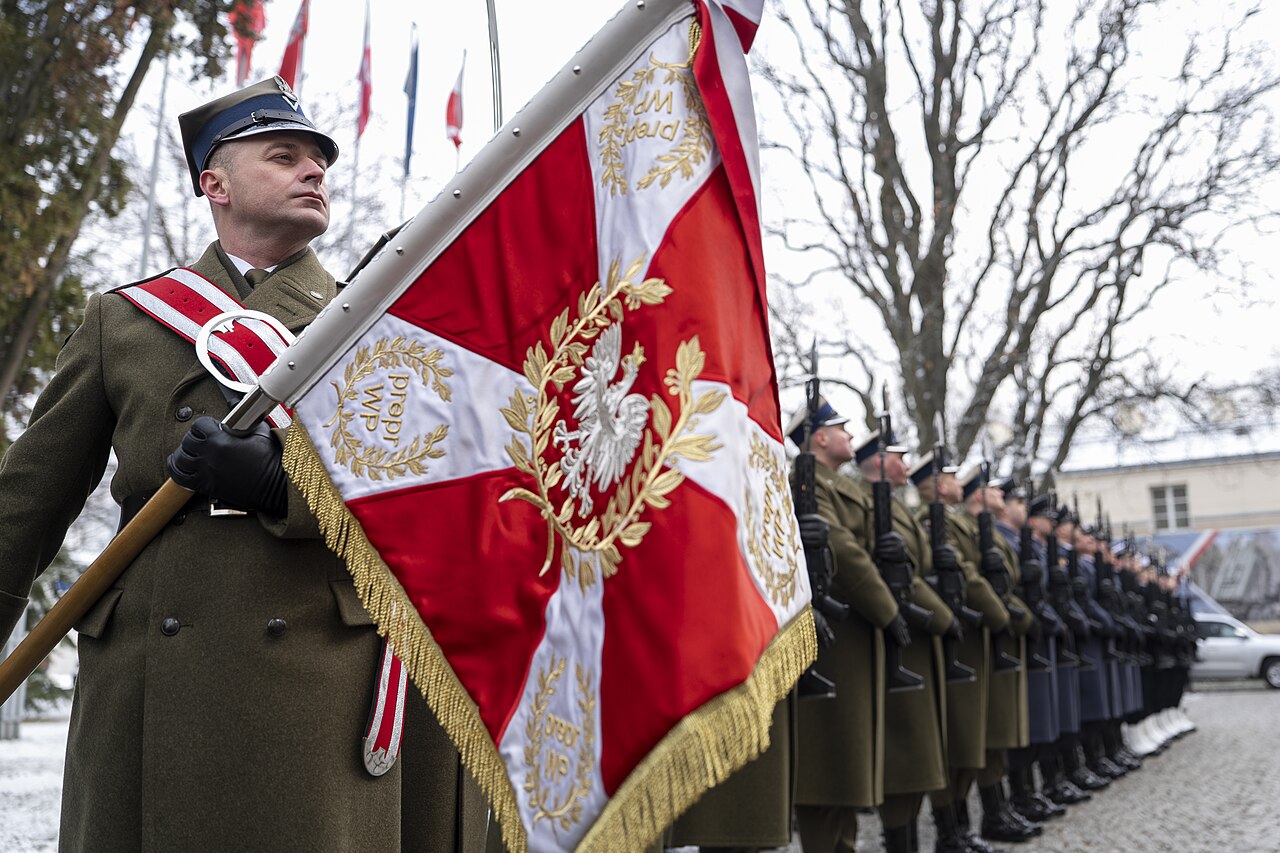
Polish troops stand at attention during the playing of the U.S. and Polish national anthems prior to a bilateral exchange between Deputy Prime Minister and Minister of National Defense Władysław Kosiniak-Kamysz and Secretary of Defense Pete Hegseth at the Klonowa Complex, Warsaw, Poland, in February U.S. Secretary of Defense · Public domain
Poland just handed Russia's ambassador a formal protest note.
Over three cruise missiles that flew into Polish airspace five days ago.
And Warsaw is now saying it straight out. Not an accident. A deliberate act.
So here's what happened. Poland's Foreign Ministry called in Russian Ambassador Georgy Mikhno a day ago. They handed him a note. Maciej Wewiór, the ministry's spokesperson, called it strongly worded. He said it carries Warsaw's firm opposition.
The note is about 20 November. That's when three Russian Kh-101 cruise missiles crossed into Poland during a big Russian attack on Ukraine. They came down in the southeast of the country.
Władysław Kosiniak-Kamysz, Poland's Defence Minister, said investigations opened at three sites. Nowy Lipowiec. Molodycz. Rudnik nad Sanem. All within around 110 kilometres of each other, near the border with Ukraine.
Donald Tusk, Poland's Prime Minister, said there was no doubt. The objects were Russian. He said quote "It seems we are dealing with an intentional provocation".
And now that view has become something much harder to take back. A formal diplomatic protest. State to state.
Maciej Wewiór said the note warns that such actions endanger Polish airspace, Polish citizens and Poland's NATO allies. He also said the Russian ambassador knows exactly whose missiles they were. He called their Russian origin indisputable.
That's not just a line. Polish prosecutors said two days ago that all three objects were Russian Kh-101 cruise missiles. Debris from the sites was made in October or November this year. In Dubna, Russia.
So why does Poland call this deliberate? Timing.
The missiles came down while Poland was hosting military exercises for the Coalition of the Willing. European troops, training near the Ukraine border, getting ready for a possible post-war mission there. Kosiniak-Kamysz pointed out that defence ministers from France, Britain and the Baltic states were in the country for those drills. So were eight chiefs of staff. He called that no accident.
The rest of this story is for members.
Satellite image of Poland in February 2003. File photo.Jeff Schmaltz, MODIS Rapid Response Team, NASA/GSFC · Public domain
Mark Rutte, NATO's Secretary-General, called the incursion clearly dangerous. He flew to Warsaw to meet Donald Tusk. Andy Burnham, Britain's Prime Minister, called the violation utterly unacceptable. He said it at an EU-UK summit in Brussels.
Russia's answer? Flat denial.
The Russian Embassy in Warsaw confirmed Mikhno was summoned and handed the note. It said he categorically rejected the accusations. Unfounded, it said. Unsubstantiated. Unsupported by evidence. The embassy went further still. It called the rhetoric around the incident openly Russophobic. It said accusing Russia on what it called tendentious assumptions is unacceptable.
Maciej Wewiór said Poland's job is to keep people safe, not to escalate things. And he warned of a disinformation campaign. One aimed at dragging Poland into a bigger fight.
That warning matters. Because this isn't a one-off.
A Russian reconnaissance drone crossed briefly into Polish airspace overnight between 23 and 24 November. Near Dorohusk. During more Russian attacks on Ukraine. The second incursion in four days.
Polish forces tracked it. They were cleared to shoot it down. They held fire once it turned back east. The reason? Risk to the people below. Stanisław Wziątek, a deputy defence minister, told public radio PR24 the drone was flying over a densely populated area. That's why it stayed in the air.
A second deputy defence minister, Paweł Zalewski, spoke about that separate drone incursion to RMF FM. He said it was hard to imagine the timing was a coincidence, and that Poland was treating it as an intentional act.
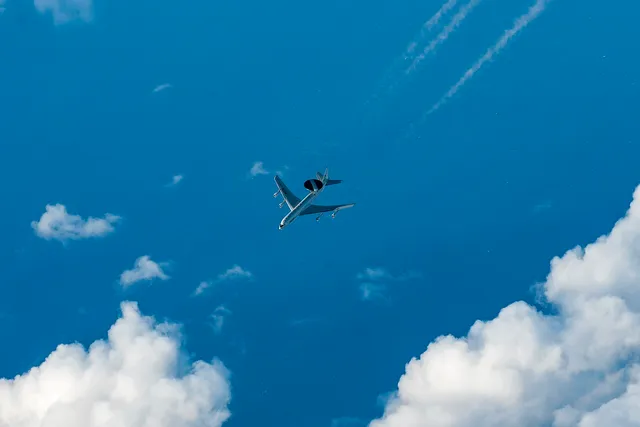
NATO is sending help. An AWACS early-warning aircraft, out of its base in Geilenkirchen, Germany. NATO says every ally stands in full solidarity with Poland and that the alliance remains ready to defend against any threat.
Poland is using this moment for something else too. Bogdan Klich, its chargé d'affaires in Washington, briefed America's National Security Council on the violations. Warsaw wants something out of this. A permanent US military presence on Polish soil.
So what don't we know? Whether Russia goes beyond its embassy's denial. Whether NATO takes any further formal step. And whether Poland's word — deliberate — comes from intelligence it hasn't shown anyone, or just from the timing. Warsaw hasn't produced evidence either way.
Two incidents. Four days apart. And Poland is now treating both the same way. Not an accident. A message.
Nothing here was paid for by an advertiser. Members are the entire business model. Membership opens everything we have ever written, our investigations first, the guides and the films, for $4.99 every 28 days or $19.99 a year.