North Korea just threatened merciless retaliation and the DMZ is on edge
1 hour ago · 2 October 2026Share
Secretary of State Michael R. Pompeo receives photos from Kim Yo Jong, sister of North Korean Chairman Kim Jong Un, in Pyongyang on October 7, 2018. File photo. U.S. Department of State from United States · Public domain
North Korea just told South Korea what happens if its troops ever fire on North Korean soldiers.
Immediate retaliation. Merciless, they say.
So how did we get here?
Eleven days ago, two landmines went off in the western DMZ, the strip of land that divides the two Koreas. Three South Korean soldiers got hurt. One of them lost a foot.
South Korea investigated. Four days ago, Lieutenant-General Kwon Dae-won, the deputy head of South Korea's Joint Chiefs of Staff, said North Korean mines were highly likely to be behind it. He pointed to the crater, the flame pattern and the injuries. The blast site sat about 10 metres from a patch where North Korean troops were believed to have recently laid mines.
Three days ago, inspectors went back and found a fourth mine. Still live.
Kang Shin-chul, South Korea's Defence Minister, told lawmakers that mine had been planted on purpose. Not washed in by rain. He said it was part of North Korea's ongoing work to seal the border.
And he called it a clear violation of the 1953 Armistice Agreement. South Korea, he said, would take what he called corresponding measures.
Two days ago, the United Nations Command, the body that oversees the armistice, backed that up. It found an active North Korean anti-personnel mine on the South Korean side of the line, and confirmed the armistice had been broken.
The same day, Lieutenant-General Kang Hyunwoo, the Joint Chiefs of Staff's director of operations, said South Korea strongly urges North Korea to apologise and take responsible measures.
So North Korea answered. And not with an apology.
Kim Yo Jong, Kim Jong Un's sister, wrote the response herself. She runs the Workers' Party's General Affairs Department, and she is the regime's loudest voice on anything to do with South Korea.
Her statement went out through KCNA, North Korea's state news agency, two to three days ago.
She called South Korea's findings a conspiratorial farce. She said North Korean soldiers have never crossed the border. And she accused Seoul of threatening them with warning broadcasts and warning shots, over what she calls a permanent border project.
Then came the warning.
The rest of this story is for members.
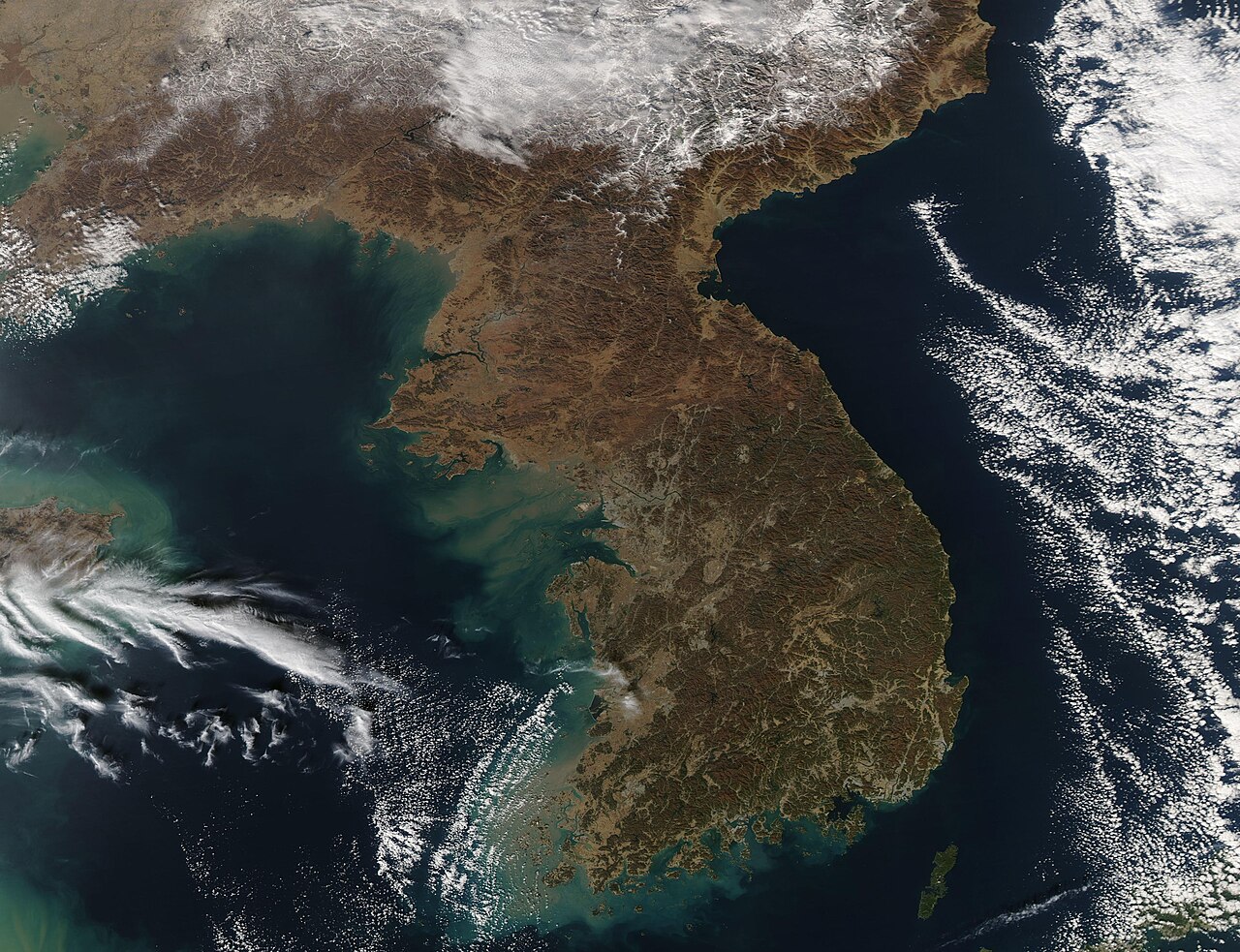
Contains modified NASA MODIS satellite data showing the Korean Peninsula, with North and South Korea divided by the border. File photo. MODIS Land Rapid Response Team, NASA GSFC · Public domain
She said quote "our border units will take immediate and merciless retaliate attack" if South Korean troops fire on North Korean soldiers carrying out that border work.
That's North Korea's most senior spokesperson on these matters, putting it in writing. Fire on our soldiers, and this is what happens.
She went further still. She said more accusations, more of what she called provocation, could lead to a situation that has not yet been experienced.
But here's the part worth slowing down on.
Kim Yo Jong said North Korea is building up its tactical counterattack strength facing South Korea's 21st Infantry Division. That's on the eastern front.
The mine blasts happened in the west. Under a completely different unit, the 25th Infantry Division.
That gap is not nothing, according to two people who study North Korea closely. Hong Min, of the Korea Institute for National Unification, and Lim Eul-chul, of Kyungnam University, both read it the same way. The statement isn't really about the mines. It's about protecting North Korea's wider border build-up from South Korean interference.
And that build-up has been running since 2024, when Kim Jong Un named South Korea as the North's principal enemy. Since then, North Korea has reinforced barbed wire, laid mines and built anti-tank barriers the length of the border. Soldiers crossing the line has gone up too. More than 20 cases were reported in August alone. For the whole of 2025, there were 17.
And this exact argument has played out before.
In 2015, two South Korean soldiers were badly hurt by a North Korean mine in the DMZ. One lost both legs. Seoul said North Korean troops crossed the line to plant it. Pyongyang denied it. South Korea responded by switching the loudspeakers back on across the border.
So what don't we know?
How the mines actually got to where they exploded. Whether North Korean soldiers crossed the Military Demarcation Line to lay them, or whether it happened some other way.
We also don't know what South Korea's corresponding measures will actually look like. Or whether this stays a war of words, or turns into something fired across the line.
The two Koreas are still, officially, at war. The 1953 armistice was never replaced with a peace treaty. The DMZ runs about 248 kilometres long and 4 kilometres wide.
And right now, on both sides of it, soldiers are waiting to see who moves first.
Nothing here was paid for by an advertiser. Members are the entire business model. Bronze is where it starts, and it opens the last seven days in full.