North Korea just planted mines that blew up South Korean soldiers in the DMZ
2 days ago · 29 September 2026Share
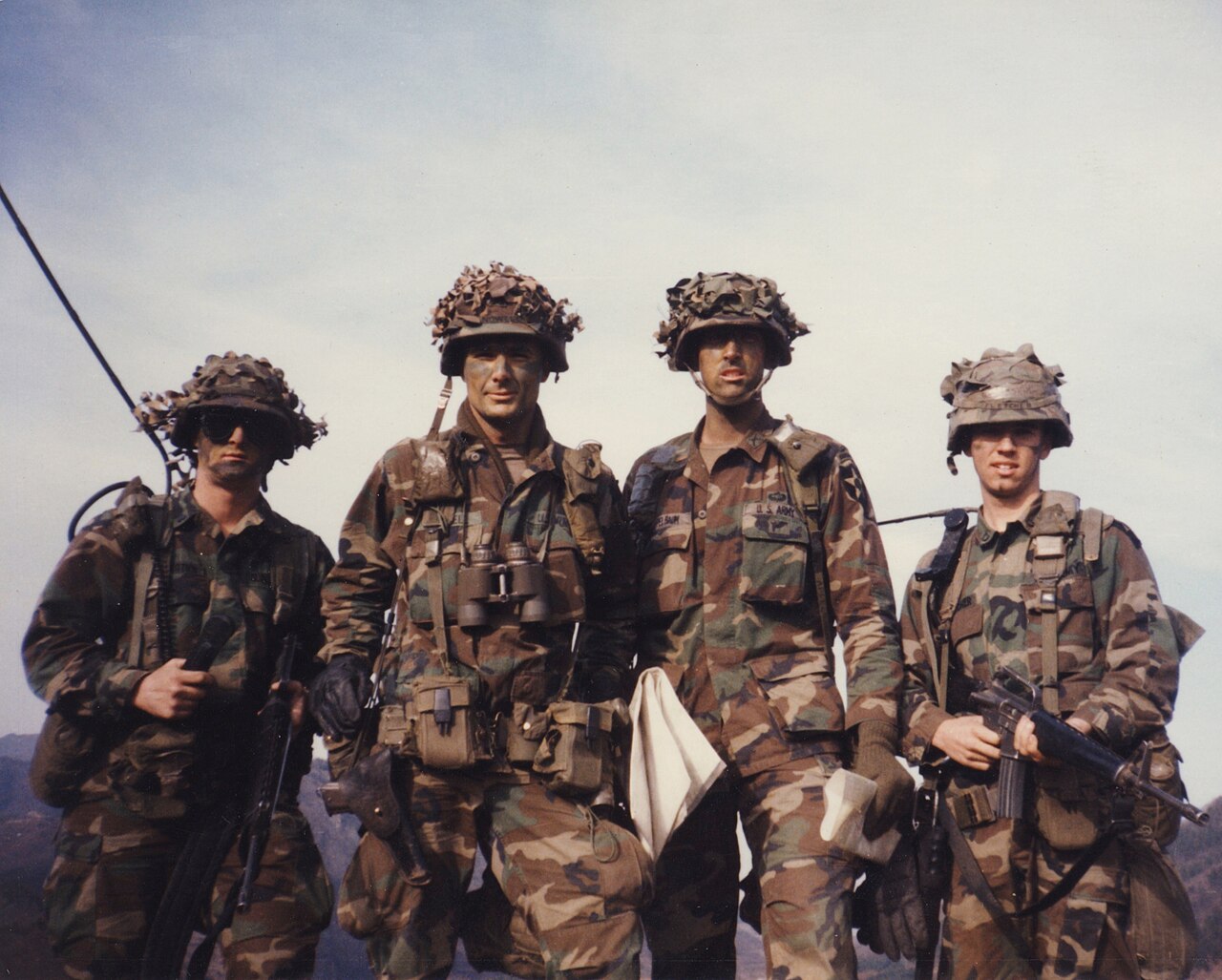
Soldiers from Charlie Company, 1st Battalion, 506th Infantry Regiment, patrol the DMZ in Korea near GP Ouellette in 1987. File photo. Hmnvtn · CC BY-SA 4.0
South Korea's government has just come out and blamed North Korea directly. Two landmine explosions. Three South Korean soldiers wounded. And South Korea is calling it a clear violation of the armistice.
Kang Shin-chul is South Korea's Defence Minister. He told a parliamentary hearing today that North Korea bears responsibility. He says quote "since North Korea bears responsibility, we will take corresponding measures."
What measures? He didn't say. Just that the military has options, and it'll roll them out in stages.
So let's go back to what actually happened.
Eight days ago, two mines went off in the western sector of the DMZ, south of the line that splits the two Koreas. Three soldiers were hurt. Two got flown out by helicopter. The third was moved by land first, then airlifted too. All three ended up at a military hospital near Seoul.
One of them lost a foot.
At first, South Korea's Ministry of Defence said it wasn't clear what caused it. That changed fast.
A day before Kang Shin-chul's statement, the ministry said North Korean landmines were highly suspected. And here's how they got there.
Kwon Dae-won is vice chairman of South Korea's Joint Chiefs of Staff. He said two mines exploded on the day in question, and a third one, unexploded, turned up as soldiers were pulling back from the site. The North Korean theory came from three things: the crater, the pattern of the flames, and how badly the soldiers were hurt.
That was suspicion. Today it became proof.
The rest of this story is for members.
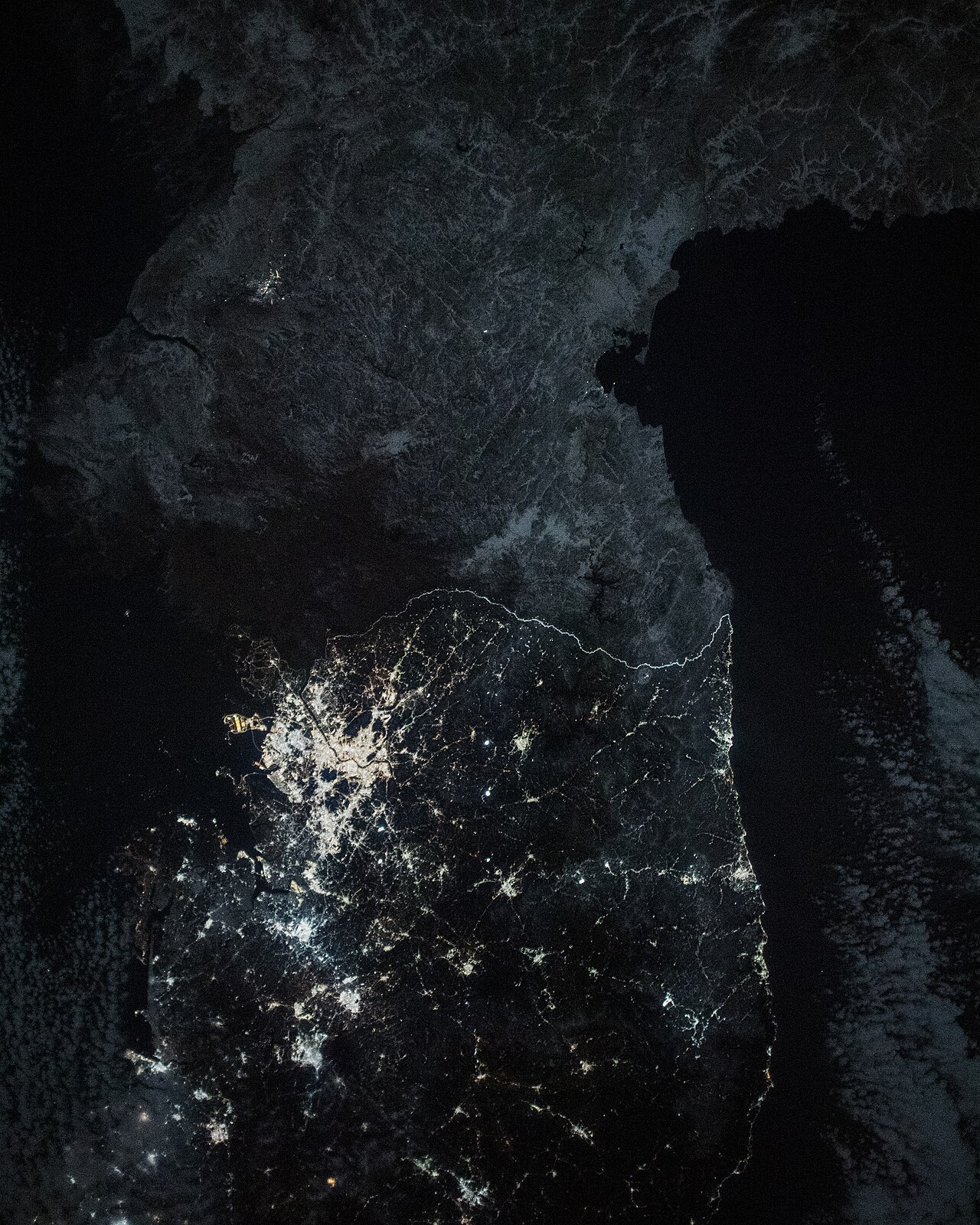
An astronaut aboard the International Space Station took this photo of the Korean Peninsula showing the distribution of nighttime light, with North Korea appearing almost devoid of lights and South Korea exhibiting lights from many cities. File photo. NASA · Public domain
Yang Jin-hyeok, an official with the Joint Chiefs of Staff, told lawmakers that investigators found an unexploded North Korean plastic anti-personnel mine right at the scene.
Not a crater. Not a burn pattern. An actual North Korean mine.
A joint team has been on site since two days before Kang Shin-chul spoke. South Korean military officials, working alongside the UN Command's Military Armistice Commission.
Now, some background. South Korea and North Korea are still technically at war. The Korean War ended in 1953 with an armistice, not a peace treaty. That's why the DMZ still exists. It runs 248 kilometres long, four kilometres wide, and is thought to hold around two million landmines.
Since 2024, North Korea's leader Kim Jong Un has called South Korea his country's principal enemy. Since then, North Korea's military has been laying mines and building anti-tank barriers along the frontier.
So here's what nobody knows yet. Was this mine planted recently, part of that 2024 build-up? Or was it laid earlier and just left there?
This isn't the first time this has happened either. Back in 2015, two South Korean soldiers were seriously hurt by a mine blast. One of them lost both legs. Seoul concluded North Korean troops had crossed the line to plant those mines. North Korea denied it. South Korea responded by restarting loudspeaker broadcasts criticising Pyongyang along the border.
But here's what's different this time. In 2015, it took tracing the mines back to soldiers who'd crossed the line. This time, investigators found the mine itself, still sitting there.
Kang Shin-chul hasn't said what the staged measures actually are, or when they start. North Korea hasn't said anything about any of this.
So right now, South Korea has physical evidence, a formal accusation of an armistice violation, and a promise of a response it still hasn't described.
Nothing here was paid for by an advertiser. Members are the entire business model. Bronze is where it starts, and it opens the last seven days in full.