Iran just threatened to invade its neighbours if America attacks again
1 hour ago · 13 October 2026Share
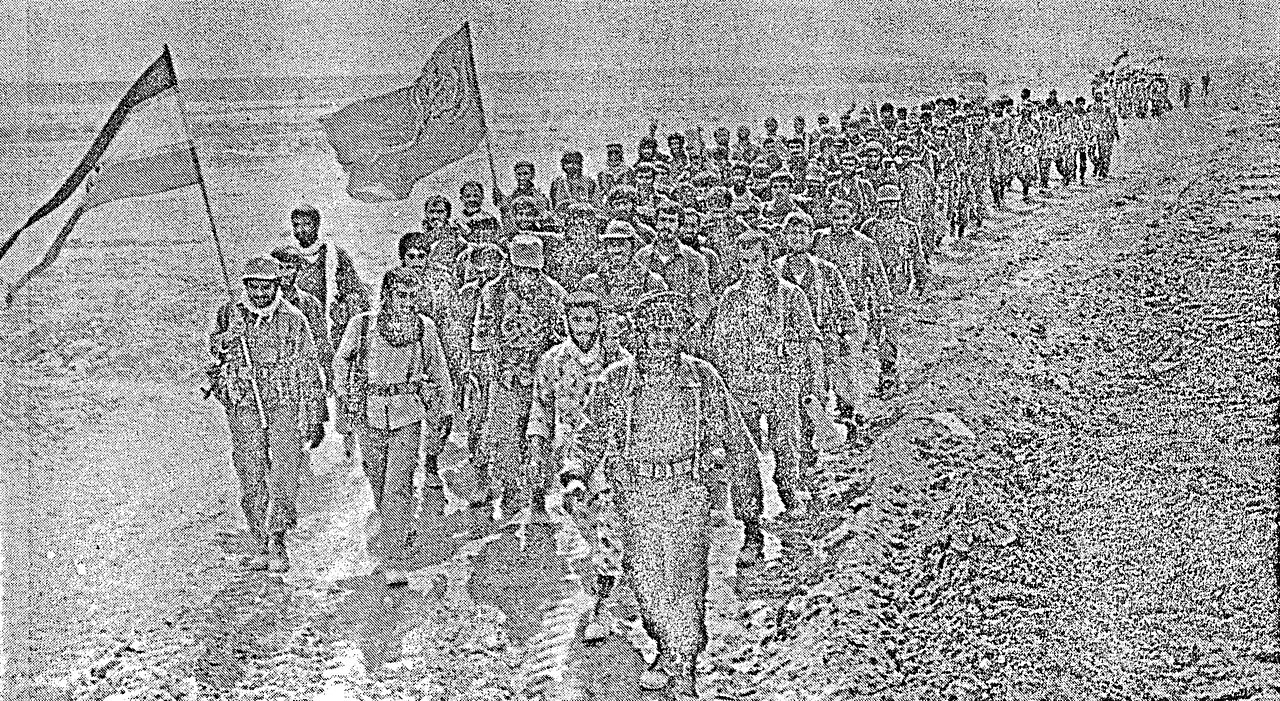
Islamic Revolutionary Guards column in 1981. File photo. Staff of the newspaper · Public domain
Iran is privately warning it could send troops across its borders into neighbouring countries.
And that's only if the US bombs Iran again.
The Wall Street Journal broke this one, pointing to people close to the warnings. No officials named. No countries named. No timing given either.
So here's what we do know.
This isn't a new strike. It's a report about warnings Iranian officials gave in the days before, some privately to regional governments, some out loud. So this is the next chapter of a known story, not something breaking right now.
The clearest public version came from Mohsen Rezaei. He's Iran's top national security official, the Secretary of its Supreme National Security Council. Two days ago he said Tehran could target the United Arab Emirates, a country Iran has mostly left alone since late spring. He also named regional data centres and internet cables as targets. Iran has separately told Arab officials it could hit Saudi oil facilities if the war starts up again.
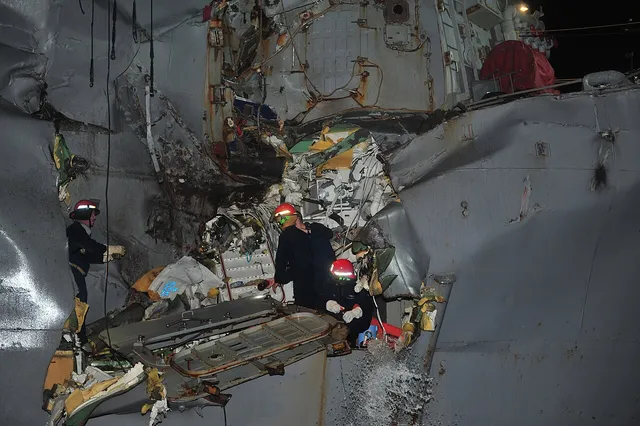
And it gets more aggressive than that. Tehran has told mediators it would go harder after American troops too, including trying to sink US warships in the region. Iranian missiles already came close to American ships last month.
So the threat has widened. Up to now, Iran's war has run on missiles, drones, cyberattacks and attacks at sea. Sending troops into other countries would be something completely different. That's a land war, not a missile war.
Here's why the timing makes sense. Three days ago, Iran-backed Houthi fighters in Yemen fired a missile at Riyadh's international airport. At least 13 people were killed. Hundreds more were wounded. The Wall Street Journal calls it the deadliest single attack on the US or its Gulf allies since this war began.
The same weekend, at least three commercial ships were hit in and around the Strait of Hormuz. An Emirati tanker, the Petro Dolphin, caught fire near Oman after a drone strike. Two Indian sailors are still missing.
And Iran is preparing at home too. Satellite pictures from Vantor, looked at by the Institute for Science and International Security, show Iran built dirt mounds and other defences last month. They're around the Pickaxe Mountain nuclear site — also called Kuh-e Gholhak in Persian — and around Natanz. The point is to make a ground raid harder.
Rafael Mariano Grossi runs the UN's nuclear watchdog. He told Bloomberg Television there are quote "some indications" of movement at Pickaxe Mountain. But he says there's no solid information on what's actually happening there.
The rest of this story is for members.
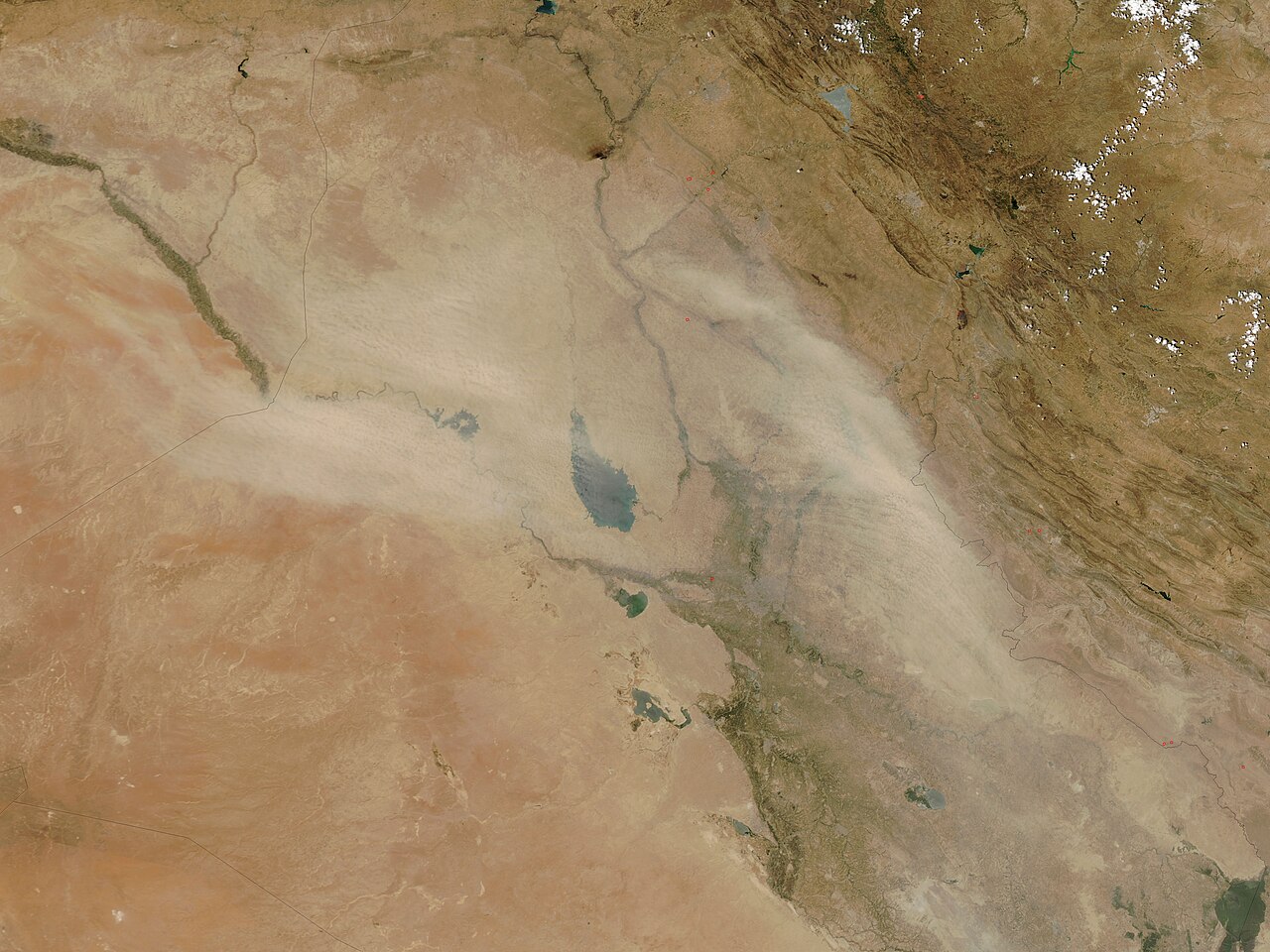
Contains modified Copernicus Sentinel data showing a dust storm crossing the Iran-Iraq border region. File photo. Jeff Schmaltz, MODIS Land Rapid Response Team, NASA GSFC · Public domain
Iran's supreme leader, Mojtaba Khamenei, praised efforts last month to rebuild missile and drone production. He also acknowledged supply problems. Brig. Gen. Gholamreza Jalali runs Iran's contingency planning. He said at the end of last month that Iran's airports, seaports and power plants have already prepared for wartime conditions. And in Tehran right now, billboards are advertising civilian training courses in shoulder-fired anti-aircraft missiles and sniper rifles.
The United States hasn't commented on these warnings. But it isn't sitting still either.
A third US aircraft carrier strike group is heading to the Middle East. So is another Marine expeditionary unit. The Pentagon is weighing sending more air-defence equipment and weapons to bases in the region too. Last week it moved a dozen B-1 bombers out of a UK base, over concerns that Iran's Revolutionary Guard had planned a drone attack there.
Donald Trump said last week the US wouldn't strike Iran before the 3 November midterm elections. But he's also said he's considered hitting the Pickaxe Mountain site directly. And people familiar with the planning say the military is working up options for new strikes right now.
So why haven't the two sides already gone back to war? Direct fighting between the US and Iran has mostly been on hold since Trump called off a planned escalation two and a half months ago, partly because of concerns about running low on missile interceptors.
Here's the thing about Iran's threats though. People who study the region say the gap between what Iran says and what it can actually do is the whole point. Iran has very little ability to defend against advanced US jets, high-altitude bombers or cruise missiles. So the threats cost it nothing, and they might work anyway.
Behnam Ben Taleblu runs the Iran programme at the Foundation for Defense of Democracies. He says Iran's preparations are both deterrence and genuine war planning at the same time.
Sanam Vakil is the Middle East director at Chatham House. She says Iran's war footing is working well for its leadership right now, because it's stuck everywhere else.
So what don't we know? A lot, actually. The Wall Street Journal hasn't said which neighbouring countries Iran is hinting about. It hasn't named which officials gave the warnings. It hasn't said exactly when the private conversations happened.
Nobody can say yet whether this is real planning for a wider war, or a bluff aimed at a White House that already backed off once this year.
Right now both sides are doing the same thing. Building up forces. Making threats. And waiting to see what happens after 3 November.
Nothing here was paid for by an advertiser. Members are the entire business model. Bronze is where it starts, and it opens the last seven days in full.