Iran just lost the Strait of Hormuz and America is closing the land routes too
18 hours ago · 8 November 2026Share
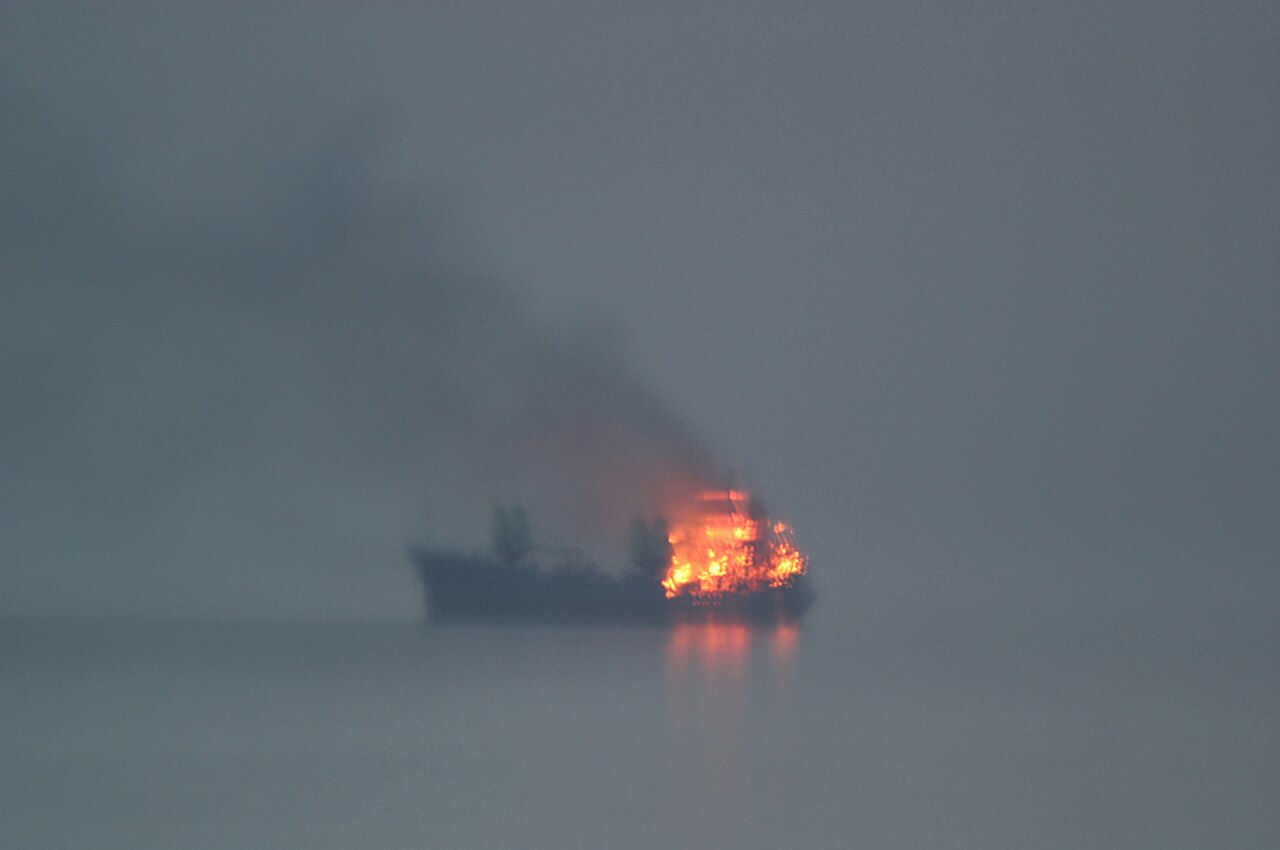
Motor Vessel Olympias burns in the Persian Gulf off the coast of Iran. File photo. U.S. Navy photo by U.S. Naval Forces Central Command · Public domain
Explosions just hit Iran's southern coast.
And two oil tankers caught fire in the Strait of Hormuz after hitting mines.
So what's going on? The US is opening a whole new front in its blockade of Iran.
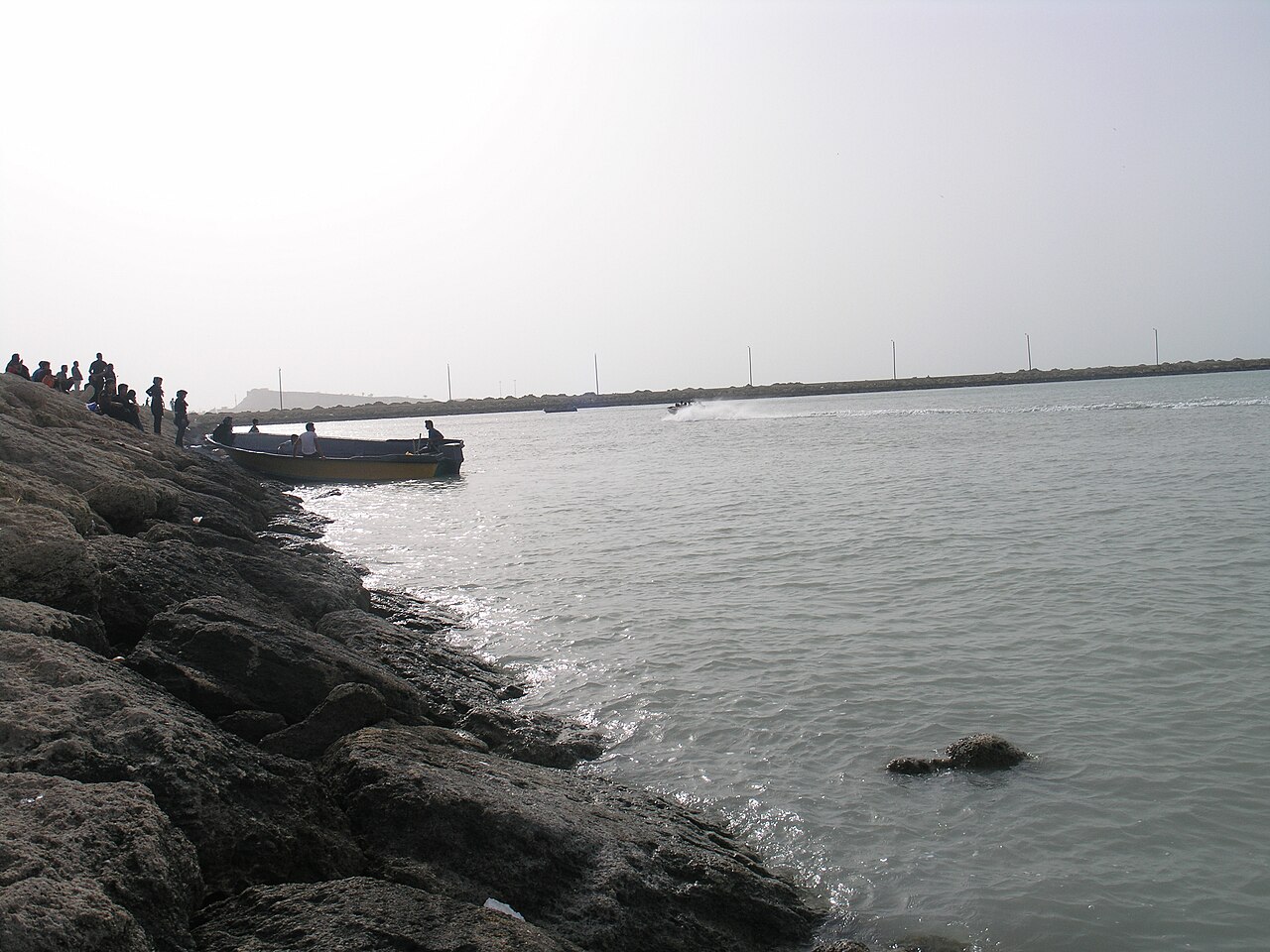
First, the explosions. Iran's state news agency IRNA says at least two blasts went off on Qeshm Island a few hours ago. Qeshm sits right inside the Strait of Hormuz, the narrow gap at the mouth of the Gulf. IRNA also reported several blasts further along the coast, in Jask, Sirik and Bandar Abbas.
Nobody has said for certain what caused them. Iranian reports suggest it might be Iran's own military activity in the strait. But a source quoted by Tasnim, another Iranian state outlet, said no projectile hit the island at all.
Then there are the tankers. Iran's Revolutionary Guard navy says two oil tankers struck mines near the strait and caught fire. Iranian state television, citing the navy, says the ships had their navigation systems switched off and were passing through an unsafe, unauthorised route when they hit the mines.
The UAE says it rescued 22 people from a cargo ship that caught fire after that report came in.
So that's three separate incidents in the same stretch of water, within hours of each other. And right now, nobody outside Iran's own military has confirmed what caused any of them.
The tankers' names, flags and cargo haven't been released. There's no confirmed number of people killed or wounded either.
Now here's the American side of it.
US Central Command says one of its aircraft fired precision-guided munitions at the stern of a ship called the M/V Huda. It's a St Kitts-flagged vessel. The strike disabled it in the Gulf of Oman. CENTCOM says the crew ignored repeated warnings and tried several times to break through the US naval blockade on Iran before the ship was hit.
The rest of this story is for members.
Persian Gulf coast at Qeshm Island, Iran. File photo. mohsen barazandeh ah… · CC BY-SA 3.0
That blockade has been running since July. CENTCOM says it has stopped Iran exporting more than 25 billion dollars in crude oil in that time. It says it has redirected 147 commercial vessels that agreed to turn back, and disabled five merchant ships that refused.
And now the US is taking the same fight onto land.
Admiral Brad Cooper runs US Central Command. He ordered a new unit called Task Force Iron Gate to stand up a day before the explosions. It's based in Tampa, Florida, with around 20 military and civilian staff. Its job is to work with other US agencies and stop advanced weapons, dual-use technology, sanctioned materials and illegal revenue moving across Iran's land borders and over the Caspian Sea.
Brad Cooper says quote "ironclad blockade" to describe what's already working against Iran at sea. So the new task force is meant to back that up on land.
The US has now gone after Iran's supply lines by sea. And it's going after them by land too.
This didn't start today. Two days ago, Donald Trump said US forces had carried out new, limited strikes on Iran, hitting an Iranian air-defence system. He called it minor. One American official said that strike followed Iran's Revolutionary Guard trying to hit a US aircraft with a missile fired from Qeshm Island days earlier.
Iran answered a few hours ago. Its Revolutionary Guard says it has lifted a self-imposed limit that had capped its ballistic missiles at 2,000 kilometres. Removing that cap would put parts of Greece and the Balkans, the Arabian Peninsula, the Levant and most of Egypt within reach of Iranian missiles for the first time.
And even with all this going on, there's still a diplomatic track running underneath it.
Two unnamed officials told the Associated Press that Iran is reviewing Qatari-mediated proposals meant to settle its dispute with the US over its nuclear programme. Donald Trump discussed Qatar's mediation role in a call with Qatar's Emir two days ago.
So what don't we know? Whether the Qeshm and Jask blasts were Iran's own doing, leftover damage from Friday's US strike, or a brand new American action. The cause of the mine strikes on the tankers is still unconfirmed. Nobody has released the tankers' identities or how many people were killed or wounded.
So right now, Iran is fighting a blockade at sea, about to face one on land, talking about missiles with no range limit left, and still, reportedly, reading a peace proposal on the side.
Not good news, I hope Iran can pull out of this murder scene, lauriemillerjade.com
14 hours ago
Readers, not advertisers
This reporting was funded entirely by readers.
Nothing here was paid for by an advertiser. Members are the entire business model. Bronze is where it starts, and it opens the last seven days in full.