Iran just gave America a four day deadline over the Strait of Hormuz
6 days ago · 25 September 2026Share
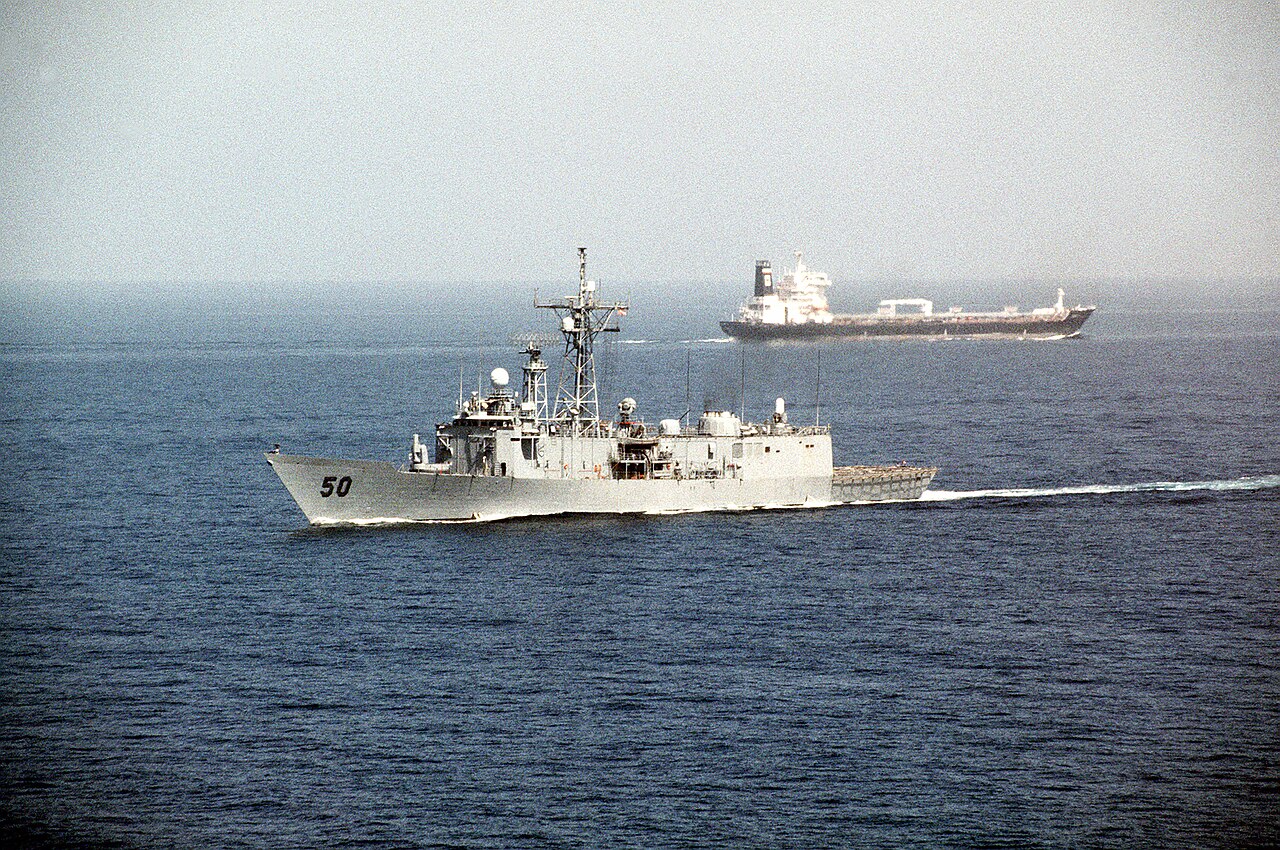
A guided missile frigate passes a tanker after transiting the Strait of Hormuz during Operation Desert Shield. File photo. Department of Defense. American Forces Information Service. Defense Visual Information Center. 1994 · Public domain
Iran just told the US: you've got four to five days.
Act on our terms, or the Strait of Hormuz stays shut.
That's what Mohsen Rezaei said. He runs Iran's Supreme National Security Council. He said it on TV about two days ago.
His words: he says quote "Talk is enough. Negotiations are enough. Now we must act."
So what has to happen in those four to five days? Iran's conditions get met. All of them. All at once.
And here's the catch. Iran won't reopen the strait. Won't even go back to the table. Not unless Washington moves first.
What happens if the deadline passes? Rezaei didn't say. He said Iran will decide its next step after the clock runs out.
And here's the twist. This is a harder line than Iran was taking just days earlier.
Back then, Iranian officials said the strait could reopen in seven days if the US just eased up militarily and lifted its blockade on Iranian ports.
Now Iran wants action first. Nothing agreed on when talks even happen.
The demands themselves aren't new. Iran's Foreign Minister, Abbas Araghchi, laid out seven preconditions in talks in New York this week.
Iran has also handed the US a written road map to end the war. It includes a regionwide ceasefire lasting up to 60 days. A phased reopening of the strait. And an end to the American naval blockade.
Iran's own officials say the conditions include lifting US sanctions and stopping military action on every front.
The rest of this story is for members.
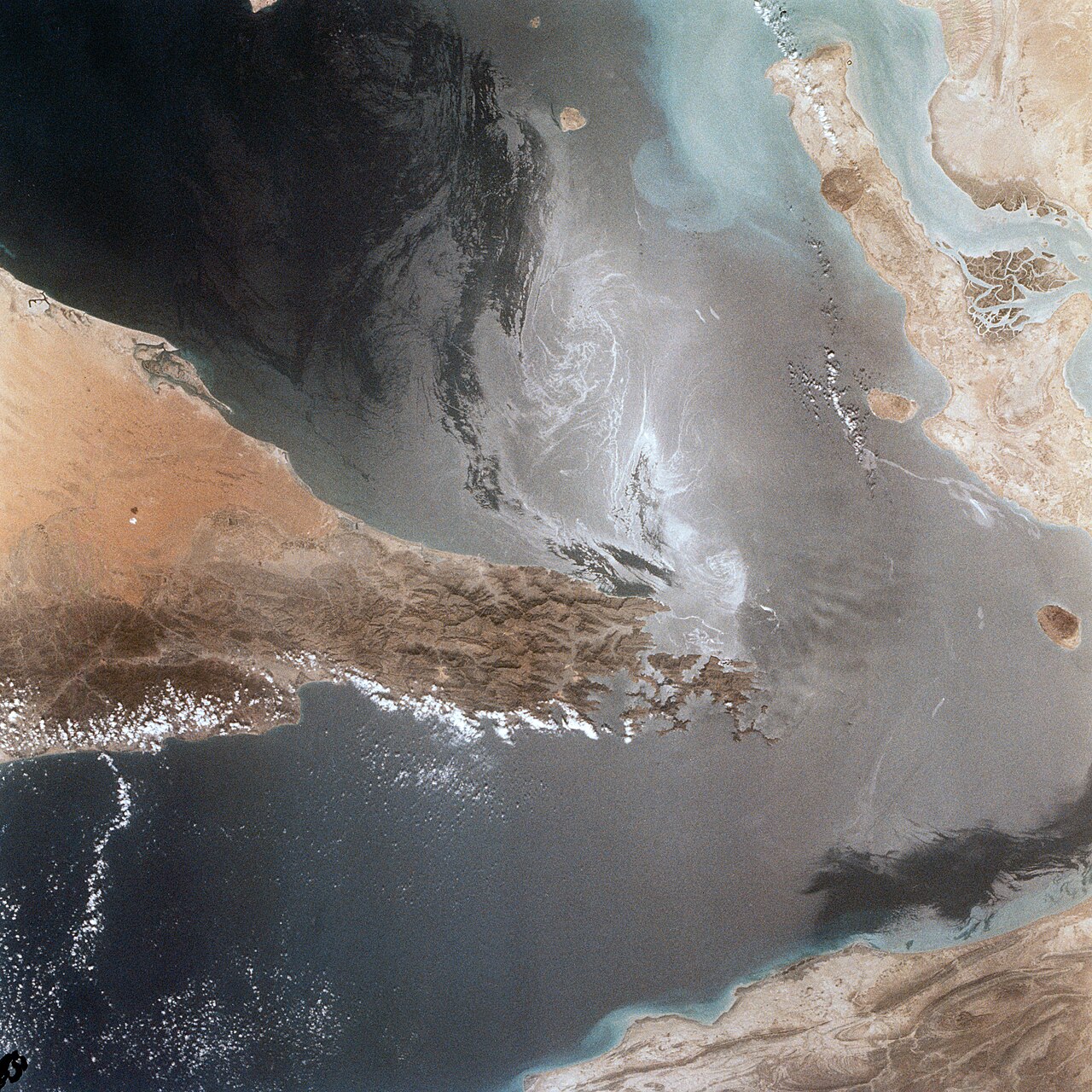
Portions of Oman, the United Arab Emirates and Iran are seen at the Strait of Hormuz with ship wakes visible in the waterway. File photo. NASA · Public domain
Rezaei told Al Jazeera something similar earlier this month. End the war everywhere. Release Iran's frozen funds. End the blockade.
So is Washington calling this a breakthrough? No.
Marco Rubio, the US Secretary of State, says it would be wrong to describe the talks that way.
Steve Witkoff, the US special envoy, met Abbas Araghchi earlier in the week to go through the terms directly.
And there's another voice raising the stakes. Major General Rahim Safavi, a senior Iranian military figure, warned that a new war started by the US could open another front entirely — at the Red Sea and the Bab al-Mandab Strait, near Yemen.
And the oil market is already feeling this.
Brent crude is trading at around $107 a barrel this week.
Shipping data from Kpler shows transits through Hormuz have averaged 6.98 million barrels a day over the seven days to 20 September. That's about 38% of the 18.3 million barrels a day that moved through before the war.
There was one small opening, though.
Ed Miliband, the UK Foreign Secretary, met Abbas Araghchi in New York. Their first meeting in a year. And the first contact between UK and Iranian ministers since Britain proscribed the Revolutionary Guard as a terrorist organisation in July.
So what don't we know? Whether Washington will respond to the deadline at all. What Iran actually does if it passes with no American answer.
Iran hasn't said. The US hasn't said whether it accepts these terms, rejects them, or plans to negotiate inside the window Tehran just set.
For now, the strait stays part-closed. Oil stays above $100 a barrel. And the clock Mohsen Rezaei set is still running.
Nothing here was paid for by an advertiser. Members are the entire business model. Bronze is where it starts, and it opens the last seven days in full.