Iran just gave America a deal and a war threat together
19 September 2026 · 19 September 2026Share
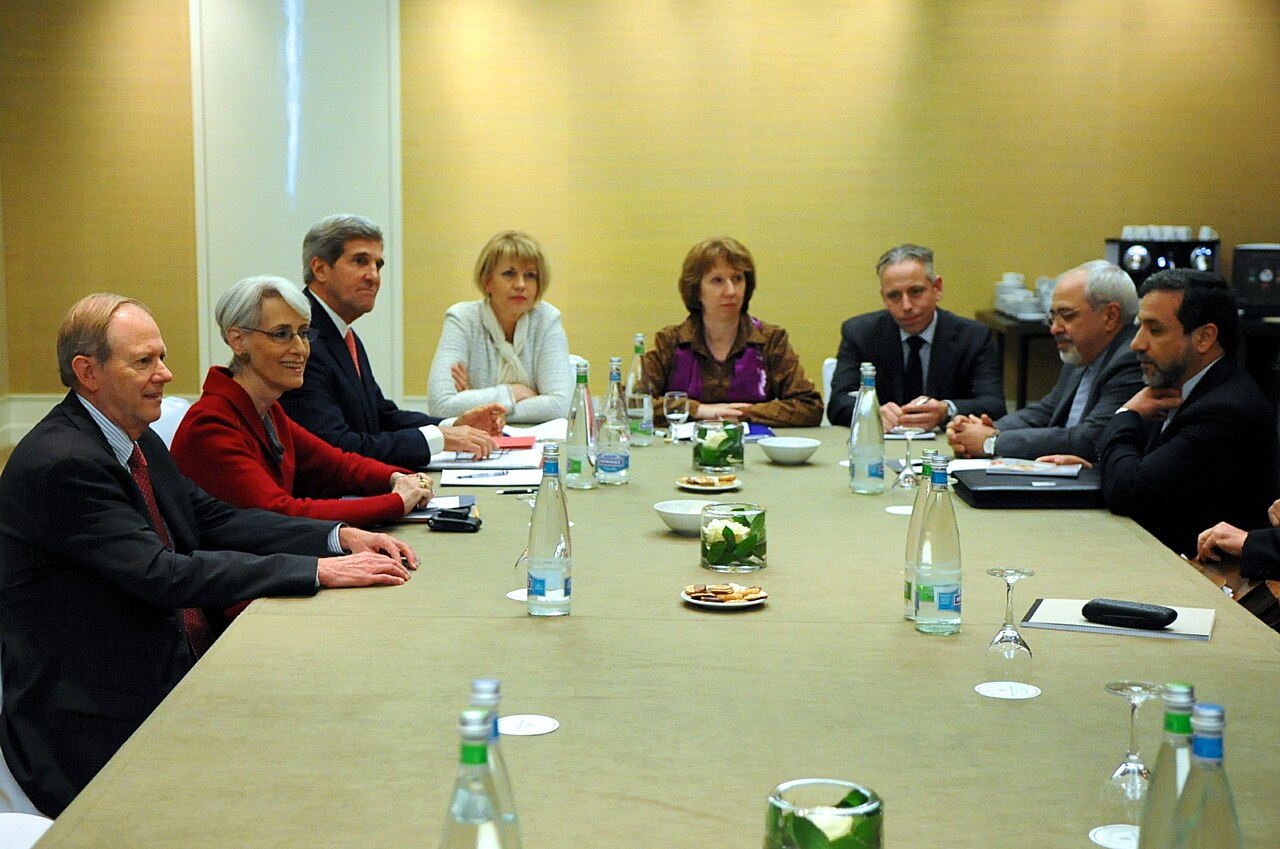
U.S. Secretary of State John Kerry meets with EU High Representative Catherine Ashton and Iranian Foreign Minister Mohammad Javad Zarif for a trilateral discussion on Iran's nuclear capabilities in Geneva, Switzerland on November 9, 2013. File photo. U.S. Department of State from United States · Public domain
Iran just sent its terms for ending the war to America.
Through Qatar. And now it's waiting for President Trump to answer.
Mohsen Rezaei is the man who said it. He runs Iran's Supreme National Security Council, a job he's had for about a month. He told Al Jazeera less than an hour ago.
So what are the terms? Three of them.
End the war on every front. Release Iran's frozen money. And end the US naval blockade.
Rezaei says Qatar has already handed those three points to Washington. He says quote "We remain in contact with the mediator Qatar, which has conveyed our conditions to Washington."
That's Iran saying the ball is in America's court now.
But he didn't stop at a deal. He added a warning.
He told Al Jazeera that Washington's interest lies in accepting these conditions, that Trump's threats will not achieve anything, and that Iran is prepared for what he called a decisive war.
So read that again. An offer and a threat, in the same breath.
Al Jazeera's man in Tehran, Tohid Asadi, called it a two-sided message. Open to talks. And still getting ready for a bigger fight. That's been Iran's move through this entire war.
Rezaei didn't rule out America striking Iran again either. He called that very much on the cards. But he says Iran is ready regardless.
He says Iran's military planning has shifted. It's now focused on US ships in the Gulf, the Gulf of Oman and the Arabian Sea. Some targets reach as far as the Indian Ocean.
And here's a claim worth treating carefully. Rezaei says Iran recently test-fired a multi-warhead missile built to hit ships, near a US vessel. Nobody else has confirmed that. Not the US Navy. Not anyone. It's his word alone, and he gave no date.
So where did this war even start?
The rest of this story is for Silver and Gold members.
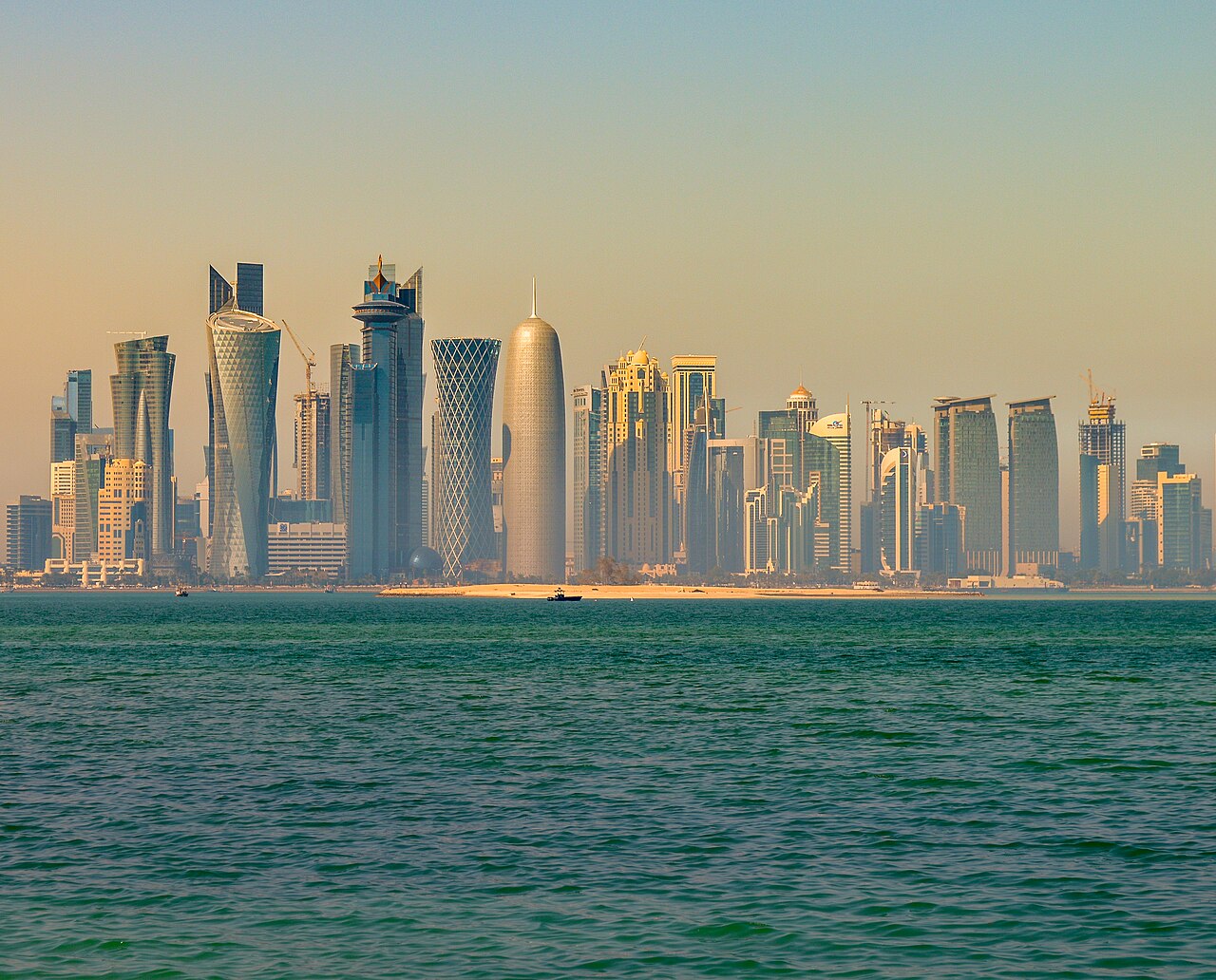
Doha skyline in the morning. File photo. Francisco Anzola · CC BY 2.0
28 February. The US and Israel struck Iran and killed its Supreme Leader, Ayatollah Ali Khamenei. Iran hit back at Israel and at US bases in the Gulf. A memorandum of understanding between the two sides expired last month. Qatar and Pakistan have been trying to restart talks ever since.
Three days ago, Donald Trump told reporters the US is close to the end of the war with Iran, and that Iran wants a deal. He even said he'd heard from Iran directly.
But Iran hasn't confirmed any direct contact with Washington. And four days ago, before Trump said any of that, Rezaei said publicly there'd be no talks until Iran's conditions were met. He accused Trump of sending mixed signals.
So the two sides can't even agree on whether they're actually talking to each other.
And while this plays out, Washington hasn't eased up. Two days ago, Treasury Secretary Scott Bessent announced new sanctions on a Bitcoin exchange tied to Iranian financier Babak Zanjani. Part of what the Treasury calls Operation Economic Outcast.
So how is Washington likely to read Rezaei's offer? A former Pentagon official gave Al Jazeera his honest guess.
David Des Roches used to run Arabian Peninsula affairs at the Pentagon. He says quote "they would be viewed as surrender."
That's a former US defence official saying Washington probably won't take this seriously.
But he did flag one real shift. Iran seems to have dropped an earlier demand for war reparations. Des Roches called that a sign of movement.
Rezaei also pushed back on America's claim that Iran broke the earlier memorandum by hitting an oil tanker in the Strait of Hormuz. He says Iran only acted after the US bombed Bandar Abbas and an Iranian surveillance platform there.
And on nuclear weapons, Rezaei says Iran hasn't decided to leave the Nuclear Non-Proliferation Treaty. Though he says continued US and Israeli conduct could push Tehran into withdrawing.
The White House hasn't said a word about Rezaei's conditions yet.
So here's what we don't know. Whether Trump answers publicly, or quietly through Qatar and Pakistan. Whether these three conditions are Iran's whole position, or just an opening bid. And whether the US and Iran are really talking directly at all.
Right now, Iran has put its terms on the table, in public. And it says it's ready either way. For a deal. Or for what Rezaei calls a decisive war.
Nothing here was paid for by an advertiser. Members are the entire business model. This story is Silver's: it opens everything we have ever written, and our investigations first.