Iran just bombed a US military vessel and the Pentagon hid it for two weeks
3 days ago · 28 September 2026Share
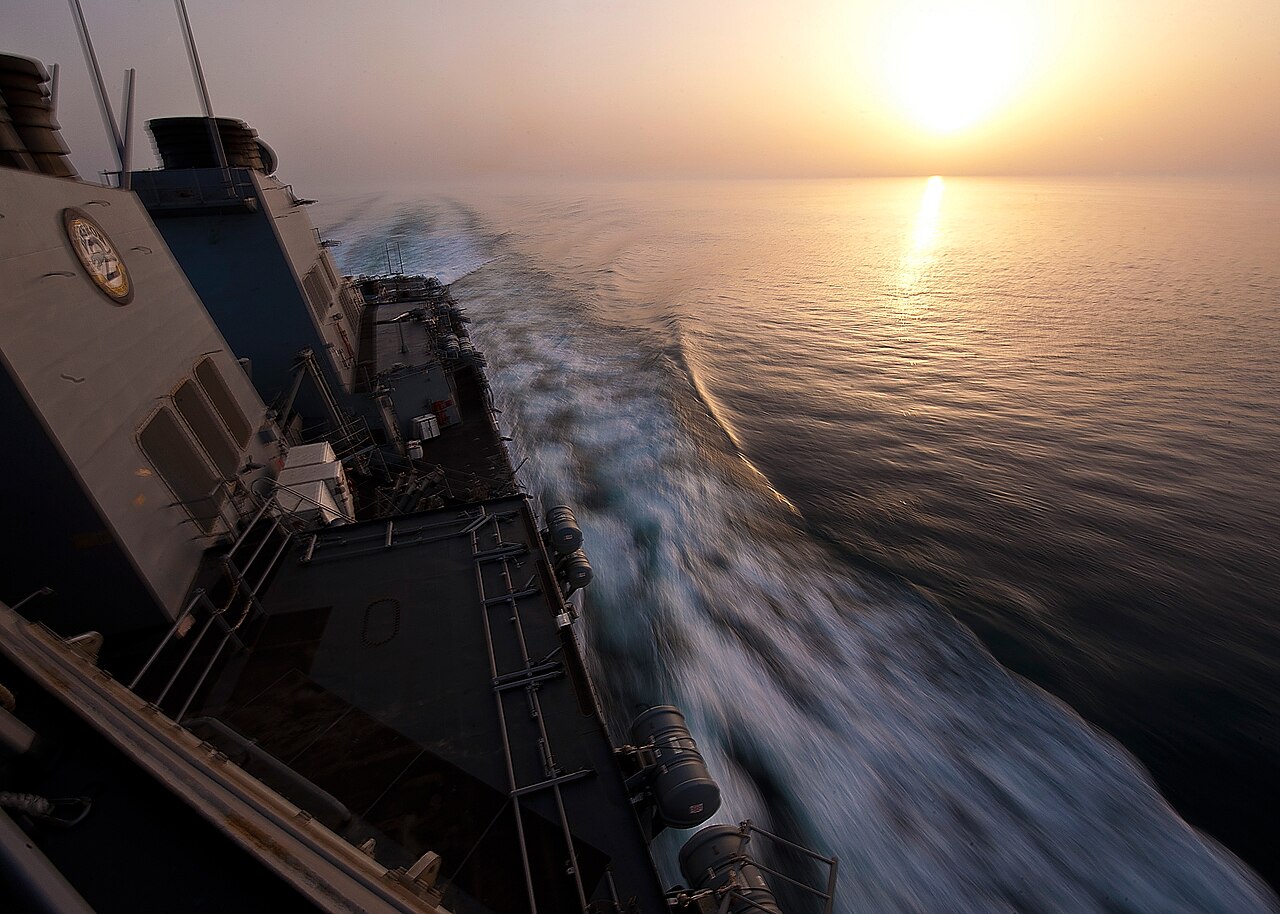
The guided-missile destroyer USS Porter transits the Strait of Hormuz. Official Navy Page from United States of America Alex R. Forster/U.S. Navy · Public domain
Eight US Marines got hurt two weeks ago.
An Iranian cruise missile hit the vessel they were on, in the Strait of Hormuz.
And the Pentagon never told the public it happened.
Here's how we know. Three US officials told NBC News about it last night. The attack happened on 14 September. Before this, the Defense Department had never reported any attack on US forces that day. Nobody had reported it at all.
So how badly were they hurt? Not seriously. They breathed in smoke. They had headaches and symptoms that match concussion. That raises the chance of brain injury. All eight went back to duty soon after.
Seven were enlisted Marines. One was an officer. They were part of a battalion landing team.
Now here's what officials are still holding back.
The Marines were not on a US Navy ship. Officials would only call it a "maritime vessel." They wouldn't say what type. Not the flag. Not the size. Not where exactly it was hit.
That's strange, for an attack the Pentagon is now confirming actually happened.
So why did it take two weeks to come out?
The injuries only showed up in the Pentagon's own casualty database about ten days after the attack. That's roughly four days before the story broke. That database showed 861 US troops hurt in the war with Iran as of the Wednesday before. It doesn't say where or when the eight Marines were hurt.
One US official said this kind of reporting can lag. Some symptoms take time to show up. The database doesn't update in real time.
The rest of this story is for members.
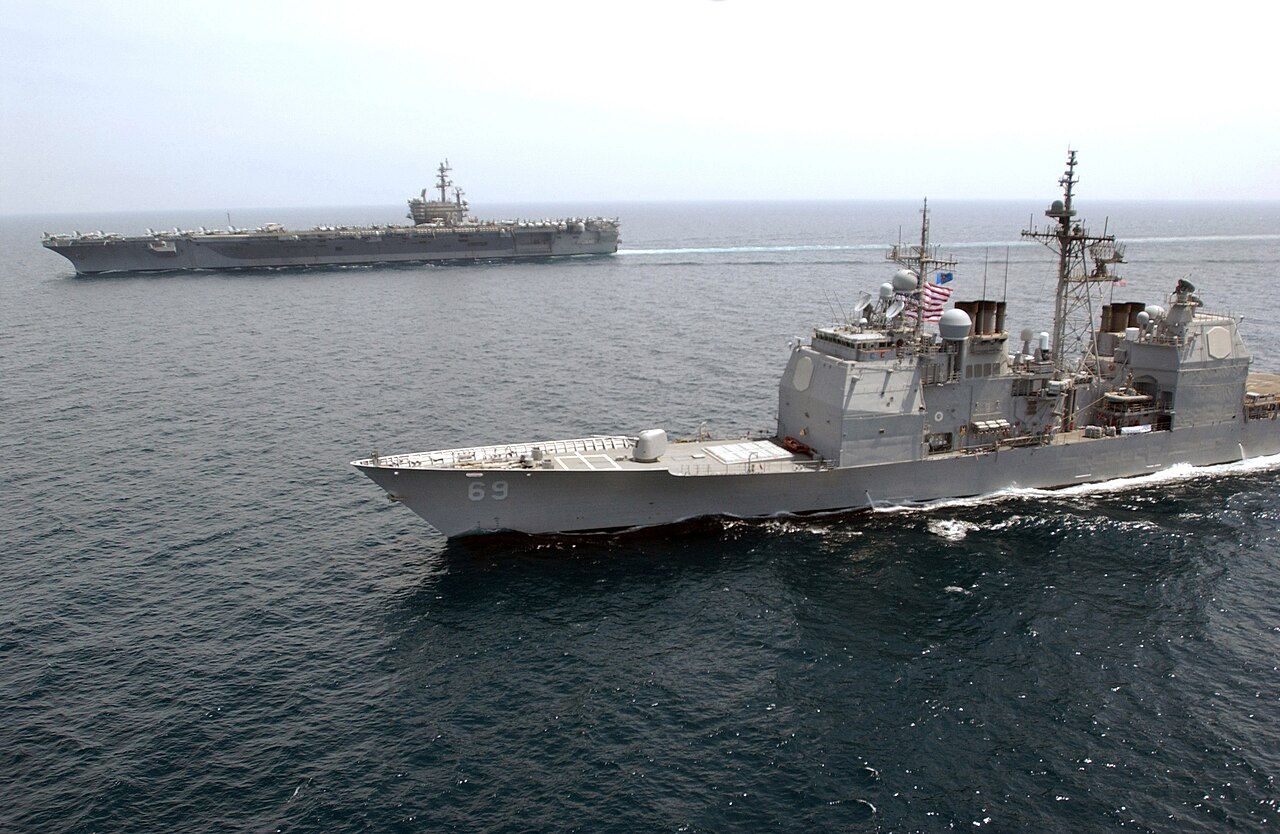
The aircraft carrier USS Ronald Reagan and guided-missile cruiser USS Vicksburg operate together in the Persian Gulf. U.S. Navy photo by Chief Photographer's Mate Spike Call · Public domain
That explains delay in general. It doesn't explain why this one attack, on a vessel carrying Marines, was never announced at the time.
A US Central Command official wouldn't comment. The Defense Department pointed questions back to CENTCOM.
And this isn't a one-off.
The US and Iran have been at war since 28 February. Iran has largely blockaded the Strait of Hormuz that whole time. It has fired on ships, boarded them, laid sea mines. The US runs its own blockade against Iranian ports too — it started in April, paused in June, came back in July when the fighting picked up again. Right now the aircraft carrier USS George Washington is enforcing that blockade and escorting commercial ships through the strait.
The attack on the Marines landed at a tense moment. Iran had put forward a seven-day plan to reopen the strait, passed on through Qatari mediators at the UN General Assembly. Donald Trump rejected it two days ago. He told reporters he was turning down Iran's offer.
Iran's foreign minister, Abbas Araghchi, spoke last night. He said Iran was fully ready for the war to carry on. He said Iran would stand firm even in a says quote "doomsday war". He also said Iran remained open to talks. He said Iran had seen Trump's first reaction, but hadn't had an official response through mediators yet. A few days before that, he said Iran will not give up its sovereign rights, whatever the pressure or threats.
Iran has said nothing about the strike on the Marines' vessel. Not a claim. Not a comment.
And the strait is still dangerous for everyone in it.
An Indian cargo ship was attacked there the week before the Marines were hurt. A sailor died. Iran's Revolutionary Guard says the strait is closed to any ship that isn't coordinating with Iranian authorities. Two days ago, hours after Trump rejected the ceasefire plan, explosions were heard near Qeshm Island in the strait. Iranian media said that pointed to anti-ship missiles and drones fired at vessels. Iranian authorities didn't confirm any attack that day.
Even so, the oil keeps moving. US Treasury Secretary Scott Bessent says between 15 million and 22 million barrels a day are still passing through the strait. Before the war, it was about 20 million.
So what don't we know? What kind of vessel the Marines were on. Its flag. Its size. Exactly where it was hit. Why the Pentagon sat on this for two weeks. And whether other attacks from the same stretch are still hidden.
The war is seven months old now. Eight Marines are back on duty. And nobody in Washington has said why the public only just found out they got hurt.
Nothing here was paid for by an advertiser. Members are the entire business model. Bronze is where it starts, and it opens the last seven days in full.