China just got the White House welcome America saves for its closest allies
24 September 2026 · 24 September 2026Share
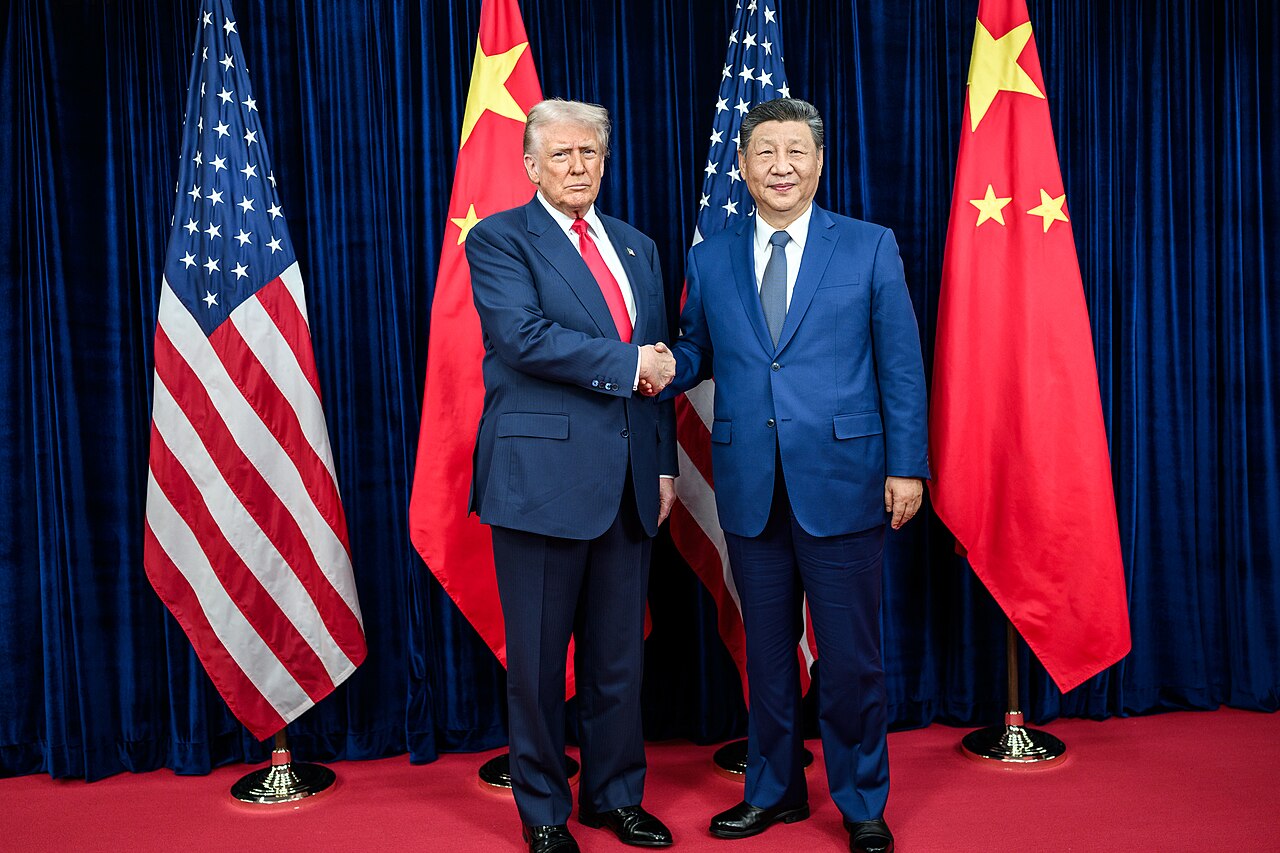
President Donald Trump greets Chinese President Xi Jinping before a bilateral meeting at Gimhae International Airport terminal on October 30, 2025, in Busan, South Korea. File photo. The White House · Public domain
No US president has met a foreign leader there in person for 11 years. The last one was Pope Francis, back in 2015, under Barack Obama.
So Trump just gave China the kind of welcome usually saved for America's closest allies.
Xi Jinping is in Washington for three days. His wife, Peng Liyuan, came too. Melania Trump met her at the plane. There was a military band, a gun salute, and a B-1 bomber flying overhead while the two leaders shook hands.
Then, within hours, the real news dropped.
Scott Bessent, the US Treasury Secretary, announced America and China have extended their trade truce. It now runs until 10 January 2027. It was set to expire on 10 November.
And here's the thing. That announcement came before Trump and Xi Jinping had even sat down for their actual meeting.
So how did that happen? Scott Bessent and He Lifeng, China's Vice Premier, held an unscheduled meeting in Washington in the hours before Xi Jinping's plane even landed.
Both governments had already agreed the one thing everyone wanted to know. The leaders' handshake came after.
This is the third time Trump and Xi Jinping have met in person since a summit in Busan, South Korea, 11 months ago. Trump went to Beijing in May. Now Xi Jinping is making the trip, his first visit to the White House in around a decade.
And the schedule is built to impress.
There's a state dinner this evening in the East Room. More than 30 tech executives are expected, including Tim Cook of Apple, Jensen Huang of Nvidia and Sam Altman of OpenAI. A White House ceremony will bring flyovers from a B-2 Spirit stealth bomber and F-22 fighter jets. The two leaders will also visit the National Archives to see the Declaration of Independence and the Constitution on display.
The rest of this story is for Silver and Gold members.
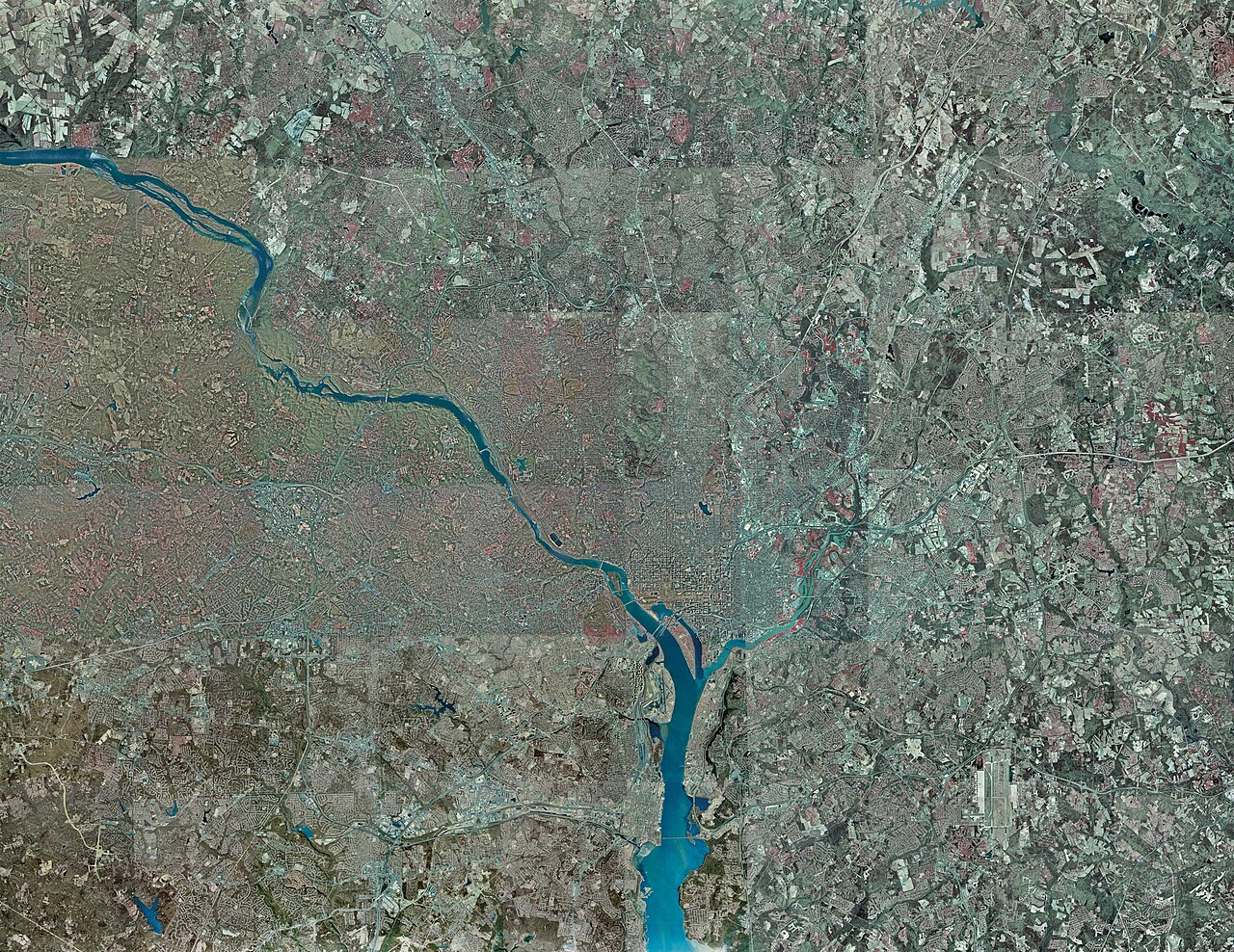
Washington, D.C. aerial photo. Mrflip · Public domain
So why now?
Trump is dealing with falling approval numbers at home. A lot of that comes from growing unease over America's war with Iran, now in its seventh month. That war has pushed up energy prices for American families. Xi Jinping, on the other hand, arrives with China's trade engine running strong.
Edgard Kagan, a former White House official now at the Council on Foreign Relations, says quote "the US is in hurtling decline, and that time is on China's side" is how he believes Xi Jinping sees this moment. Trump's own view is that the American economy keeps getting stronger.
So one of Washington's own former officials is saying China might be reading this summit as American weakness, not strength.
And underneath all the dinners and flyovers, the hard issues are still sitting there.
A $14 billion American arms sale to Taiwan is still waiting for final approval. Xi Jinping is expected to push Trump to drop it. China's own suspension of export controls on rare earths, the materials America's tech and defence industries need, was also due to expire on 10 November. That gives Beijing real leverage going into these talks.
Then there's Iran.
China buys more Iranian oil than any other country. Washington has pushed Beijing to cut back, but it hasn't actually punished the Chinese banks handling those deals. Congress is also worried about reports that China gave Iran satellite images used in a strike that killed American troops. Trump has waved off that claim when asked about it directly.
James Lewis, a fellow at the Centre for European Policy Analysis, says quote "no one is expecting any big breakthroughs" beyond the trade extension already announced. He calls this the summit of the three Ts: Taiwan, technology, and trade.
On arrival, Xi Jinping told Trump, in a written statement carried by China's state news agency Xinhua, that the two countries should be partners, not rivals. China's embassy in Washington had no immediate comment on the truce extension itself.
This week's formal talks could still bring sector-specific tariff deals, cooperation on drug trafficking, more military contacts, or progress on Americans detained in China. Whether Taiwan, rare earths or Iran get touched at all is still not known.
And there's already another Trump-Xi meeting expected before the year ends, either at the APEC summit in China in November or G20 talks in the US in December.
So the truce is extended. The dinner is set. What isn't settled is everything underneath it.
Nothing here was paid for by an advertiser. Members are the entire business model. This story is Silver's: it opens everything we have ever written, and our investigations first.