America just threatened China and India with tariffs over Russian oil
20 September 2026 · 20 September 2026Share
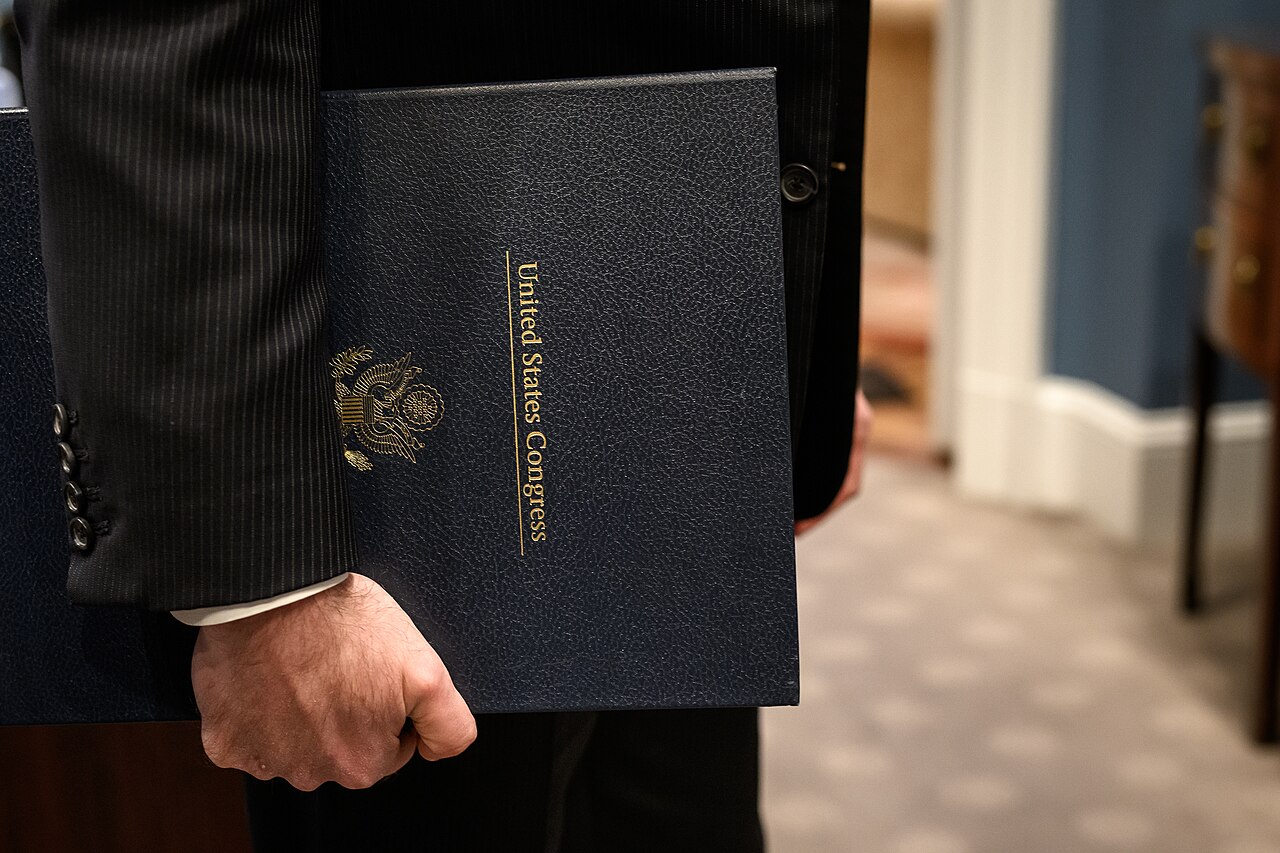
White House Staff Secretary Will Scharf holds the funding bill from Congress that President Donald Trump will sign in the Oval Office, officially reopening the government, Wednesday, November 12, 2025. File photo. The White House · Public domain
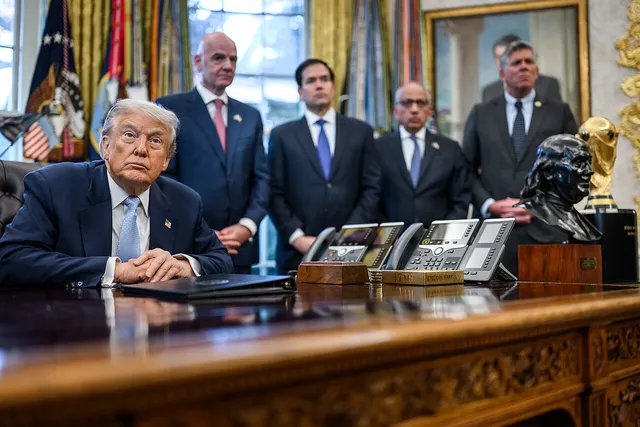
Donald Trump just signed a law that lets him hit any country still buying Russian oil with 100% tariffs.
And the two biggest buyers of Russian oil on Earth? China and India.
So this law was basically built for them.
He signed it a day ago. It's called the Lindsey O. Graham Sanctioning Russia and Iran Act. Named after the South Carolina senator who pushed it through before he died in July.
Here's how it actually works. Nobody gets tariffed today.
First, the Treasury and State departments get 180 days to name the five countries buying the most Russian oil and gas. Then Trump gets 60 more days after that. He either certifies those countries are cutting back on Russian energy, or he starts taxing them.
So it's a countdown, not a switch.
The law does more than tariffs, too. It sanctions Vladimir Putin himself, senior Russian officials, oligarchs, Russian banks, and the tanker fleet Russia uses to dodge existing sanctions. And separately, it extends sanctions on Iran's energy and weapons sectors for another five years.
And it wasn't close in Congress. The Senate passed it 86 to 11 back in August. The House passed it 262 to 159 three days ago, with 58 Democrats crossing over to vote for it.
But not everyone signed on. Hakeem Jeffries, the House Minority Leader, opposed it. He said the tariff powers would raise costs for American families. He said the sanctions parts were full of loopholes.
Richard Blumenthal, the Democratic senator who co-wrote the bill, sees it differently. He says quote "we have your number" — talking directly to Vladimir Putin.
So what does China say?
China answered the next morning. Its Commerce Ministry said Beijing opposes unilateral sanctions with no UN authorisation and no basis in international law.
Then it went further.
China's Commerce Ministry says it will keep watching what America does next, and reserves the right to take "all necessary measures" to protect its own sovereignty and interests.
The rest of this story is for Silver and Gold members.
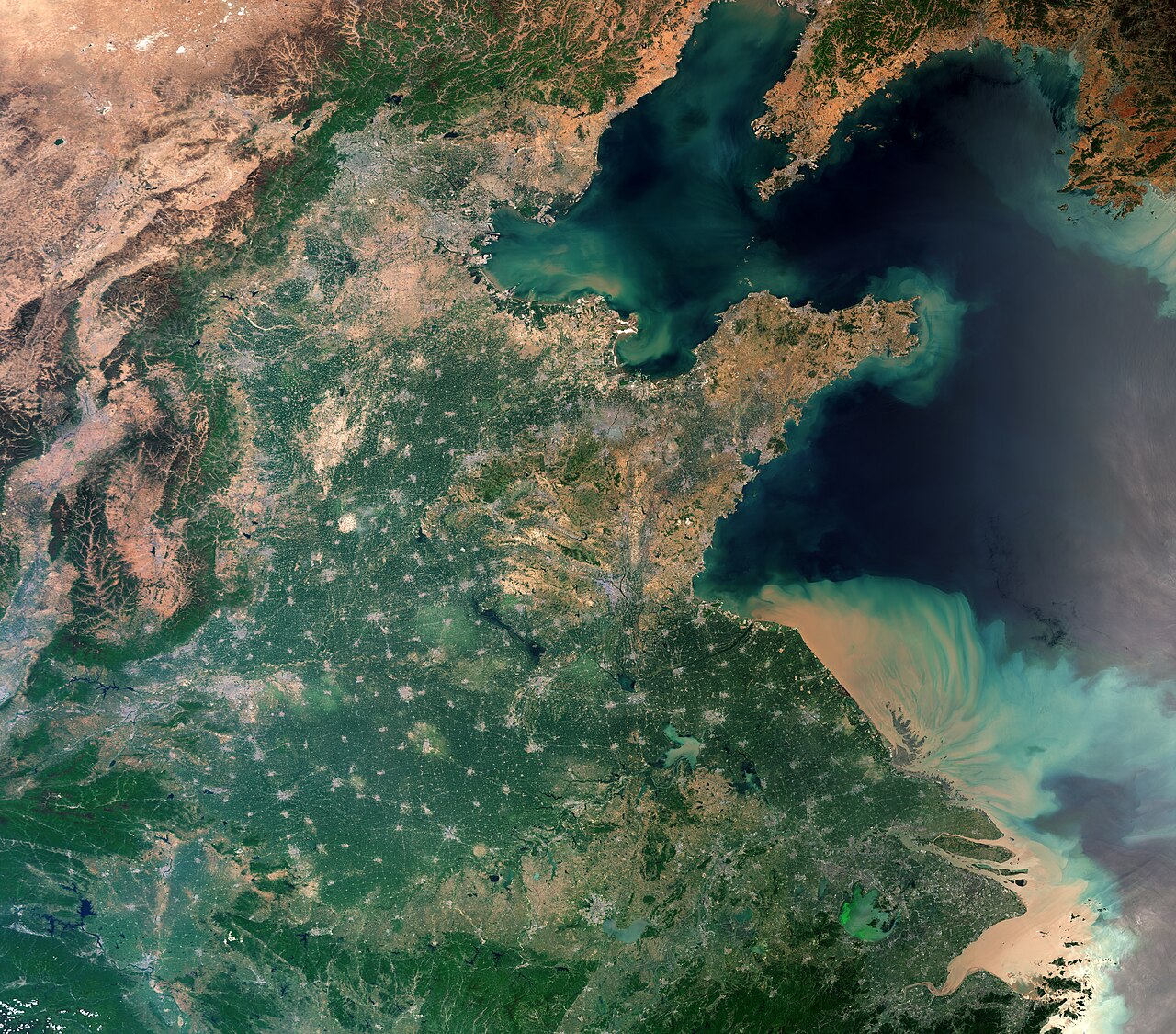
Contains modified Copernicus Sentinel-3A satellite data showing Shanghai, China, site of the world's busiest container ports on the Yangtze River delta. File photo. European Space Agency · CC BY-SA 3.0 igo
That's a threat with nothing attached to it. No list. No specifics. China didn't say if that means tariffs on American goods, export restrictions, or something else entirely.
China also said it wants stable trade ties through dialogue, not a fight.
Now the timing.
Trump is due to host China's president, Xi Jinping, at the White House in about a week. And the day after China's statement, America's Treasury Secretary, Scott Bessent, sits down with China's Vice Premier, He Lifeng, for trade talks in New York.
So China is threatening retaliation and showing up to negotiate in the same breath.
Russia's response was smaller, but it landed. Dmitry Peskov, the Kremlin's spokesperson, called the bill an unfriendly action. He said it would complicate any peace settlement in Ukraine.
Ukraine sees it the opposite way. Volodymyr Zelenskyy, Ukraine's President, called the law a powerful tool. Mike Johnson, the House Speaker, said it puts maximum pressure on the Russian war machine.
And India? India is saying less than everyone else.
Randhir Jaiswal, a spokesperson for India's Ministry of External Affairs, said two days ago that New Delhi is monitoring the bill closely. He said India is diversifying its energy sources while taking what he called necessary measures to protect its own trade interests. India has separately said it remains firmly committed to energy security for its 1.4 billion people.
But here's the part that softens all of this.
The law isn't as blunt as it looks. A country can get exempted from tariffs if it imports less than 15% of Russia's natural gas exports and is genuinely cutting its dependence.
Trump also keeps broad waiver powers. He can suspend the tariffs just by telling Congress. And the whole sanctions regime ends automatically if Russia and Ukraine actually reach a peace deal.
So nothing is automatic here. Nobody is being tariffed yet.
What exists right now is a law, a 180-day clock, and two of the biggest oil buyers on the planet — one of which has just put Washington on notice.
Nothing here was paid for by an advertiser. Members are the entire business model. This story is Silver's: it opens everything we have ever written, and our investigations first.