The West Bank just lost its ambulances to soldiers and settlers
1 day ago · 23 November 2026Share
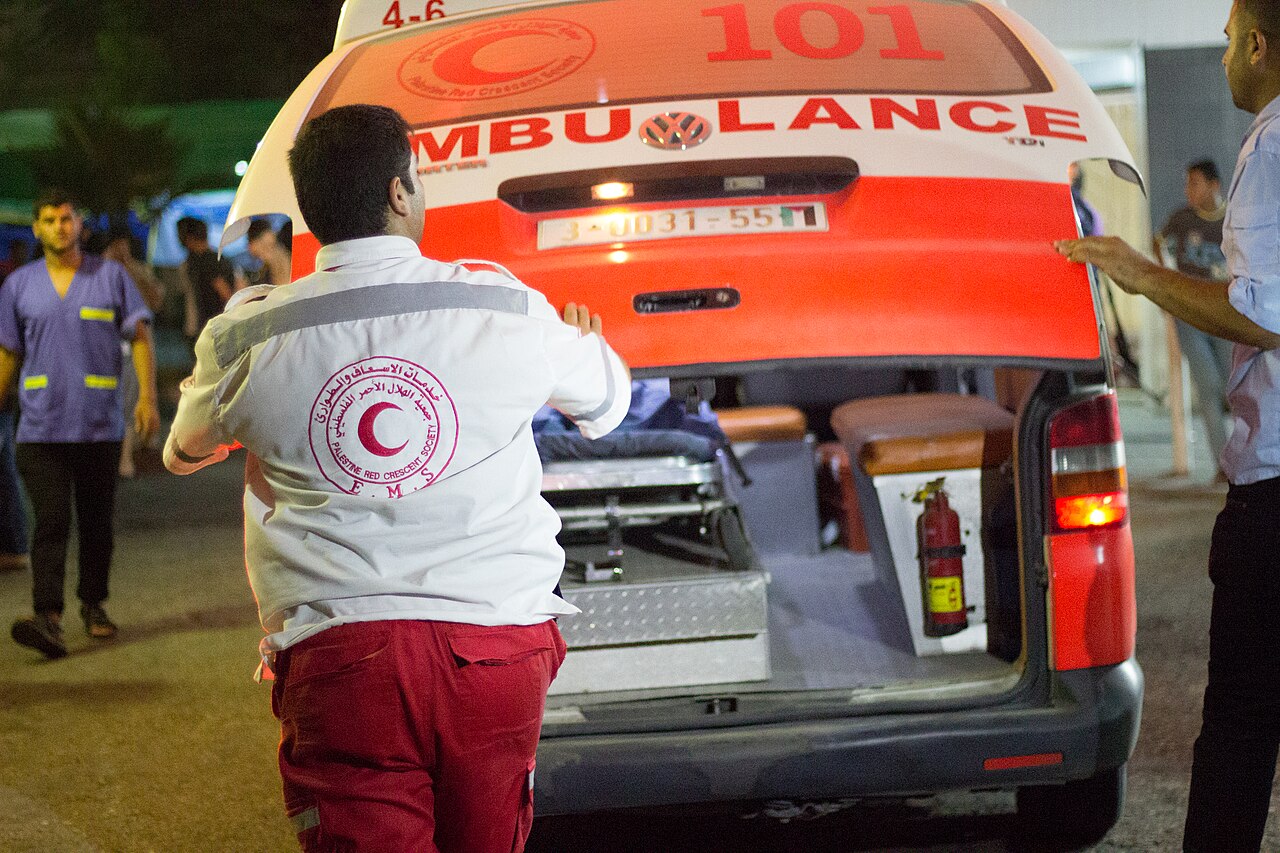
An E.M.S worker hurries to remove an injured citizen from an ambulance to the emergency room. File photo. Basel Yazouri · CC BY 2.0
Palestinian medics in the occupied West Bank say attacks on them have surged 350 per cent.
That's the finding in a new report out today from Physicians for Human Rights Israel.
So what's behind that number? Data from Insecurity Insight and the Safeguarding Health in Conflict Coalition. Incidents against medics, ambulances and clinics went from 93 in 2022 to 422 in 2024.
But here's the thing. The Times of Israel reports a different figure from the same data pool. 760 incidents in 2024. Then 346 in 2025. Nobody has explained why the two counts don't match.
PHRI interviewed 25 Palestinian medics for this report. Most work near Nablus. Three patterns kept coming up. Medics getting their movement blocked. Direct attacks on emergency teams. And what the report calls routine humiliation.
Imran Anati helped write the report. He says there's been a dangerous escalation since 7 October 2023, when Israel's war in Gaza began.
He says quote "these are not isolated incidents, but a systematic assault on Palestinian emergency medical care for which Israel bears responsibility".
That's a rights group saying this isn't random. The report goes further. It calls ambulances and clinics direct targets of abuse. It says this is a shift in Israeli policy, with tactics used in Gaza now showing up in the West Bank.
And the testimony backing that up is specific.
One paramedic from the Nablus area says Israeli soldiers stopped him reaching a wounded man. The man bled to death before the soldiers left.
A medic named Alaa lost a patient after a 40-minute detour. Israeli military activity near a village forced the detour. The patient lost consciousness on the way to Sebastia.
A paramedic named Ibraheem says he was shot at by Israeli forces and settlers while pulling a wounded man out of an olive grove. He'd already put a 10-year-old girl in his ambulance.
A medic named Tamer says a soldier broke his phone. And threatened to shoot him on his next call-out.
One ambulance driver put it this way. He says every phone call means taking a risk, and every time he leaves home, there's a chance he won't come back.
The rest of this story is for members.
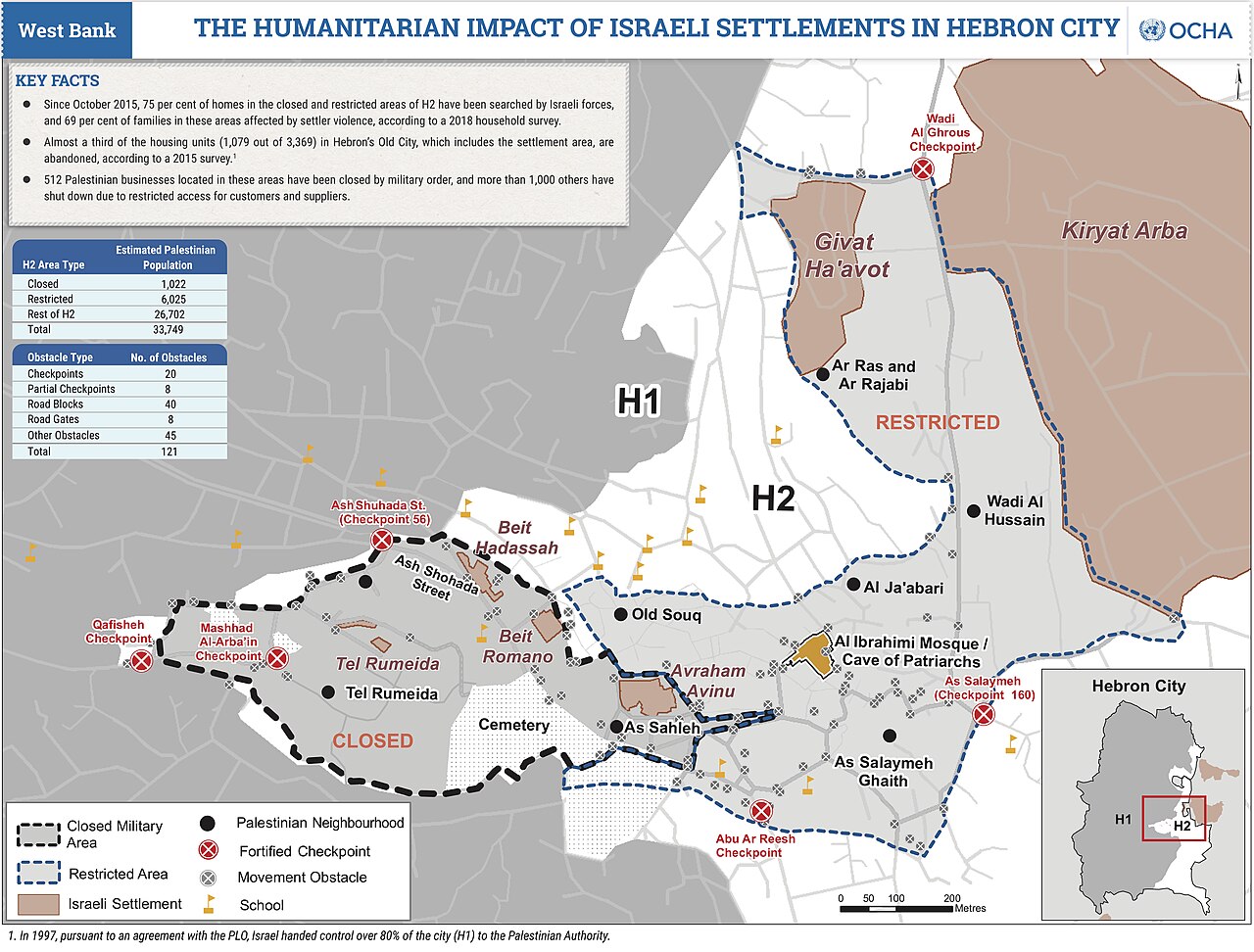
Humanitarian impact of Israeli settlements in Hebron city in 2019. File photo. UN OCHAoPt · Public domain
That's what the job looks like now, in the words of the people doing it.
The World Health Organization's own numbers back the pattern, even where the exact counts don't line up. WHO recorded 233 attacks on healthcare in the West Bank in 2025. 165 of those hit medical transport. The Times of Israel separately cites WHO figures of 181 incidents in 2022 and 157 in the first ten months of this year.
The Times of Israel also collected testimony PHRI's report doesn't include.
Paramedic Yousef Diriyah, from Aqraba, says soldiers once held his ambulance at a checkpoint for ten minutes. A gunshot victim's life was on the line.
Paramedic Bashar Qaryouti, from Qaryut near Nablus, says a trip to Nablus hospital used to take 25 minutes. Now it takes an hour.
Ambulance driver Mohammad Mousa, 49, also from Qaryut, was shot dead on the job on 20 April 2024. Palestinian witnesses say settlers were involved.
And the checkpoints aren't incidental to any of this. They regularly force ambulances into long detours. Some patients have died on the way. Pregnant women have given birth outside hospitals because they couldn't get there in time.
Israel's military has responded, but only in comments carried by the Times of Israel. It says it works routinely to ensure freedom of movement and the safe passage of medical staff across the West Bank, in line with its commitment to international law and the protection of life. It says specific allegations get investigated.
On the Mousa shooting, Israel's military says its Military Police Criminal Investigation Division finished its inquiry. The case now sits with the Military Advocate General's Office for review.
So that's Israel's military saying it already has a process for cases like this. It hasn't addressed the bigger pattern PHRI describes. And it hasn't said whether it accepts that this obstruction is systematic rather than a string of isolated incidents.
One thing isn't in dispute. The direction of travel.
A separate Al Jazeera report citing WHO data, published 11 days ago, found 124 distinct attacks on healthcare in the West Bank between January and August this year. Four deaths and 40 injuries confirmed in that count. PHRI has previously called the West Bank's medical system collapsing.
What we don't know: whether this is centrally directed policy, or individual soldiers and settlers acting on their own. We also don't know why the two sets of 2024 data differ so sharply. And we don't know what's happened to specific Israeli investigations, Mousa's included, beyond the one line Israel's military has given.
Nothing here was paid for by an advertiser. Members are the entire business model. Membership opens everything we have ever written, our investigations first, the guides and the films, for $4.99 every 28 days or $19.99 a year.