Russia just tried to burn down Ukraine's satellite link for the third time
2 hours ago · 18 October 2026Share
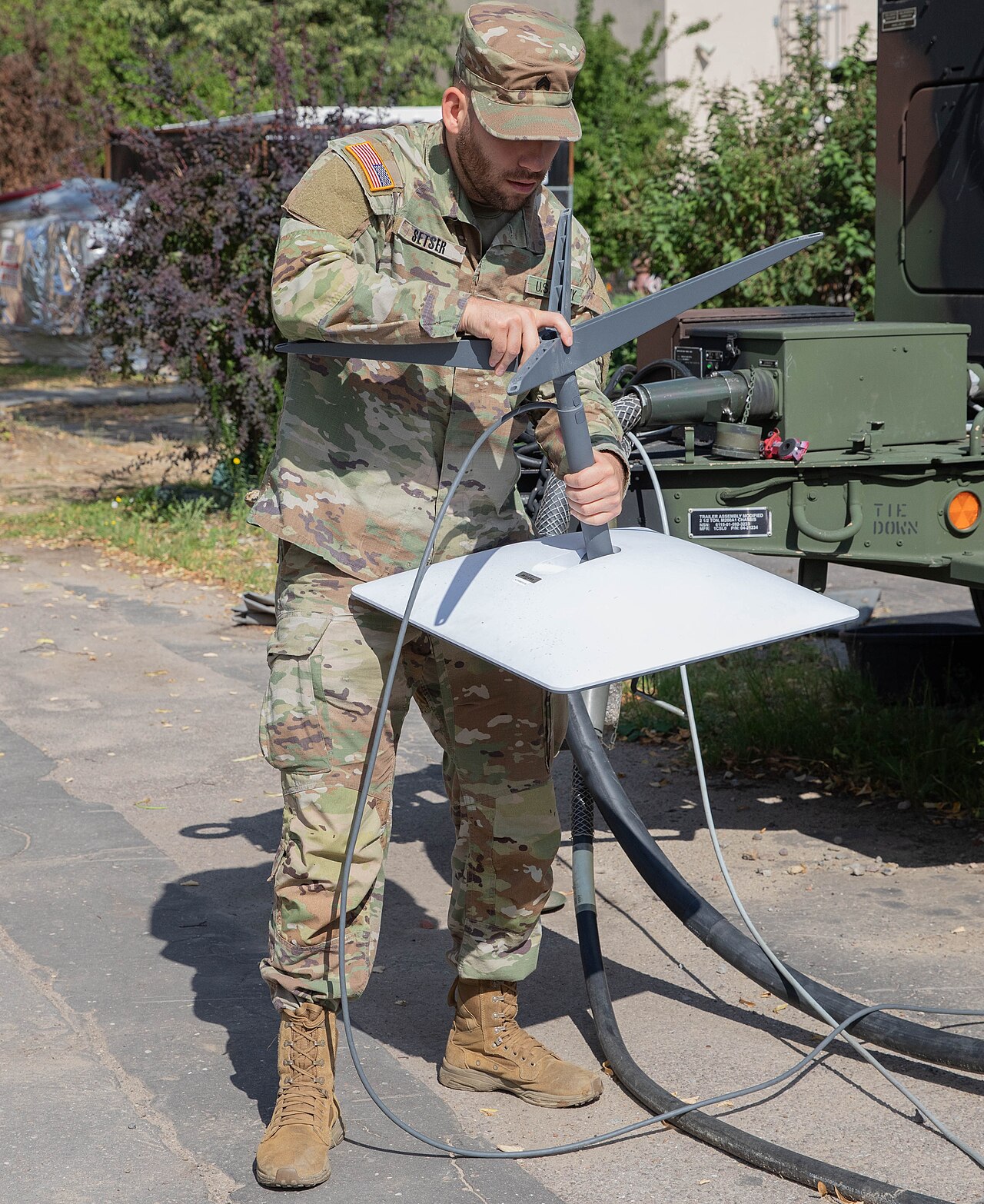
U.S. Army Sgt. Bryson Setser prepares a Starlink satellite to acquire signal on Camp Kosciuszko, Poland, July 11, 2023. File photo.U.S. Army Reserve photo by Sgt. Peter Martinez · Public domain
Lithuanian police just stopped an arson attack.
The target was a facility storing Starlink satellite equipment.
And this is the third time this has happened in Europe in under a month.
So what happened? Someone broke in at almost 2 a.m. local time, a few hours ago. They tried to torch satellite antennas and a control unit. Police found the gear left behind: incendiary liquid, in containers holding between three and 10 litres.
It didn't work. Lithuanian authorities had already warned the company an attack might come. Security was already stepped up.
Here's why that site matters. It runs nine Starlink antennas, and they provide the connection Ukraine actually uses.
Mindaugas Sinkevičius, Lithuania's Prime Minister, isn't calling this random. He says this is part of a wider pattern, and that it is clearly Russia's hybrid war against Europe. He thinks Russia commissioned it.
But here's the thing. That's his political reading, not a police finding yet.
Arūnas Paulauskas, Lithuania's Police Commissioner General, says nobody has been detained. He says the damage was minimal and the company kept working. A pretrial investigation has only just started.
Robertas Kaunas, Lithuania's Defence Minister, confirmed the arson attempt happened. He says he can't give more details yet.
And it gets stranger. Hours after the arson attempt, the same morning, something flew into Lithuanian airspace from Poland and crossed the north of the country. NATO jets couldn't identify it. Possible fragments turned up in the Pasvalys district, near the Latvian border. Nobody knows yet if it carried explosives, what caused the blast, or who it belonged to.
Sinkevičius has called a National Security Commission meeting for tomorrow. Both the arson attempt and the drone are on the table.
The rest of this story is for members.
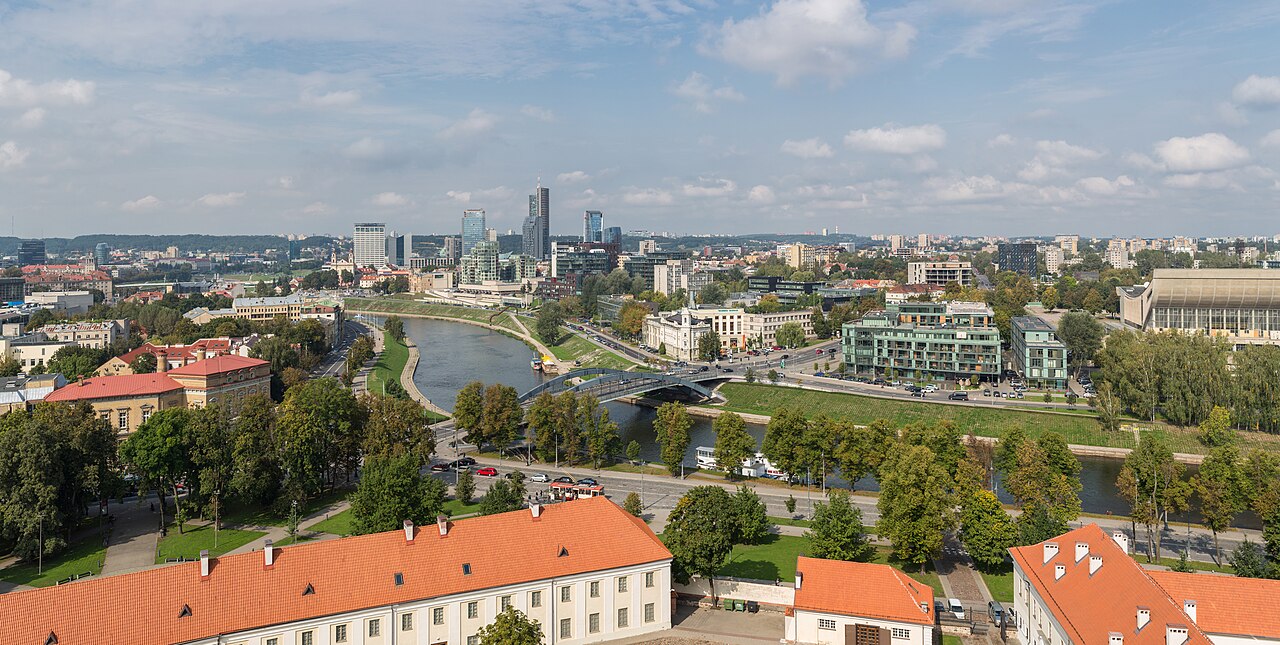
The modern skyline of Vilnius, Lithuania, as viewed from Gediminas' Tower looking north-west. File photo. Diliff · CC BY-SA 3.0
Now here's the pattern. This is the same thing, twice before, in two other countries, this month.
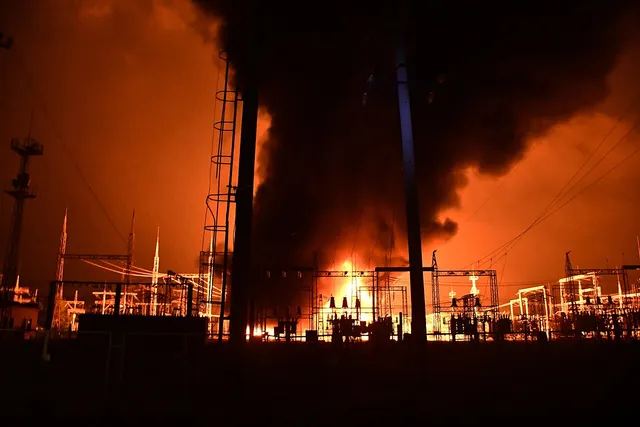
In Poland, a fire broke out at a Starlink ground station in Wola Krobowska about three and a half weeks ago. The station is run by Exatel, Poland's state-owned telecoms company. It carries internet traffic through Poland, including to Ukraine. Krzysztof Gawkowski, Poland's Deputy Prime Minister, said at the time it may have been a deliberate attempt to cut off internet access used by Ukrainian forces.
That suspicion has since hardened. German authorities detained two Turkish citizens about six days ago over the Wola Krobowska fire. Poland's Internal Security Agency says both are suspected of arson. Polish officials blame Russian intelligence. Marcin Kierwiński, Poland's Interior Minister, says the suspects will face charges of subversion and sabotage on behalf of a foreign intelligence service. Donald Tusk, Poland's Prime Minister, called the fire another act of Russia's hybrid war. A third suspect has since been detained in the same case.
In Bulgaria, masked intruders set fire to 11 of 17 Starlink antennas at a facility near Sofia, overnight about nine days ago, according to Bulgarian National Television. Bulgarian authorities detained two foreign nationals, aged 20 and 21, holding German passports. They had entered the country legally, through the Kulata border crossing. Ivaylo Mirchev, a Bulgarian lawmaker, says the antennas were targeted on purpose, because they carry the main connection to the satellites. He says there's still no word on whether the damaged antennas served Ukraine's armed forces.
So add it up. Three countries. Three Starlink sites. Inside one month.
Poland's case now carries an espionage charge. Bulgaria has two suspects in custody. Lithuania has nobody in custody, and an accusation from its Prime Minister, not yet a confirmed one.
Starlink is not a small detail here. Poland's government alone spends around $50 million a year on Ukraine's Starlink service, according to Radosław Sikorski, Poland's Foreign Minister. The network carries Ukrainian military communications, drone operations and battlefield connectivity. Knock out enough ground stations, and that connection gets harder to hold.
The Institute for the Study of War has linked the drone crashes in Moldova and Romania, the Poland Starlink fire, and a shutdown at Berlin's airport into one Russian sabotage pattern.
Russia has not responded to any of the three attributions.
So what's still unknown? Who tried this in Lithuania. Whether it's connected to the drone that crossed into Lithuanian airspace hours later. And whether these three incidents were actually coordinated, or just copied.
Nothing here was paid for by an advertiser. Members are the entire business model. Bronze is where it starts, and it opens the last seven days in full.