Nigeria just confirmed an Ebola case and the outbreak behind it is spreading across Africa
1 hour ago · 21 October 2026Share
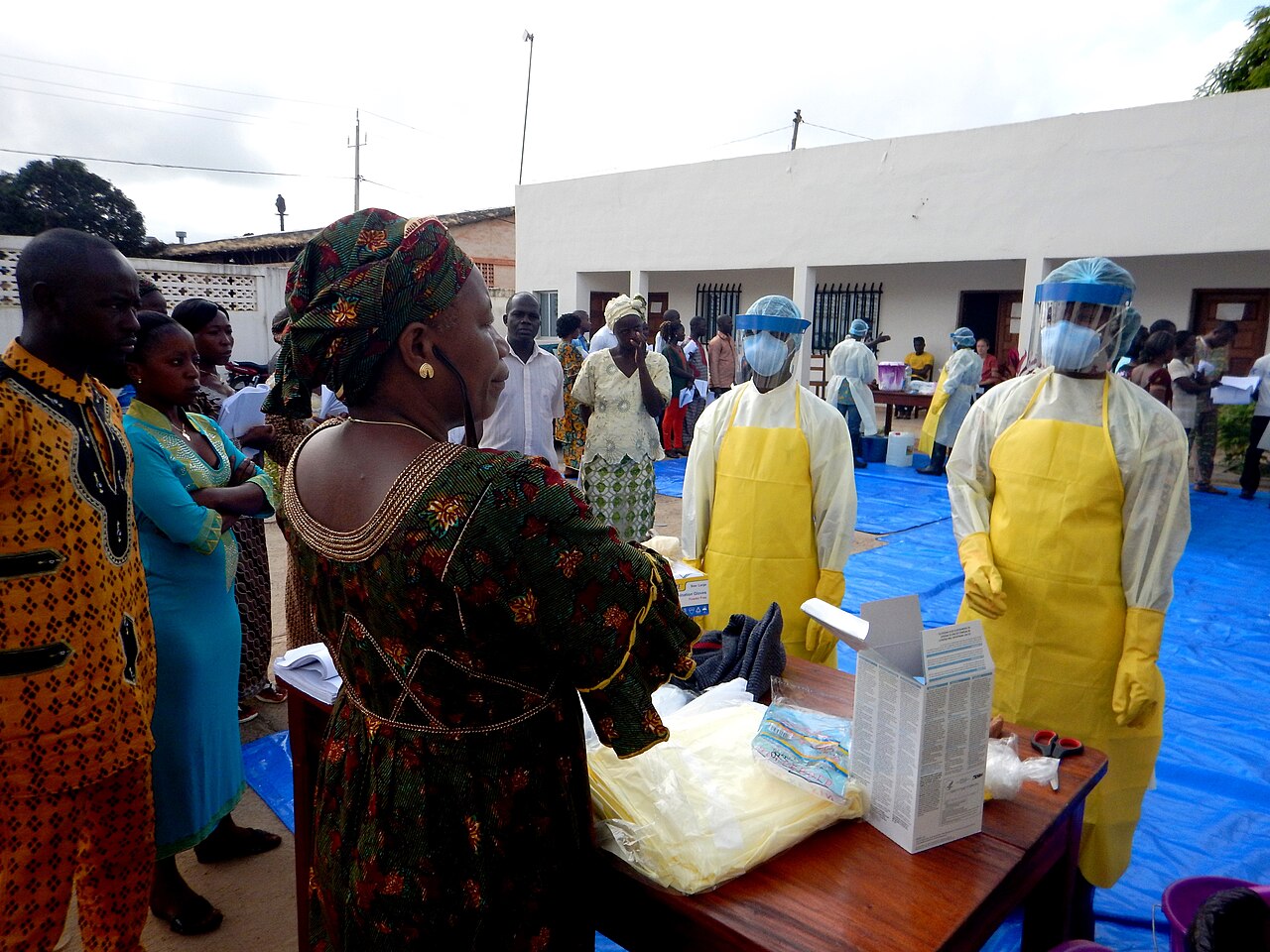
A trainer demonstrates the proper use of personal protective equipment while two students model full PPE during Ebola patient care training. File photo. CDC Global · CC BY 2.0
Nigeria just confirmed its first Ebola case in 12 years.
A woman arrived from Uganda. She's now in Abuja, the capital.
Nigeria's Health Ministry confirmed it a day ago.
So here's the timeline. She got symptoms on 7 October. Went into a private hospital in Abuja on 11 October. Tests came back positive for Ebola on 20 October.
Muhammad Ali Pate runs Nigeria's health ministry. He says they've found 44 people who had contact with her. They're tracing every single one.
He says quote "doing everything possible to contain this case".
So that's Nigeria's plan. Trace and contain. Not lock down a city.
But here's a dispute running underneath all of this. Nigeria hasn't said where the woman is actually from. Uganda's health ministry says she's Nigerian, and that she only passed through Uganda after a business trip to eastern Democratic Republic of Congo. Uganda also says it has zero confirmed active Ebola cases right now. Nigeria hasn't confirmed or denied any of that. Nobody's even said yet exactly when she arrived in Nigeria.
And Nigeria has done this before. Twenty people got infected in the 2014 to 2016 outbreak. Nigeria was declared Ebola-free after three months. But that outbreak went on to kill around 11,000 people across West Africa. The worst one on record.
So Nigeria was expecting this. Its disease control agency put Abuja on its top-ten at-risk list back in May. Then said again on 7 October, right after Kenya's first case, that it was reviewing that risk.
Femi Gbajabiamila is chief of staff to President Bola Tinubu. He says the government wanted to avoid a repeat of the last outbreak, when a carrier entered the country and everyone scrambled to respond.
He said that back in June, when Nigeria set up an Ebola taskforce. Months before this case showed up. Those same structures are running the contact tracing right now.
The rest of this story is for members.
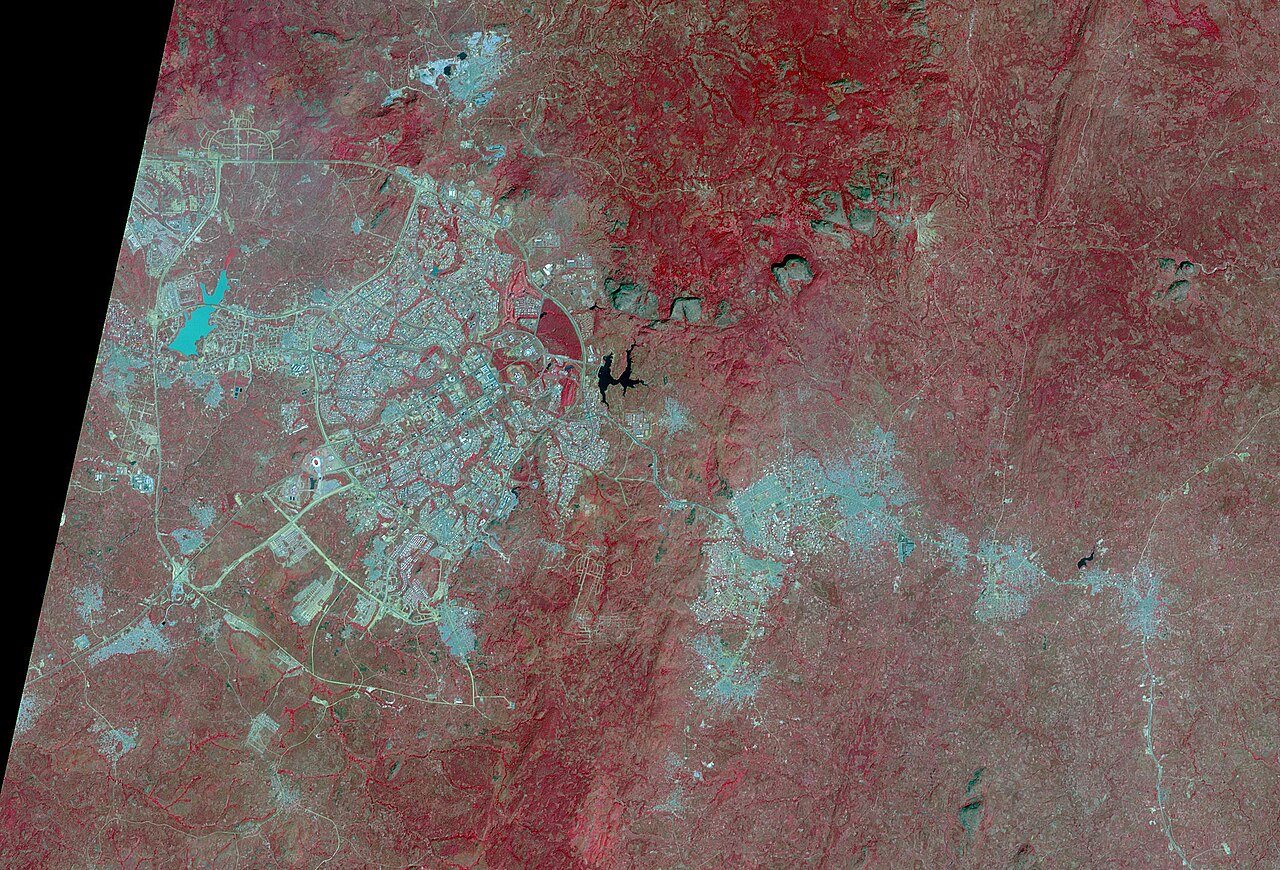
Contains satellite imagery of Abuja, Nigeria's capital city, which had grown to over 6 million people by 2020. File photo. NASA/METI/AIST/Japan Space Systems, and U.S./Japan ASTER Science Team · Public domain
So why is this happening at all? Because the outbreak behind it has been spreading since May. It started in the Democratic Republic of Congo. It's now past 9,000 confirmed cases. Over 4,000 deaths. That's a death rate of 48 per cent.
The World Health Organization and the Africa Centres for Disease Control and Prevention both call this the fastest-spreading Ebola outbreak on record. And it's on track to beat 2014 to 2016 for the worst ever.
Jean Kaseya runs Africa CDC. He posted that this is now the most geographically spread-out outbreak of this Ebola strain in history. It's hit three regions of the continent.
And Kenya shows exactly how far it's spread. Kenya confirmed its first case on 6 October. A man who travelled from DRC through Uganda, tested positive in Nairobi, and died the same day. Then on the same day Nigeria confirmed its case, Kenya confirmed a ninth. A 24-year-old man, a relative of that first patient, already in quarantine.
Patrick Amoth runs Kenya's health directorate. He says all nine Kenyan cases belong to one family cluster. No sign yet of spread beyond it.
134 of Kenya's 135 traced contacts are already quarantined. The first group finishes their 21 days on 25 October.
That's the model Nigeria is trying to copy now. In a capital city of several million people.
The strain here is called Bundibugyo. No licensed vaccine exists for it. No approved treatment either. That's different from the more common Zaire strain, which does have vaccines, and those helped end DRC's 2018 outbreak and Uganda's outbreak this year.
Uganda actually had cases in this same outbreak earlier this year. Twenty confirmed, two deaths. Then it declared itself free in July. The World Health Organization certified that in August.
America's Centers for Disease Control and Prevention says it isn't recommending any travel or trade restrictions on DRC, Uganda or Kenya right now.
So what don't we know? Whether Nigeria's case stays at just one. No contact has tested positive so far. Whether that holds depends on how fast the tracing moves. In a capital city. In a country that's done this once before and is hoping not to again.
Nothing here was paid for by an advertiser. Members are the entire business model. Bronze is where it starts, and it opens the last seven days in full.