Iraq just sent troops into Iran's strongest militia stronghold in Baghdad
1 day ago · 23 November 2026Share
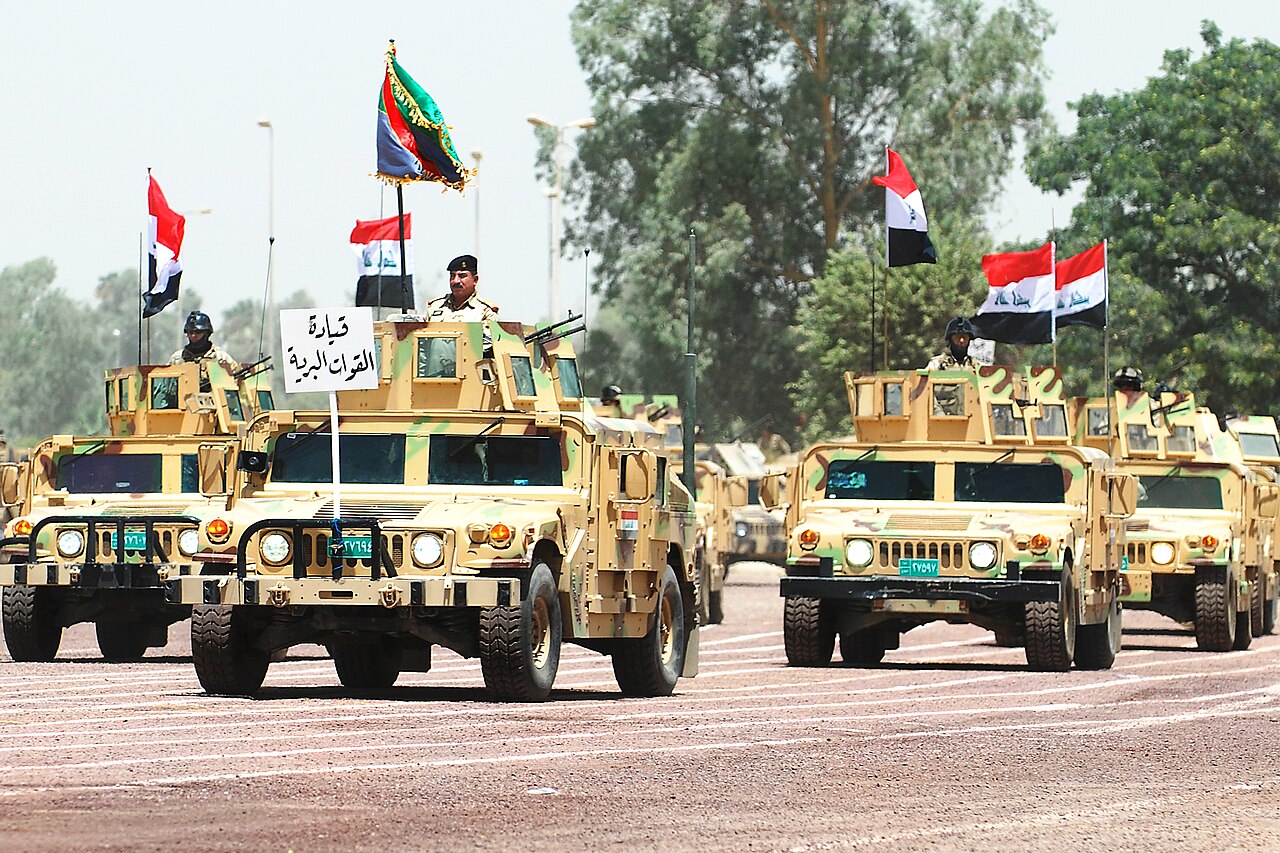
Iraqi security forces pass for review before military and civil leadership in Baghdad.Tommy Avilucea, U.S. Air Force · Public domain
Iraq just sent its own army into a town it hasn't controlled in ten years.
Iraqi security forces moved into Jurf al-Sakhar three days ago. It's a town south of Baghdad. Iran's strongest militia ally in Iraq, Kataib Hezbollah, has run the place for more than a decade.
So what changed? A deal. Reached the day before the troops went in. Brokered by senior Shia political leaders.
And here's the twist. Iran sent its own man to make this happen.
Esmail Qaani runs Iran's Revolutionary Guards' Quds Force. That's the unit behind Iran's armed allies across the whole region. He flew into Baghdad a week ago. His job? Stop one of those allies from fighting Iraq's own government.
Think about that for a second. Iran stepping in to calm down its own militia.
This is the first time in over ten years that Iraqi government forces have entered Kataib Hezbollah's stronghold.
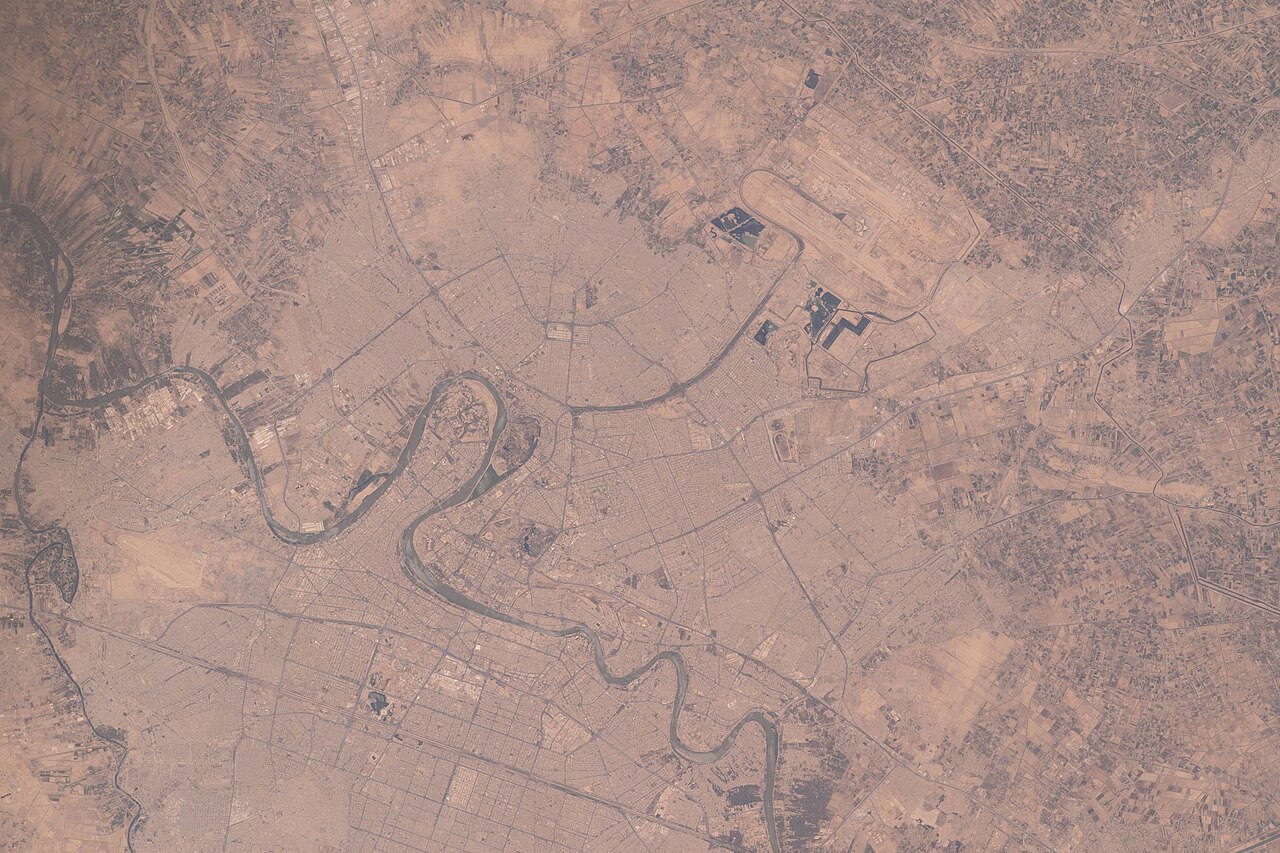
Jurf al-Sakhar sits on the Euphrates, about 60 kilometres southwest of Baghdad. Mostly Sunni farmland. The Iraqi army and Shia militias, Kataib Hezbollah included, took it back from ISIL in 2014. The town's own residents were never allowed to return. More than 100,000 people from the town and nearby villages are still displaced.
Ali al-Zaidi is Iraq's Prime Minister and commander-in-chief of the armed forces. He spoke directly to the troops going in. He said quote "no weapons outside state authority, no weapons but Iraq's". He also told them that no decision belongs to anyone but Iraq, and that no flag should fly higher than Iraq's own. He said this wasn't war. Everyone in that town, he said, is a brother and a son of the nation.
So who actually went in? A joint force. The Iraqi army sent a brigade. The Federal Police sent a battalion. So did the Energy Police, with a regiment of their own. And two brigades came from the Popular Mobilization Forces — the same state body that includes Kataib Hezbollah's own fighters.
The rest of this story is for members.
Contains modified Copernicus Sentinel data showing Baghdad and the River Tigris. File photo. Earth Science and Remote Sensing Unit , Lyndon B. Johnson Space Center · Public domain
Lieutenant General Ahmed Hatem Hamid says a control headquarters has gone up in the town, run by the Federal Police. Lieutenant General Saad Maan, who heads Iraq's Security Media Cell, says there's been what he calls very good cooperation with Kataib Hezbollah's own brigades inside the Popular Mobilization Forces.
So why now, after ten years?
Follow the money. The government accuses Kataib Hezbollah of running an oil-smuggling network. Hundreds of millions of dollars of state oil, diverted. The group denies it. Nine senior security and oil officials in Babil province have already lost their jobs over the investigation. A Baghdad-based analyst, Fadel Abu Raghif, told Al Jazeera the deal followed in-depth negotiations, after what he called a tug of war that lasted about two months.
But here's the part the government's language doesn't settle.
Kataib Hezbollah has not accepted defeat. Six days ago, before any deal, one of its commanders, Abu Taleb al-Saidi, said the group's withdrawal from Jurf al-Sakhar was a dream that would never come true. He said quote "not even over our dead bodies". After the troops went in, a Kataib Hezbollah source told AFP the group had given the government a way out of a mess it created itself. But it wasn't leaving the town.
And on the ground, nothing is actually settled.
Al Jazeera reports the militia's fighters are expected to redeploy elsewhere within about a month. An Iraqi analyst, Sajad Jiyad, told The New Arab it's really a phased redeployment, with some fighters staying put, and that the whole process could take weeks. Reporting from the days since the deployment says Kataib Hezbollah has actually kept its weapons. It hasn't been pushed out of the area at all.
This is bigger than one town, too. Al-Zaidi has set 30 June 2027 as the deadline for every armed faction in Iraq to disarm or fall under state command. Kataib Hezbollah has already said no. So have two other militias, Harakat Hezbollah al-Nujaba and Kataeb Sayyid al-Shuhada. The United States designated Kataib Hezbollah a foreign terrorist organisation back in 2009. And Donald Trump has been pushing al-Zaidi to disarm militias that have hit American troops and bases in Saudi Arabia and the UAE since the war with Iran began in February.
So Baghdad has planted its flag in a town it hasn't controlled in a decade. What's still not clear is whether Kataib Hezbollah has actually given anything up. Or whether its fighters have just stepped back far enough to let the government say that it has.
Nothing here was paid for by an advertiser. Members are the entire business model. Membership opens everything we have ever written, our investigations first, the guides and the films, for $4.99 every 28 days or $19.99 a year.