India just locked down its own capital to stop a protest it already lost once
1 hour ago · 10 October 2026Share
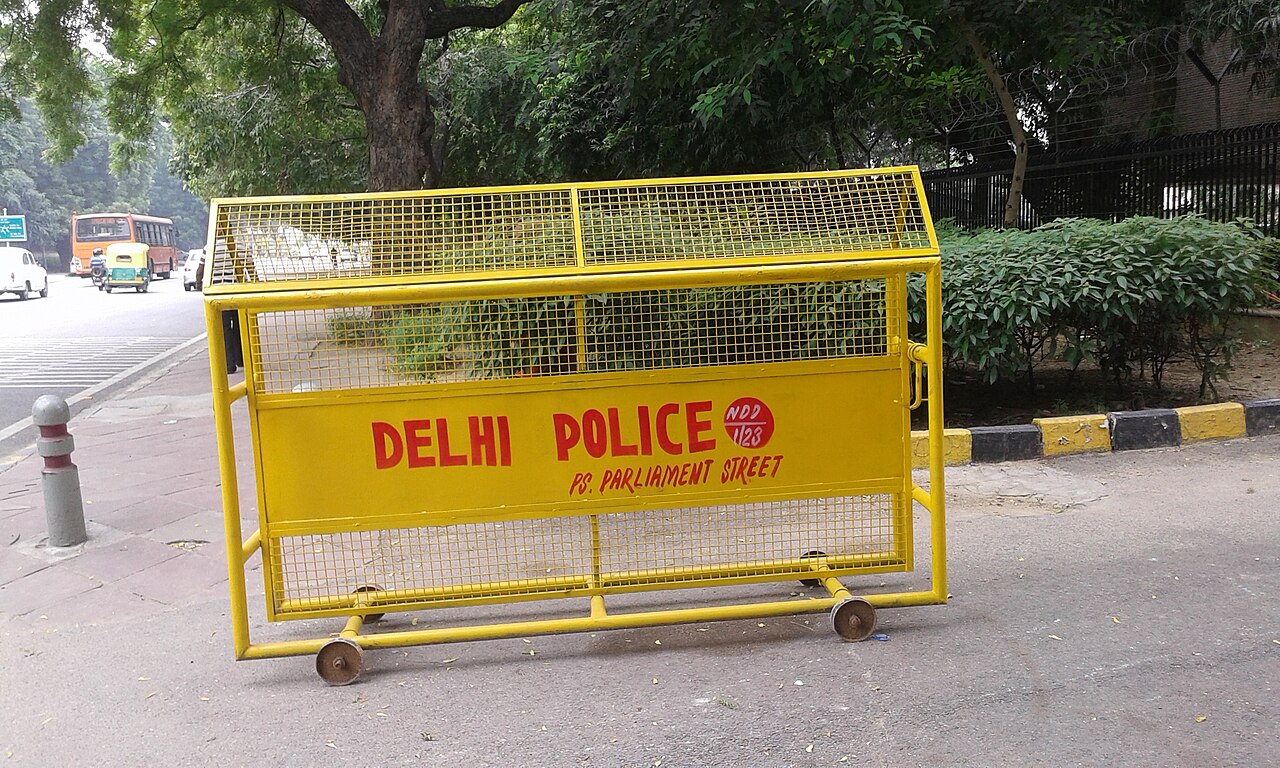
Delhi Police barricade at Parliament Street police station.Sidheeq · CC BY-SA 3.0
India just locked down its own capital.
Nearly 30,000 security personnel are out across New Delhi this morning. That's up from about 23,000 reported a day earlier.
Why? To stop a protest.
And not just any protest. This is the Cockroach Janta Party, a youth movement that already forced a government minister to resign.
So what did police do? They went straight for the leaders.
Abhijeet Dipke, the founder, flew into Delhi from Mumbai this morning. Police detained him the moment he landed. Two more leaders, Saurav Das and Ashutosh Ranka, were pulled off the same flight.
The leadership never even reached the protest.
Here's what else shut down. More than 50 Delhi Metro stations, closed. Trains into two New Delhi stations, cancelled. Mobile internet, suspended in parts of the city. Checkpoints went up at every entry point into central Delhi, with police searching buses and cars one by one.
And the protest site itself? Jantar Mantar was barricaded. Anti-riot vehicles and tear gas launchers lined the roads leading in.
Police say they denied permission because the protest request came in late.
Some protesters broke through anyway. They were detained while chanting against Narendra Modi, India's Prime Minister, and against election officials. Al Jazeera reported students being pulled off trains and buses on their way to Delhi, with some put under house arrest far from the city.
CJP called the arrests, quote "a pre-planned interception" aimed at crippling the protest's leadership before it could even start.
The movement says thousands more have been detained nationwide. Nobody outside the movement has confirmed that number.
And there's an earlier claim too. Two days before the lockdown, CJP spokesperson Ashutosh Ranka said at least 10,000 people had been detained across the country — movement members, student groups, farmer and Dalit organisations, political parties. That's his count. No independent outlet has confirmed it either.
So who are these people, and why does a government need 30,000 staff to stop them?
The rest of this story is for members.
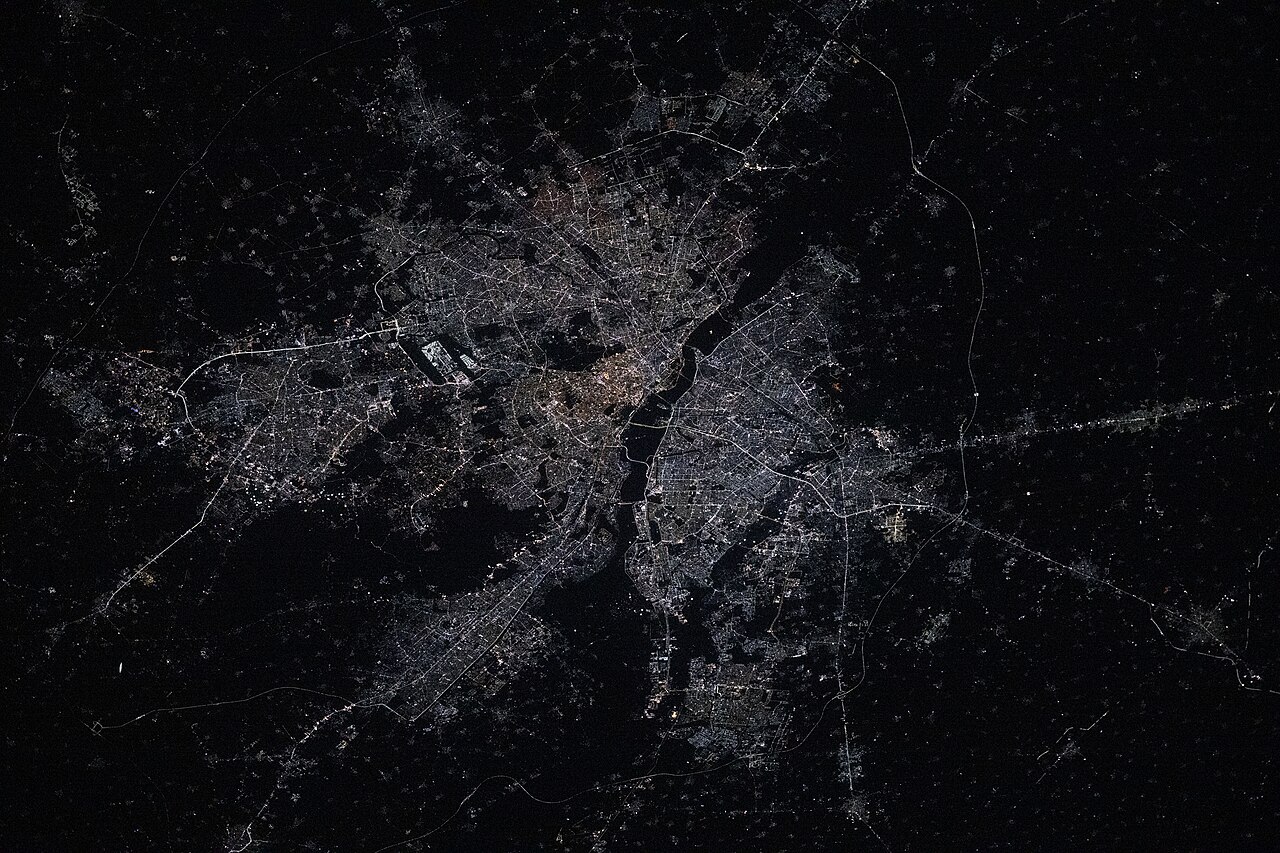
Contains modified NASA Earth Science and Remote Sensing Unit data showing Delhi from the International Space Station at approximately 259 miles altitude. File photo.NASA Johnson Space Center / Don Pettit · Public domain
CJP started five months ago, in May. India's Chief Justice, Surya Kant, called unemployed young people cockroaches. The movement took the insult and ran with it.
Three months ago, in July, it forced out Dharmendra Pradhan, then India's Education Minister, over leaked exam papers.
That's the track record. One resignation already. Now the government is throwing a locked-down capital at the next one.
And here's what they actually want this time: the resignation of Gyanesh Kumar, India's Chief Election Commissioner.
Why? Because of something called the Special Intensive Revision — a review of India's voter rolls. More than 130 million names have come off the list under it.
The opposition says the revision is being used to strip out eligible voters, and that it hits people who tend to vote against the governing BJP hardest. An Indian Express investigation last month reported that Gyanesh Kumar overruled the other two election commissioners' concerns about the whole exercise.
The Election Commission and the government reject that completely. Their line: the revision only removes duplicate and ineligible names. No eligible voter is being struck off, they say.
Delhi Police have also pushed back on a separate claim — that officers used excessive force this week. A police statement said that allegation is being used to defame the force.
Gaurav Bhatia, a representative for the governing BJP, said the accusations were being levelled by what he called an irresponsible, anarchist opposition.
Congress leader Rahul Gandhi was briefly detained this week too. How many times? Depends who you ask. Al Jazeera reported three detentions in two days. Other reporting says twice. Nobody agrees on the exact count.
India's Supreme Court already stepped in once. A day before the lockdown, it told authorities to reconsider the transport restrictions and make sure public transport wasn't entirely shut down.
Now the bigger picture. State elections are coming next year in Uttar Pradesh and Gujarat. Both are seen as a test of the BJP's standing. That's part of why a fight over who gets to vote has turned this explosive.
Before he was detained this morning, Dipke posted on social media that Modi had, quote "made EMERGENCY official". At the airport, he told police he'd come to be arrested and wasn't afraid. An officer told him this wasn't an arrest.
Here's what we still don't know. How many people have actually been detained today. Whether Dipke, Das and Ranka are still in custody or have been let go. What legal power the government is using to shut down an entire city. And how many people actually made it to Jantar Mantar.
A movement that started as a joke about cockroaches has just forced 30,000 security staff and a locked-down capital to keep it off the street.
Nothing here was paid for by an advertiser. Members are the entire business model. Bronze is where it starts, and it opens the last seven days in full.