Germany just put Ukraine's state on trial for Nord Stream
1 hour ago · 13 October 2026Share
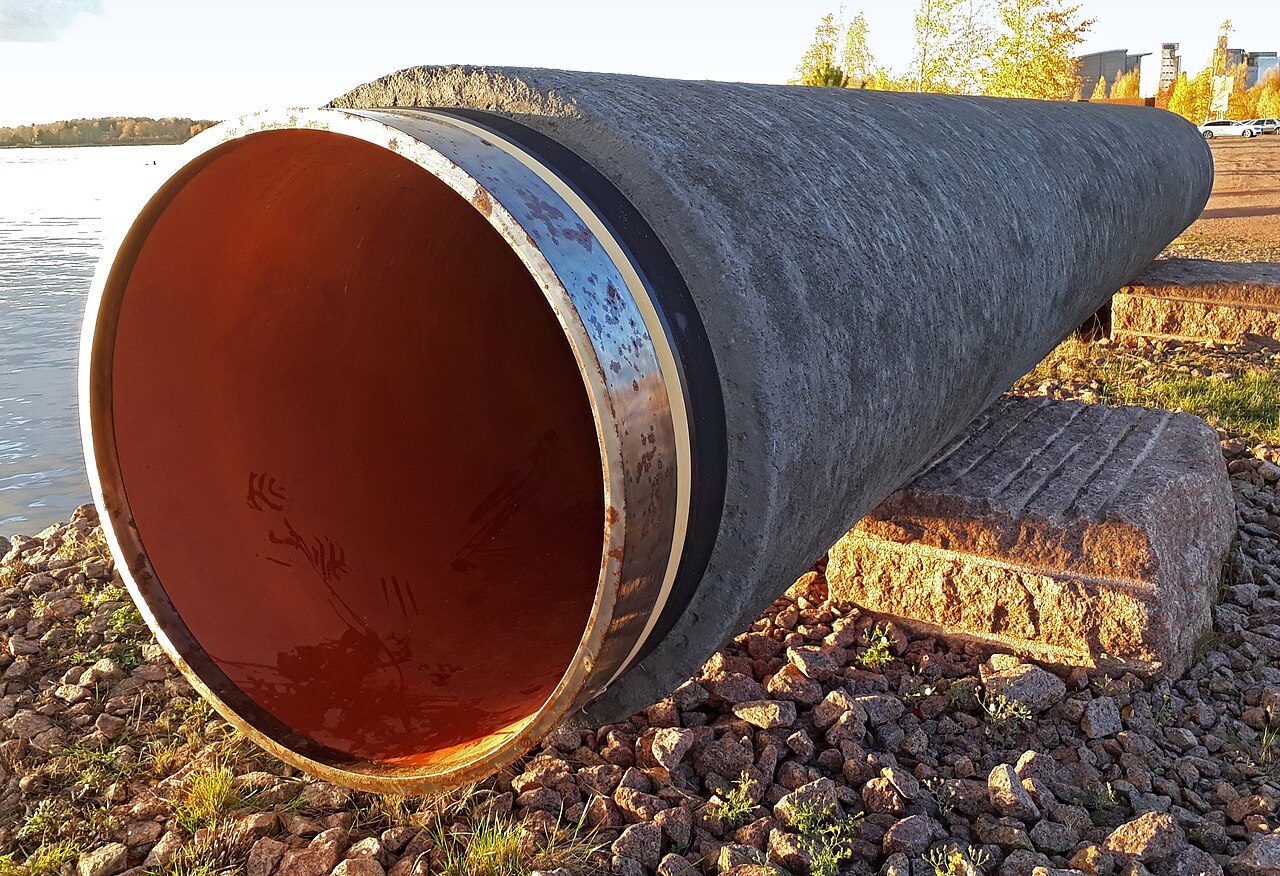
A piece of Nord Stream pipe on public display in Kotka, Finland. Vuo · CC BY-SA 4.0
A Ukrainian former army officer is on trial in Germany right now.
He's accused of helping blow up the Nord Stream gas pipelines four years ago.
And German prosecutors are saying something much bigger than that.
They say he was acting on behalf of the Ukrainian state itself.
So this isn't just a trial about one man anymore.
The trial opened today at the Hanseatic Higher Regional Court in Hamburg. The court only names him as Serhii K., under German privacy rules. Other reporting has named him as Serhii Kuznetsov.
He's charged as an accomplice to a war crime. Attacking civilian infrastructure. Causing an explosion. Damaging property. Disrupting a public service.
And here's the thing. This is the first time any court anywhere has actually examined who was behind the Nord Stream sabotage.
So what actually happened back in 2022?
The pipelines carried Russian gas straight into Germany, under the Baltic Sea. In September that year, explosions tore through three of the four Nord Stream 1 and Nord Stream 2 strands on the seabed. Nobody was hurt. But one of Europe's biggest energy links to Russia was gone overnight.
Now here's what prosecutors say.
They say Kuznetsov and other soldiers drew up the plan at the end of February 2022. That's the same month Russia invaded Ukraine. And they say it was done, in their words, says quote "on behalf of state authorities in Ukraine".
The goal, prosecutors say, was to permanently stop gas flowing through the pipelines. And to stop Russia using the gas money to fund the war.
So think about what that means. A German court is being told, by its own prosecutors, that a Ukrainian government body ordered an attack on infrastructure linked to Germany. One of Ukraine's most important military backers.
Prosecutors say Kuznetsov coordinated a team that rented a sailing yacht, the Andromeda. They used it to plant explosives on the pipelines near Denmark's Bornholm Island.
But even the basic facts aren't fully settled. One legal analysis says the yacht left from the German island of Rügen. The Associated Press and Al Jazeera say it left from the port of Rostock.
The rest of this story is for members.
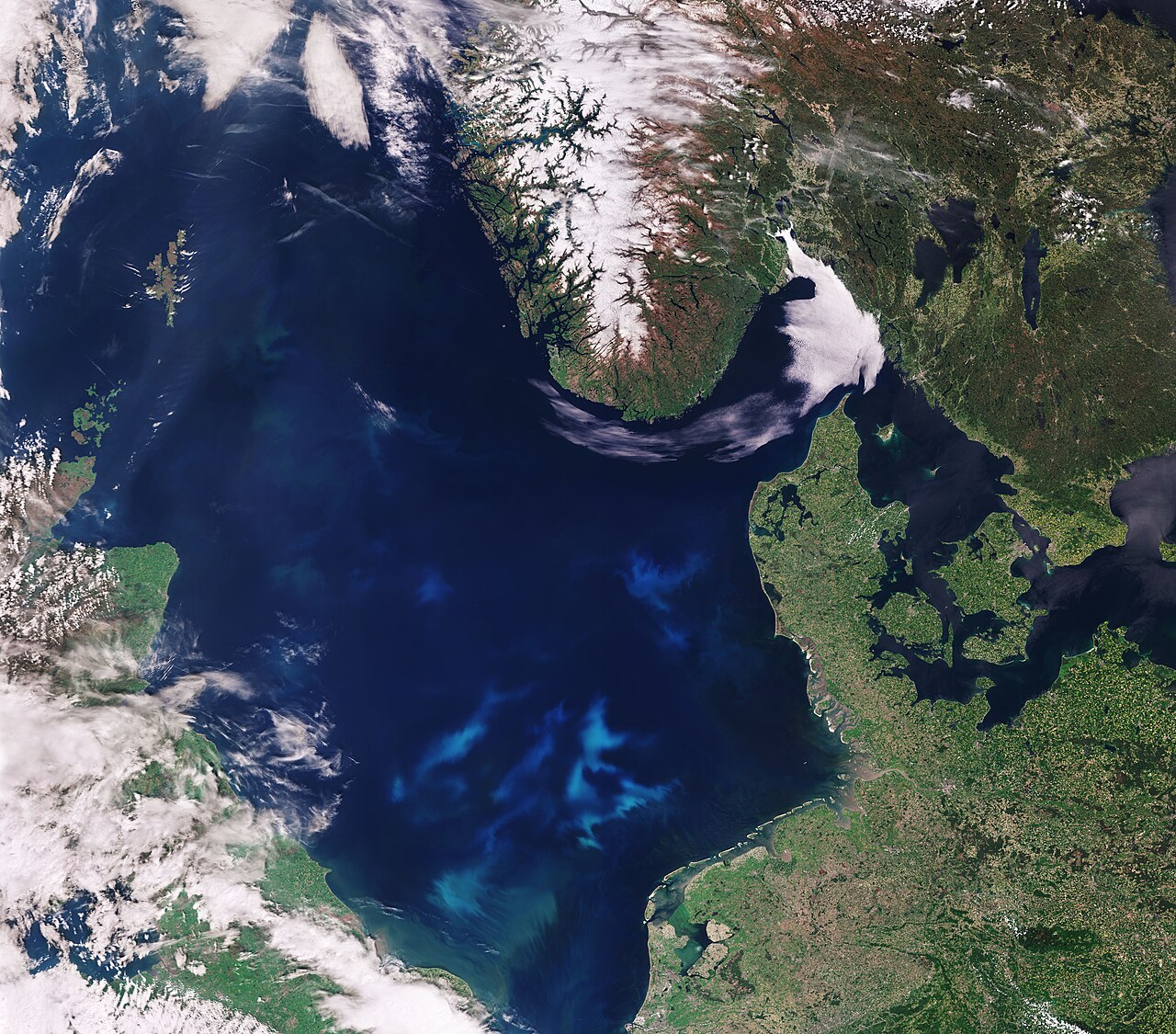
Contains modified Copernicus Sentinel-3A satellite data showing a significant algae bloom covering most of the southern North Sea, revealing the region's geography and shipping lanes. File photo. European Space Agency · CC BY-SA 3.0 igo
Kuznetsov was arrested in Italy fourteen months ago. He was extradited to Germany about eleven months ago. Germany's federal prosecutors formally charged him three and a half months ago. One legal analysis puts the indictment at 108 pages.
And he's not the only one.
A second suspect, named by Germany as Vladimir Z. and described as a diver, is in custody in Croatia fighting extradition. He was arrested in Pula about two months ago. A Croatian court approved sending him to Germany last month. But that ruling is under appeal. It isn't final.
German prosecutors have identified seven suspects in total. Only one is currently on trial.
Volodymyr Zelenskyy, Ukraine's President, has repeatedly denied his government knew about or was involved in any plan to attack the pipelines. According to one Ukrainian outlet, Ukraine's Prosecutor General's Office said investigators found no proof tying Ukraine, its state bodies or its officials to the explosions.
Kuznetsov's German lawyer, Jes Meyer-Lohkamp, says quote "have not provided any direct, conclusive evidence of our client's involvement".
German media have also named Roman Chervinskiy, a former Ukrainian intelligence officer, as Kuznetsov's alleged commander. He denies the accusations.
So the court now has two separate questions to answer.
Did Kuznetsov do it? And did the Ukrainian state order it?
Denmark and Sweden both investigated this themselves. Both closed their cases without charging anyone, over two and a half years ago. Western governments first blamed Russia for the attack. Russia has always rejected that. It calls the attack an act of international terrorism, and says American, British and NATO intelligence agencies were behind it instead.
Dmitry Peskov, the Kremlin's spokesperson, said two days before the trial opened that Russia expects "objectivity", and that both the people who carried out the attack and those who ordered it should be named.
Court hearings are set roughly twice a week. Sixteen dates are already scheduled through 17 December. The case is expected to run into February next year.
Here's what a conviction would actually mean. A German court formally finding that Ukraine's government ordered an attack on German energy infrastructure. Germany has been one of Ukraine's most important backers since Russia's invasion began in February 2022, sending weapons, money and political support.
Nobody has proven in court that the Ukrainian state ordered this.
Nobody has proven the opposite either.
That's what sixteen hearings, and however many follow them, now have to settle.
Nothing here was paid for by an advertiser. Members are the entire business model. Bronze is where it starts, and it opens the last seven days in full.