Germany just put its own military on alert against Russia
1 hour ago · 22 October 2026Share
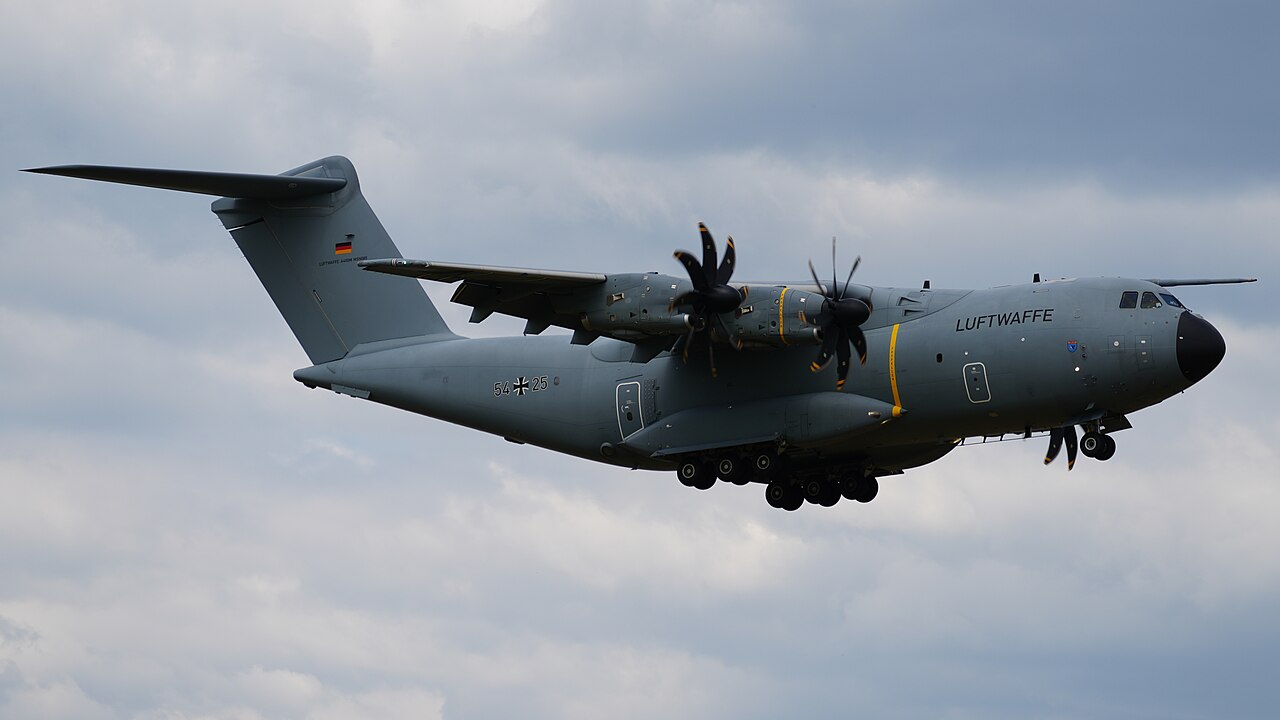
A German Air Force Airbus A400M transport aircraft lands at Wunstorf Air Base during the Air Defender 23 exercise. File photo. MarcelX42 · CC BY-SA 4.0
Germany's own military just raised the alarm on Russia.
The Bundeswehr has formally classified the threat of Russian sabotage against its own troops and bases as significant. That's the second-highest level on its internal threat scale. It's the first time that level has ever been used.
So what triggered it?
About five weeks ago, investigators found a crashed drone in a forested area near Wunstorf Air Base in Lower Saxony. A few metres from the wreckage, they found a tin packed with high explosives.
And here's the part that changes everything. Investigators now believe that drone was aimed at Bundeswehr military aircraft. Not Ukrainian planes. German ones.
Every previous drone incident tied to Russia in Germany had hit Ukrainian aircraft using German airspace. This is the first time investigators believe Germany's own military was the direct target.
A German defence ministry representative put it plainly. They said quote "We are noting that we face a significant sabotage threat overall for the Bundeswehr."
But the internal assessment goes further than that one line.
It concludes that Russia has crossed what it calls a previously anticipated red line. Harmful intent. Kinetic or lethal effects. Using weaponised drones. Against Germany and the Bundeswehr directly.
That's a military intelligence service stating, on paper, that Russia is now willing to use drones capable of killing German soldiers.
Now here's the twist.
German media reports, citing technical analysis from the BKA, say the Wunstorf drone had likely been sitting near the base for about two years before anyone found it. Two years. That means it was placed long before the recent escalation. Long before the drone attack at Leipzig and Halle Airport in early August, which Germany has publicly blamed on Russia after a month-long investigation. That attack hit Ukrainian cargo planes, not German military assets.
So the question now is simple. Are there other drones like it, sitting undetected, somewhere else in Germany?
The rest of this story is for members.
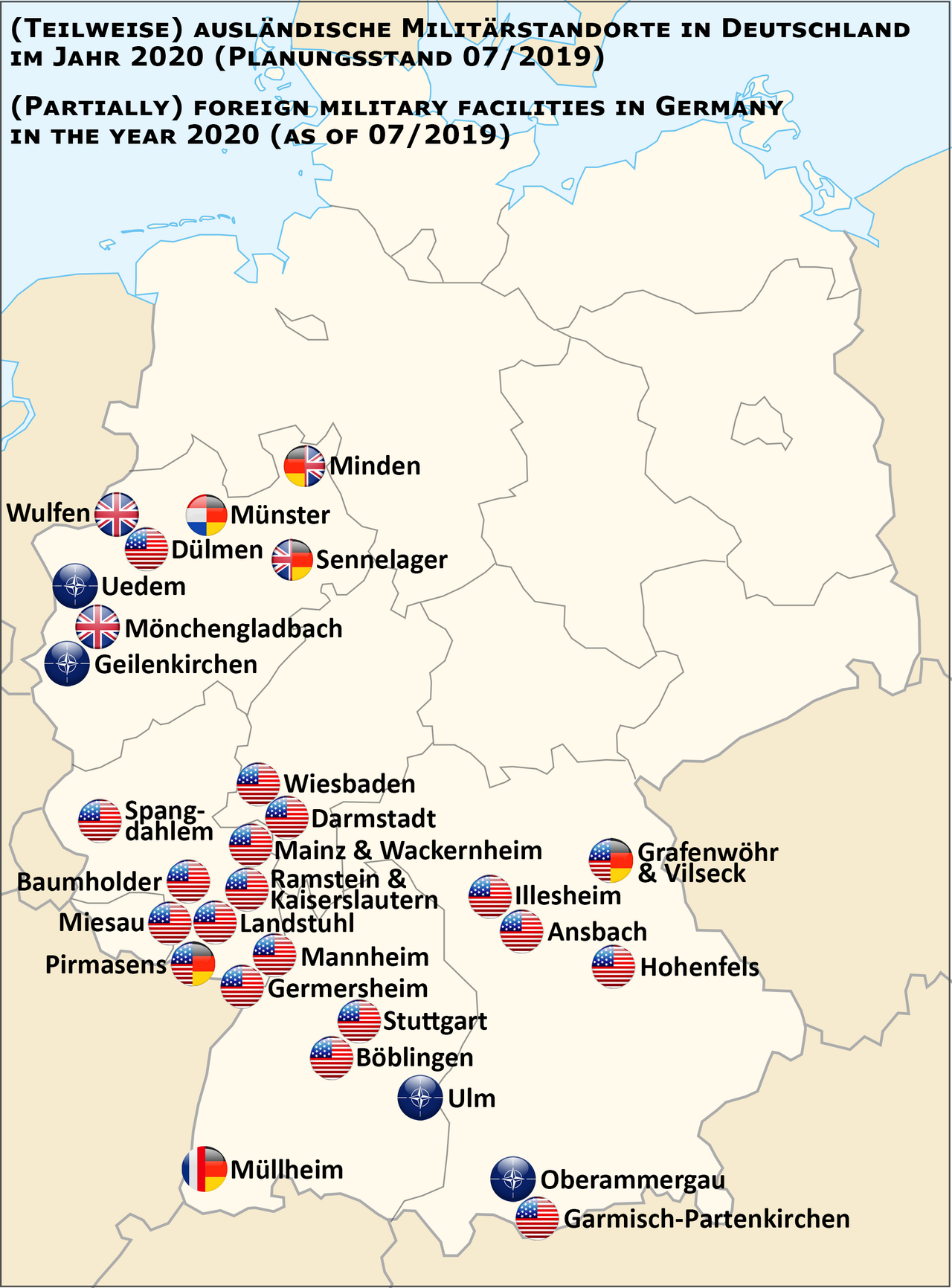
A map showing the locations of foreign military installations in Germany as of 2014. File photo. 36ophiuchi · CC BY-SA 3.0
Wunstorf isn't the only data point either.
German authorities point to a pattern. Drones have flown over the Arrow 3 missile defence site in Saxony-Anhalt. A camouflaged camera was found filming a strategically important railway station in Minden, in Westphalia. The assessment links all of it to an effort to weaken German political and public support for Ukraine, aimed at disrupting equipment deliveries and training.
Until now, Germany's highest-risk classification only covered specific sites. Ukrainian-training bases. Naval bases. Shipyards. The new assessment says the threat can't be boxed into a few locations any more.
So Germany's military is responding. More guard patrols. Infrared cameras. Fence surveillance systems. All going up at its installations now.
This didn't come out of nowhere.
Nine days ago, Alexander Dobrindt, Germany's Interior Minister, said the country faces what he called a shadow war, one he says goes further than the Cold War ever did. He called for expanded intelligence powers.
Sixteen days ago, Martin Jäger, the head of Germany's BND foreign intelligence service, said Germany risked being pulled into a shadow war with Russia.
And today, Friedrich Merz, Germany's Chancellor, said Russian disinformation and hybrid attacks are the biggest threat Germany faces. He said quote "This is a fundamental attack against the entire political order we achieved after 1990."
That's the leader of a NATO country calling this a threat to the entire order Europe built after the Cold War ended.
So what does Russia say?
The same thing it always says. It denies any involvement in sabotage or hybrid attacks, and has previously accused Germany of staging incidents itself. Russia's ambassador in Berlin called Germany's earlier allegations over the Leipzig attack absurd, and called them a provocation. Moscow has not responded specifically to today's Bundeswehr assessment.
Here's what's still not known. Whether other drones are sitting undetected near other German bases. What the Wunstorf drone's confirmed target actually was. And whether this is the start of more attacks, or whether Germany is just catching up, five weeks late, to something that already happened.
Nothing here was paid for by an advertiser. Members are the entire business model. Bronze is where it starts, and it opens the last seven days in full.