Egypt just arrested an entire newsroom and charged them with terrorism
1 hour ago · 8 October 2026Share
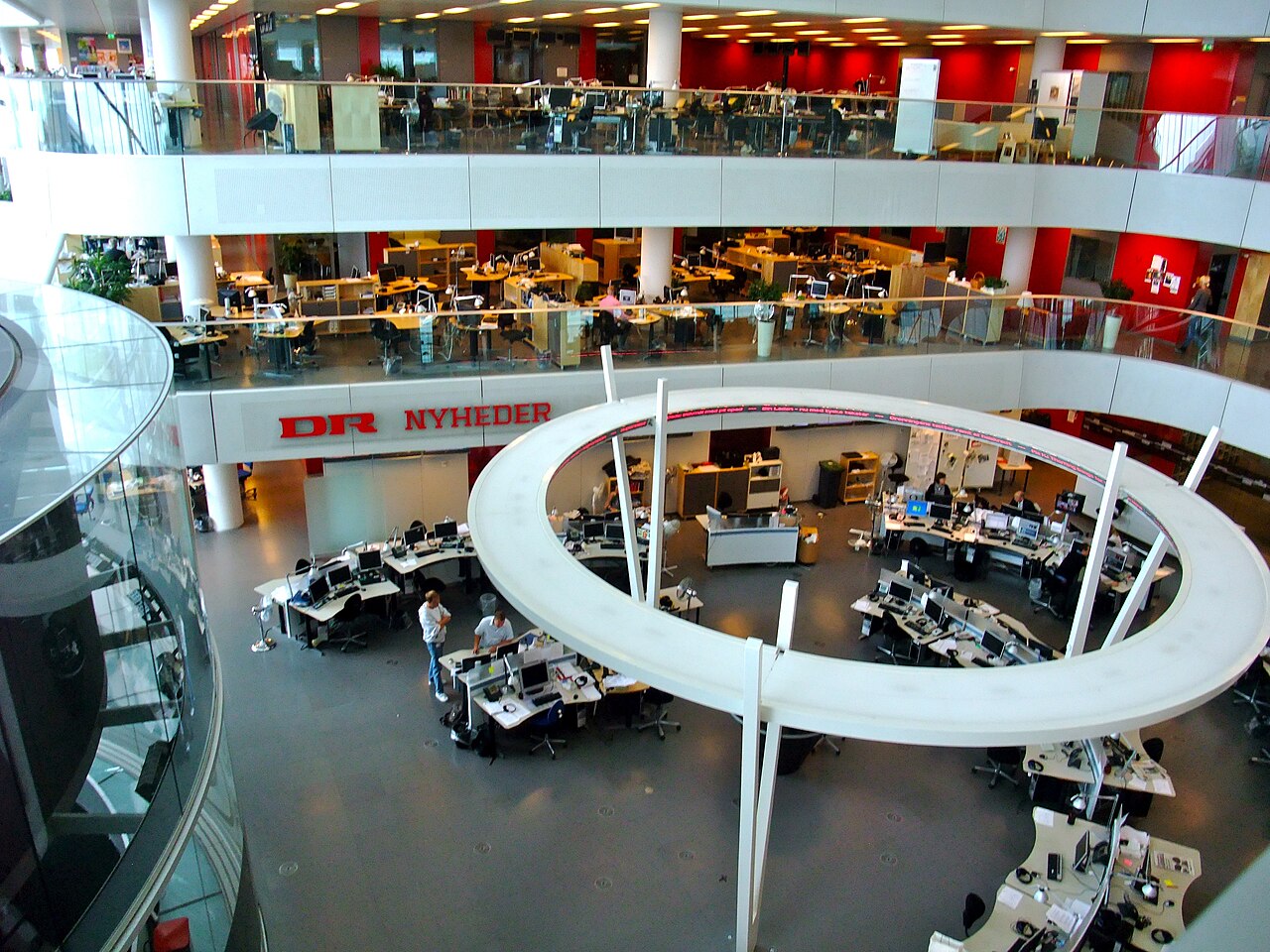
News room at the Danish Broadcasting Corporation where journalists work to produce news to web, TV, and radio. File photo. James Cridland · CC BY 2.0
Egypt just arrested an entire newsroom.
Six journalists. That's all of them. Every single reporter at Matsadaash, an independent fact-checking site whose name means "Don't Believe It" in Arabic.
They were picked up nine or ten days ago, in raids across several governorates. Security forces took their phones and their computers. Egypt has never done this before — arrested a whole newsroom at once.
So what does Matsadaash actually do? It checks what Egyptian officials say, and investigates state bodies. It's been doing that since 2018.
Egypt's Interior Ministry confirmed the arrests seven days ago. It says Matsadaash is tied to the Muslim Brotherhood, the group Egypt banned back in 2013, after President Mohamed Morsi was overthrown. The ministry says the site was unlicensed, run from abroad, and spreading false news for the Brotherhood.
Three or four days ago, one of the six, Mohamed Ashraf, was formally charged. Joining a terrorist group. Spreading false news. The Egyptian Initiative for Personal Rights, which represents all six, says he was interrogated from 10pm to 8am about what Matsadaash had actually published. Then he was ordered held for 15 days. At that point, nobody knew where the other five were.
One day ago, the Public Prosecution said it had ordered all six held in pretrial detention while the investigation continues. That statement laid out the allegations in detail. But it didn't list formal charges for each person, and it didn't say how long the detention order runs. Separately, the wire service AFP reported that prosecutors have accused all six of terrorism-related offences.
So what's the actual case? According to the prosecution's own statement, investigators say the six got monthly payments in foreign currencies, sent through a company owned by a Brotherhood member living overseas. One defendant reportedly said he and the others were told to publish false news about state institutions, to help bring them down. And prosecutors say a technical check found pro-Brotherhood posts on two of the journalists' social media accounts.
That's it. That's the whole case, in the prosecution's own words.
And here's the thing. EIPR says the journalists have reported torture since they were arrested. Beatings. Forced stripping. Electric shocks. Threats to hurt them or their families. All allegedly at National Security Agency facilities. The Interior Ministry denies every bit of it. A ministry source says the claims are false, and just an attempt to dodge the charges.
The rest of this story is for members.
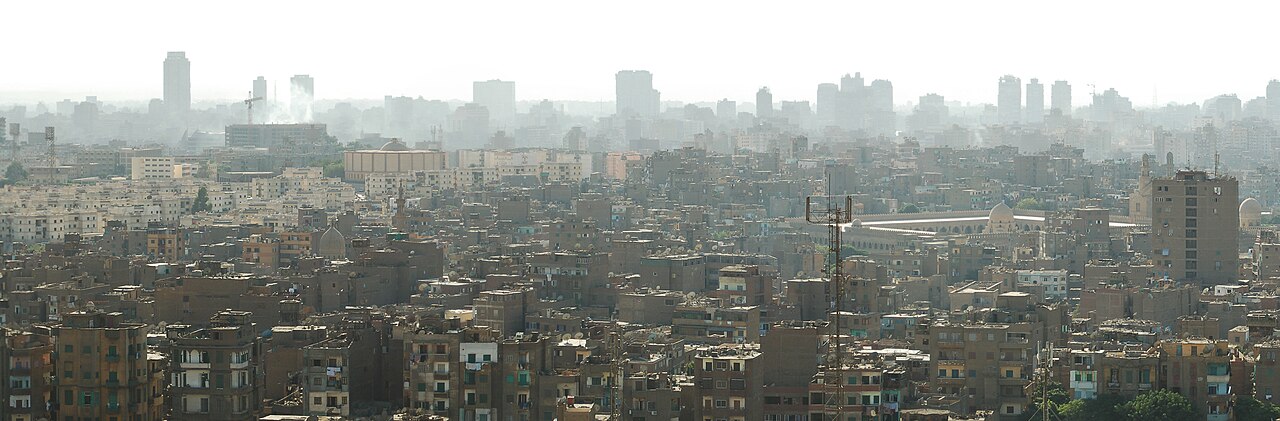
Cairo cityscape. Egypt, North Africa. File photo. Mstyslav Chernov · CC BY-SA 3.0
The Public Prosecution's own statement says none of the six had visible injuries. It says three who said they were mistreated were examined by the Forensic Medicine Authority, and no injuries or signs of violence were found.
But EIPR says the prosecution's statement never names one single Matsadaash report as false. Not one. And none of the six was shown a false report during their questioning — questioning that ran almost 30 hours each.
Matsadaash and its co-founder, Abdelrahman Mansour, deny all of it. Mansour was a prominent activist in Egypt's 2011 uprising. He now lives in New York. He says he and the journalists' families still don't know where they're being held. He calls this one of the worst attacks on journalism in Egypt's modern history.
Only one of the six is even a registered member of the Egyptian Journalists Syndicate. Even so, the Syndicate's board voted, unanimously, to file a complaint with the Prosecutor General over the torture allegations. It wants any confession made under coercion thrown out. And it's asked for all six to be released on the Syndicate's own guarantee, pointing to how young and inexperienced some of them are.
There's a precedent here, and it doesn't help the prosecution's case. Two Matsadaash editors were arrested in 2023, over a report on Egyptians detained in Zambia with a plane full of cash and weapons. They were released. No charges. Investigators found no link to the Brotherhood at all.
More than 80 rights groups and media outlets have signed a petition against the arrests, including Human Rights Watch and Reporters Without Borders. Dozens of journalists held a sit-in outside the Journalists Syndicate in Cairo, demanding the staff be released.
Lobna Darwish, EIPR's advocacy director, says the real goal is to take an entire independent media platform offline — arrest the whole team, not just one journalist over one story. Amy Brouillette of the International Press Institute says quote "a blatant attempt to censor Matsadaash's vital public interest reporting". The Committee to Protect Journalists calls it a grave escalation in Egypt's campaign against independent journalism.
Egypt is already holding a lot of journalists. EIPR says 26. The Committee to Protect Journalists says 19. The New Arab says around 23, with 16 of them already past the legal detention limit. The exact number is disputed. But every count runs well into double figures.
The arrests came just days before the United States said it would waive human rights conditions on $320 million in military aid to Egypt. They also land weeks before Egypt Forum 2026, an event President el-Sisi is running to show off his government's achievements.
Nobody knows yet whether the six will go to trial, what they'd face if convicted, or whether this ends the way it did in 2023 — released, with no charges at all.
Nothing here was paid for by an advertiser. Members are the entire business model. Bronze is where it starts, and it opens the last seven days in full.