He says Iran faces a choice. The easy way, or the hard way.
He said it a few hours ago at the White House, right before boarding Marine One for Ohio.
Trump says Iran has been "decimated." He says Iran is "virtually giving up any plans of a nuclear weapon."
And his Defense Secretary is backing him up.
Pete Hegseth spoke to reporters the same day, in Colorado Springs. He says quote "Iran will never, ever, ever have a nuclear weapon." He says Trump is hell-bent and determined to make sure of it.
Then Hegseth laid out the alternative. He says quote "it may have to happen the hard way."
What does that actually mean? Nobody has said. Not Hegseth. Not Trump. Could be more bombing. Could be a ground operation. Could be something else entirely.
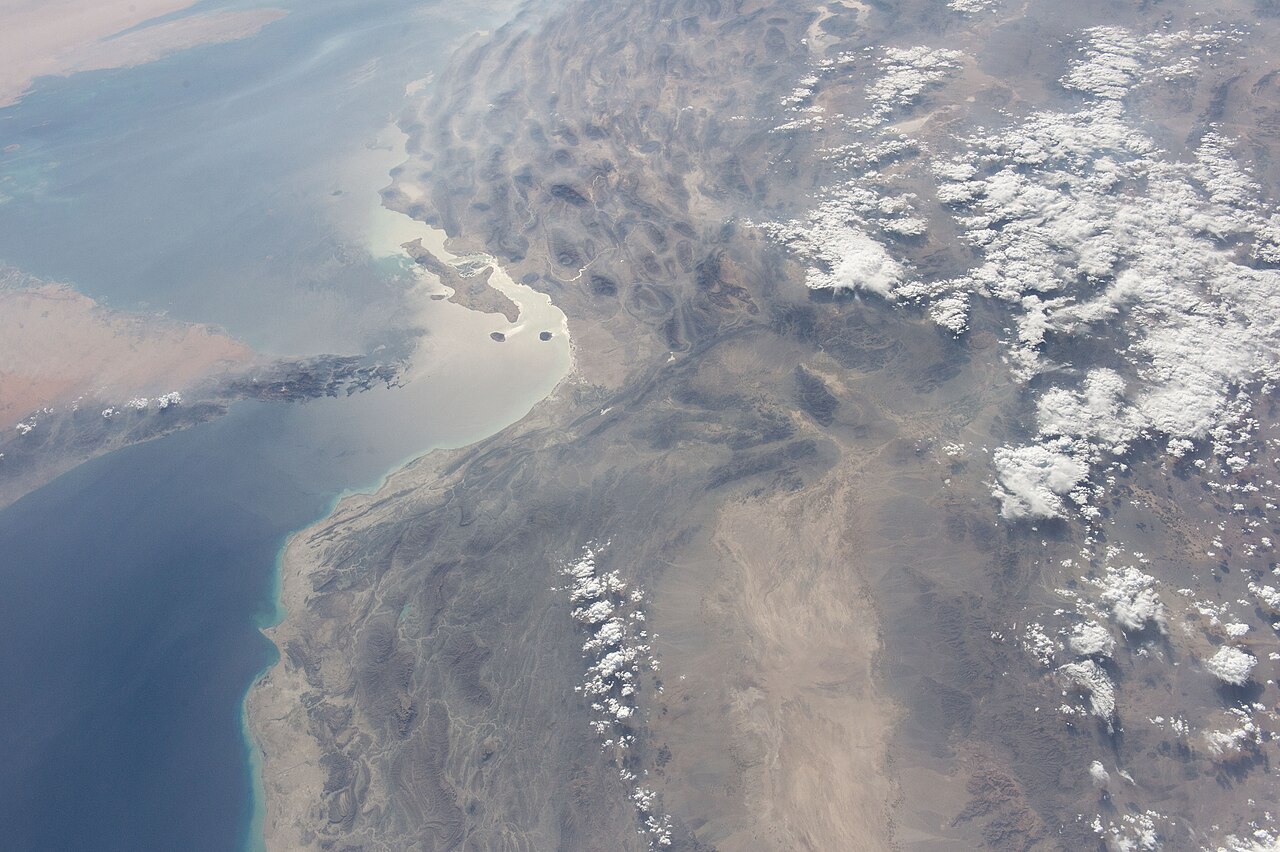
Hegseth also said something else. He says America controls the Strait of Hormuz now, not Iran. He says Iran's navy and air force are too damaged from this war to challenge the US there.
He did admit Iran is trying to rebuild. But he called it slow. Because of the damage already done.
So why bring this up now?
Because diplomacy just collapsed.
Last week, Iran's Foreign Minister Abbas Araghchi put forward a plan. Seven days to reopen the Strait of Hormuz. In exchange, the US ends its blockade, lifts sanctions, and agrees a regional ceasefire.
Araghchi told NBC Iran was fully prepared to fight again. He wrote online that Iran did not come to New York to sell a war.
The rest of this story is for members.
Contains modified ISS imagery showing the Persian Gulf, Strait of Hormuz, and surrounding region. Earth Science and Remote Sensing Unit , Lyndon B. Johnson Space Center · Public domain
Days later, Marco Rubio, the US Secretary of State, ordered Iran's entire UN delegation to leave the country.
Two Iranian officials stayed past the deadline. They were removed around the same day Trump made his remarks.
But Iran's UN mission tells a different story. It says those two were always leaving on that date. It says it told the State Department back on 17 September.
So who's right? Nobody outside both governments can say for certain.
And behind all of this, the US military has been building up for weeks.
A third aircraft carrier, the USS Theodore Roosevelt, is heading to the Middle East. More than 2,000 Marines are going with it, from the Makin Island group.
By the end of November, three carriers and two amphibious groups should be in the region. Around 50,000 US troops are already there.
This war started on 28 February. The US called it Operation Epic Fury.
Trump originally said he needed four to six weeks to wipe out Iran's nuclear threat.
Eight months later, it's still going. Trump says 18 US troops have died fighting it.
Back in June, the US and Iran signed a deal to reopen the Strait of Hormuz. That deal has fallen apart. Neither side is sticking to it.
And Trump keeps changing his timeline. He's said the war will end "very soon." He's said it could end once the midterms are over. He told Time magazine it's possible he resumes bombing Iran once the midterms are done, on 3 November.
So here's the real question. Is this pressure meant to drag Iran back to the table? Or is it getting the public ready for more bombing, once the election is out of the way?
Neither man has said.
And Iran, for now, is still talking diplomacy through Qatar. Even while it says it's ready to fight.
Nothing here was paid for by an advertiser. Members are the entire business model. Bronze is where it starts, and it opens the last seven days in full.