The Treasury just scrapped gas standing charges and heavy users could pay more
28 October 2026 · 28 October 2026Share
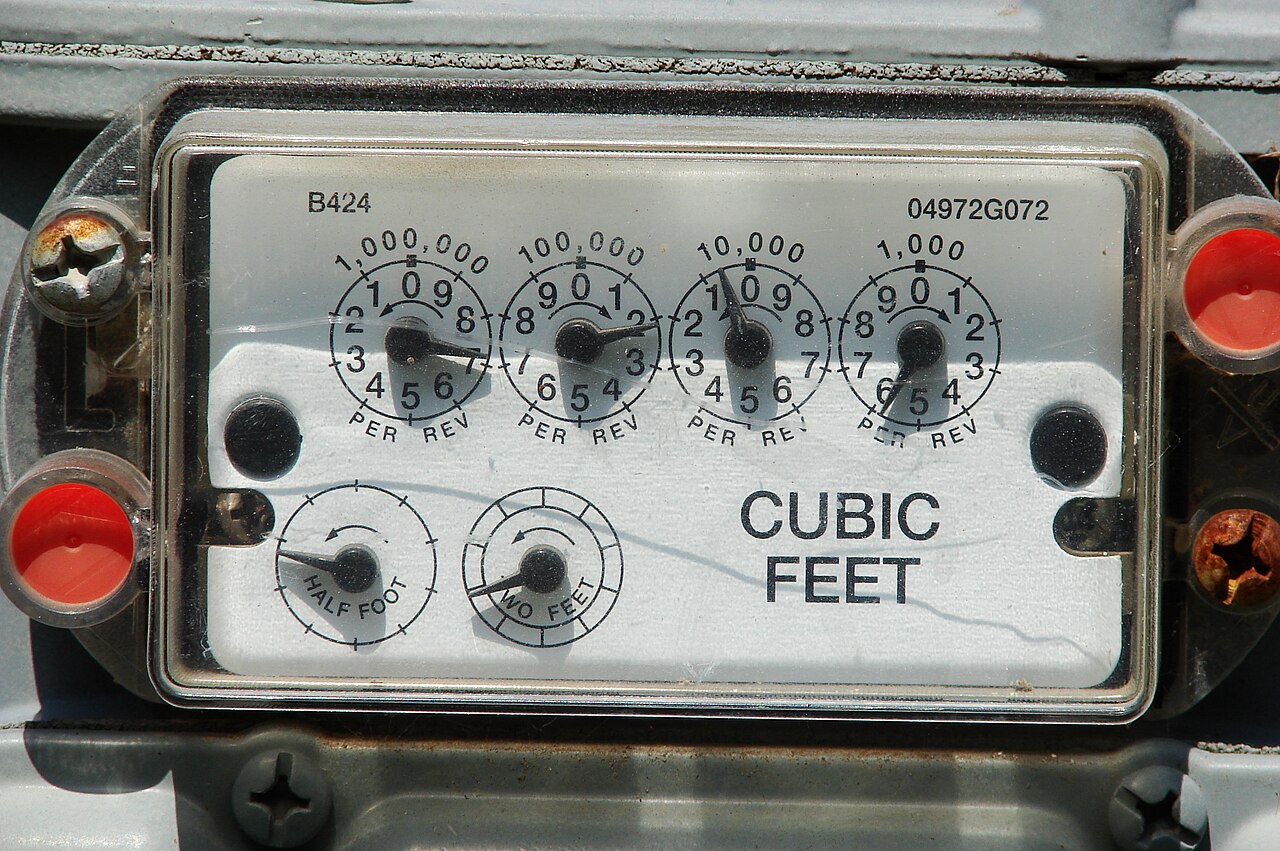
Close-up of a diaphragm-style natural gas meter analog read-out. File photo. Loadmaster (David R. Tribble) This image was made by Loadmaster (David R. Tribble) . Email the author: David R. Tribble Also see my personal gallery at Google Photos · CC BY-SA 3.0
John Healey is scrapping standing charges on gas bills.
He's the Chancellor, and this is part of his first Budget, due at half twelve today.
So what's a standing charge? It's the flat daily fee on every gas bill. You pay it whether you use gas or not.
Right now that's £108 a year, on average.
Under this plan, that cost disappears as a flat fee. It gets folded into the unit rate instead. So you pay per unit of gas you actually use.
John Healey says quote "Gas standing charges are unfair and outdated".
Now, the number the Treasury is putting out: 60% of households save £45 a year, on average.
But here's the thing. It hasn't said over what period. And it hasn't said what happens to the other 40%.
Healey wants Ofgem, the regulator, to make this happen in 2027, or sooner if it can. Ofgem hasn't said anything back yet.
Around 23 million homes are affected by this.
So what about the households that don't save? The Treasury says it will set out what it calls targeted mitigation for a small number of households. It hasn't said what that looks like, or who qualifies.
And here's why that matters. Moving the cost onto the unit rate means heavy users pay more of it. So larger families, and anyone who uses a lot of gas, might not benefit. Some could end up paying more.
This didn't come from nowhere. A week ago, Andy Burnham, the Prime Minister, asked John Healey and Miatta Fahnbulleh, the Energy Secretary, to look at scrapping standing charges. That was right after the government approved the Jackdaw gas field.
The rest of this story is for Silver and Gold members.
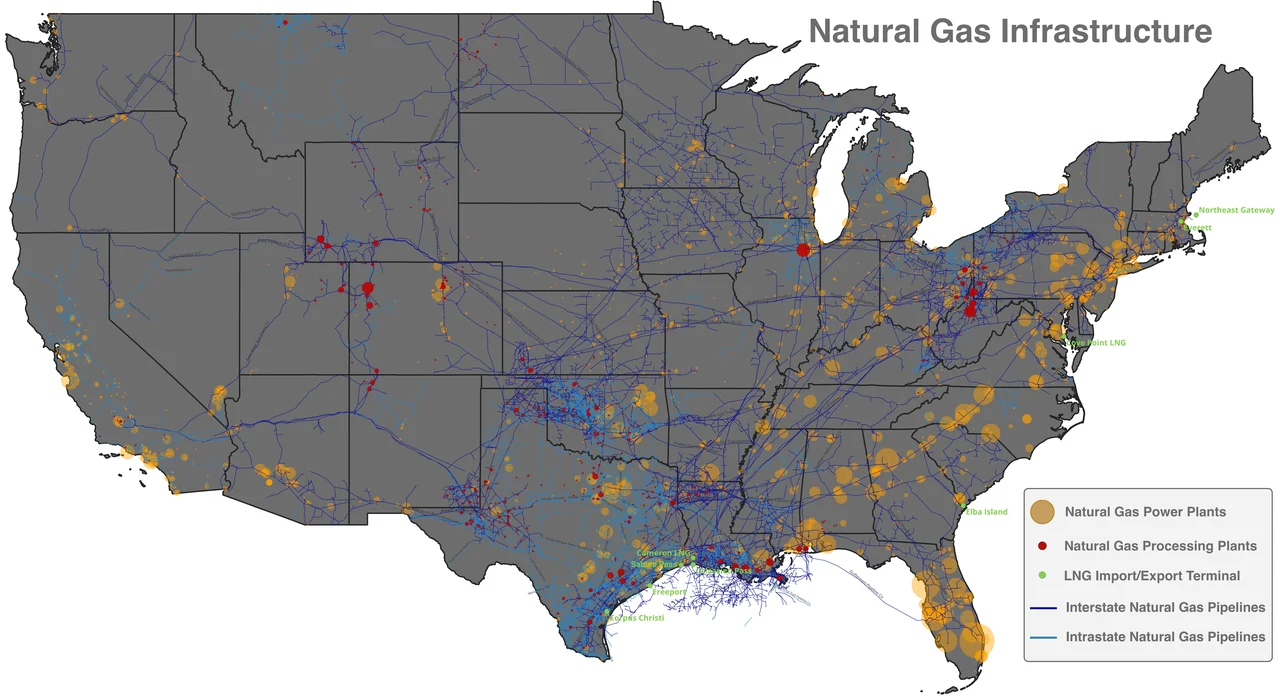
Contains natural gas infrastructure in the United States. File photo. Wikideas1 · CC0
Andy Burnham says abolishing gas standing charges is about basic fairness and giving people more control over their bills.
Miatta Fahnbulleh says affordability is her number one priority.
And this is a complaint people have made for years. Martin Lewis, from MoneySavingExpert, has called standing charges an energy poll tax. His point: everyone pays them, whether they use gas or not.
And the timing matters too. Bills have just gone up. Ofgem's price cap rose 4% this month. The average dual-fuel bill went from £1,663 to £1,723 a year.
Separately, the government has also cut VAT on electricity bills. That's in effect now until the end of March next year, worth about £45 a year. That's a different measure, not part of this one.
Greg Jackson, who founded Octopus Energy, welcomed the standing charges move. He says it's real joined-up thinking.
Now, a report the night before this announcement said something extra. It said the plan would also cut the Energy Secretary's power to put net-zero levies on bills. And it put the saving at up to £50.
Neither of those made it into the Treasury's actual announcement. £45 is the number the government has put its name to.
So what's still missing? How the Treasury recovers the £108 a year it currently collects through the standing charge, once that charge is gone. Moving it into the unit rate is the plan. But the mechanics haven't been spelled out. And we don't know what this costs the Exchequer, if anything.
Opposition parties haven't responded yet. They're expected to ask how the money gets recovered, and whether this goes far enough, once the Budget speech is done.
So the standing charge now has an end date.
What replaces it, for every household, still doesn't have a number on it.
Nothing here was paid for by an advertiser. Members are the entire business model. This story is Silver's: it opens everything we have ever written, and our investigations first.