The Royal Navy just stood up its first ever robot boat squadron
3 days ago · 9 November 2026Share
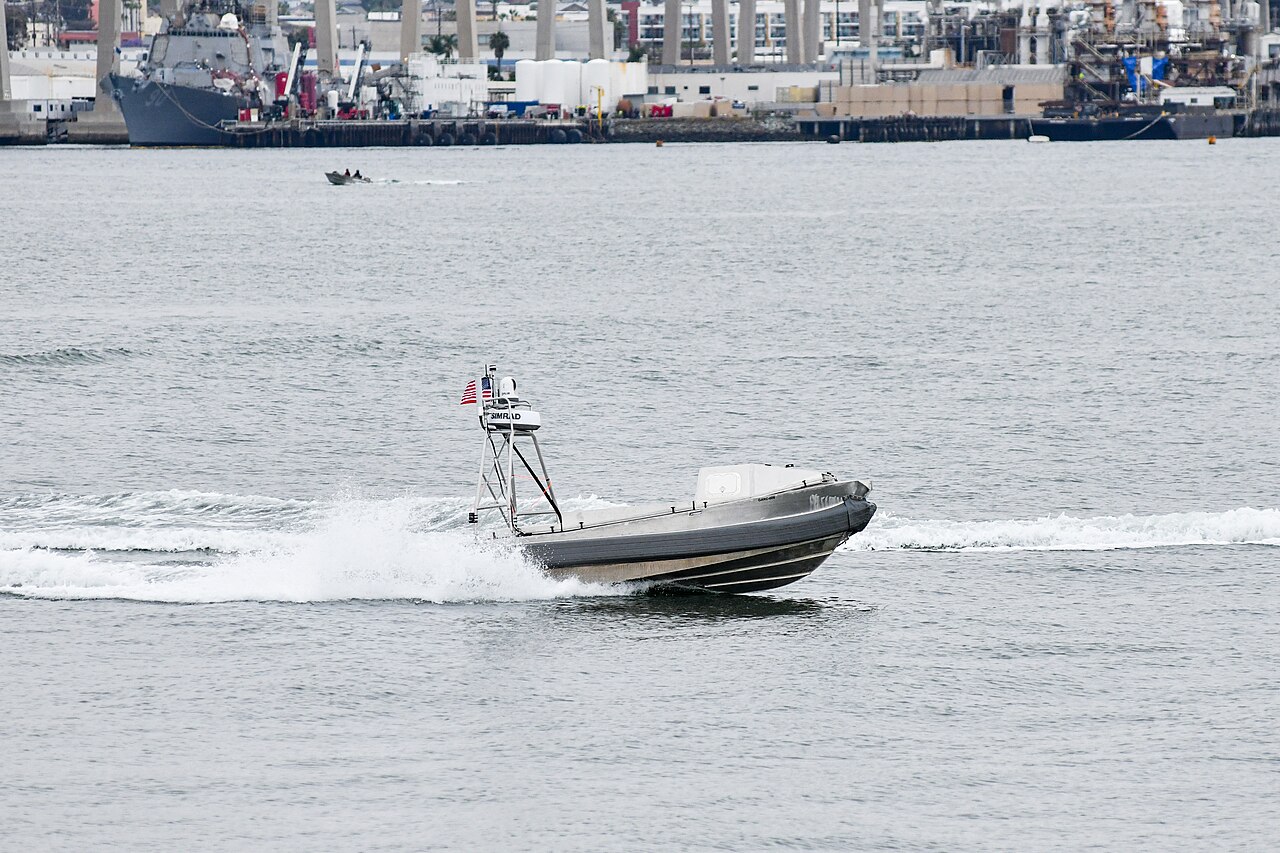
Global Autonomous Reconnaissance Craft from Unmanned Surface Vessel Squadron 3 operate remotely in San Diego Bay. Mass Communication Specialist 1st Class Claire M. DuBois, U.S. Navy · Public domain
The Royal Navy has just commissioned its first ever autonomous squadron.
This is a unit built to run uncrewed boats on front-line operations.
The ceremony happened four days ago, at HM Naval Base Portsmouth.
More than 200 people were there. Navy sailors, families, dignitaries, media.
The Ministry of Defence sat on this announcement under embargo until today.
So why now? Wes Streeting, the Defence Secretary, says it's a response to modern warfare moving faster than ever.
The new unit is called the 1st Autonomous Squadron. It's based in Portsmouth.
Around 180 people serve in it. Split into two watches, so it can run day and night.
And here's a number worth holding onto. That's roughly the same headcount as a Type 23 frigate's entire crew.
So what do they actually operate? Two types of uncrewed boat.
First, Rattler training vessels. Second, Kraken K3 Scout boats.
The Rattlers have already escorted warships off Scotland. Remotely piloted from 500 miles away.
The Kraken K3 Scout can travel 600 miles. Push that to 1,100 miles if needed.
It's been tested off the south coast too. Force protection. Surveillance. Reconnaissance.
Now, this squadron didn't come from nowhere.
Back in March this year, the Navy announced a plan to buy 20 drone boats. Project Beehive, they called it.
A British company, Kraken Technology Group, won that contract. Worth £12.3 million.
And now the 1st Autonomous Squadron replaces Project Beehive entirely. Beehive was just the proving ground.
The rest of this story is for members.
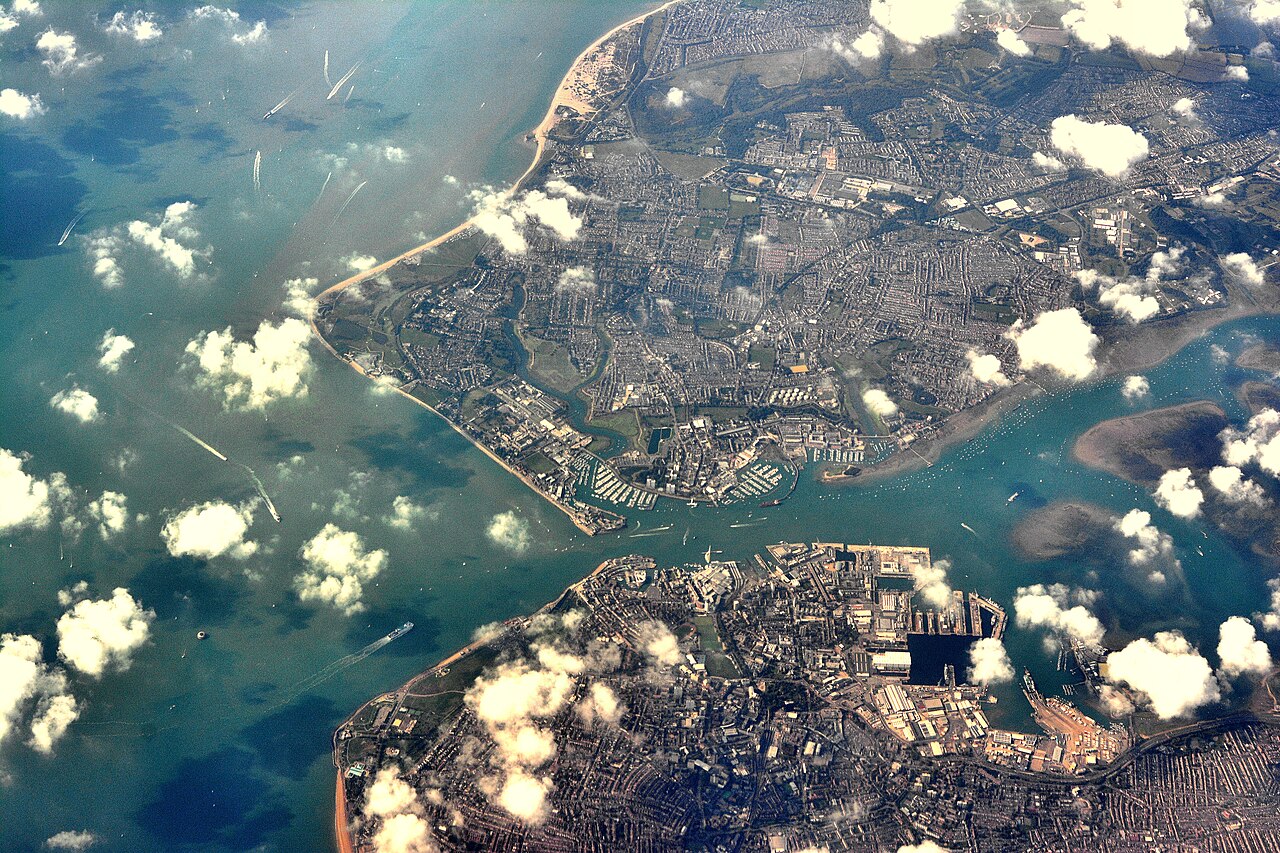
Portsmouth naval base and associated towns on the south coast of England, with the Spinnaker Tower visible. File photo. Mike McBey · CC BY 2.0
Vice-Admiral Steve Moorhouse is the Royal Navy's Fleet Commander. He says quote "We are commissioning the first autonomous squadron in our history".
That's the Navy's most senior operational officer saying nothing like this has existed before.
He also says the seas are getting more contested and harder to operate in. A hybrid navy, he says, makes the fleet more lethal. Harder to knock out. Quicker to adapt.
Commander Helen Coxon runs the squadron day to day. She says quote "I am proud to lead the people who will make it work".
So that's the officer in charge being honest. Her sailors are still building these skills. They haven't finished yet.
All of this sits inside a bigger plan. The hybrid navy. Warships and crews, working alongside uncrewed vessels.
And the price tag? £1.5 billion, over four years.
Why does this matter right now? The Royal Navy has just 11 frigates and destroyers left.
These autonomous boats are meant to work alongside the Type 26 and Type 31 frigates. Not replace them.
And Russia has been building up forces in the North Atlantic. And in the High North. That's the water closest to Britain's own coastline.
The timing isn't an accident either.
This announcement landed just before a major gathering of allied leaders in Oslo this week. The subject there? The collective security of Northern Europe.
One more thing happened alongside the squadron. The Navy opened a Capability Accelerator Hub at Portsmouth. Partly funded by UK Defence Innovation.
General Sir Gwyn Jenkins, the First Sea Lord, ordered it built more than a year ago. Early in his tenure, during a sprint of reforms.
No opposition to any of this has been reported. It has support across party lines.
So what don't we know? When these boats actually deploy on live operations. And whether more autonomous squadrons are coming after this one.
Nothing here was paid for by an advertiser. Members are the entire business model. Bronze is where it starts, and it opens the last seven days in full.