The Treasury just contradicted its own Chancellor on welfare and nobody knows the plan
30 October 2026 · 30 October 2026Share
U.S. Secretary of Defense Pete Hegseth with UK Secretary of State for Defence John Healey in February 2025. File photo. U.S. Department of Defense · Public domain
John Healey just promised to cut the benefits bill before the next election. And a few hours later, his own Treasury said that is not quite what he promised.
He's the Chancellor. He said it live on LBC's Nick Ferrari at Breakfast earlier today. Then he said it again, same morning, on BBC Radio 4's Today programme.
Both times he was asked the same question. Will welfare spending fall before the next election?
Both times he gave the same answer. He says quote "we'll do that in a Labour way".
So that sounds like a yes. A timed promise.
But then Treasury officials started briefing journalists. And their line was different. They say he made no commitment on timing at all.
So which is it?
Well, start with what happened the day before. John Healey delivered his first Budget to the Commons. It raised the bank tax surcharge from 3% to 6%, for 15 months. It gave £100 to households in council tax bands A to D, to help with energy bills.
And here's the thing. It did not announce welfare cuts.
Kemi Badenoch, the Conservative Party leader, went straight at that gap. She called the Budget quote "not good enough, not strong enough, not bold enough". She said Britain's welfare system is out of control and the country is spending and borrowing too much.
That's why the welfare question did not go away the next morning.
Now here's the number behind all of this. Welfare spending is set to rise this year by £19 billion. That takes it to £353 billion. The Office for Budget Responsibility says it will hit £431 billion by 2031/32. And the OBR has separately warned that sickness and disability benefits alone could cost £100 billion a year before the end of the decade.
That's the bill John Healey says he wants to bring down.
The rest of this story is for Silver and Gold members.
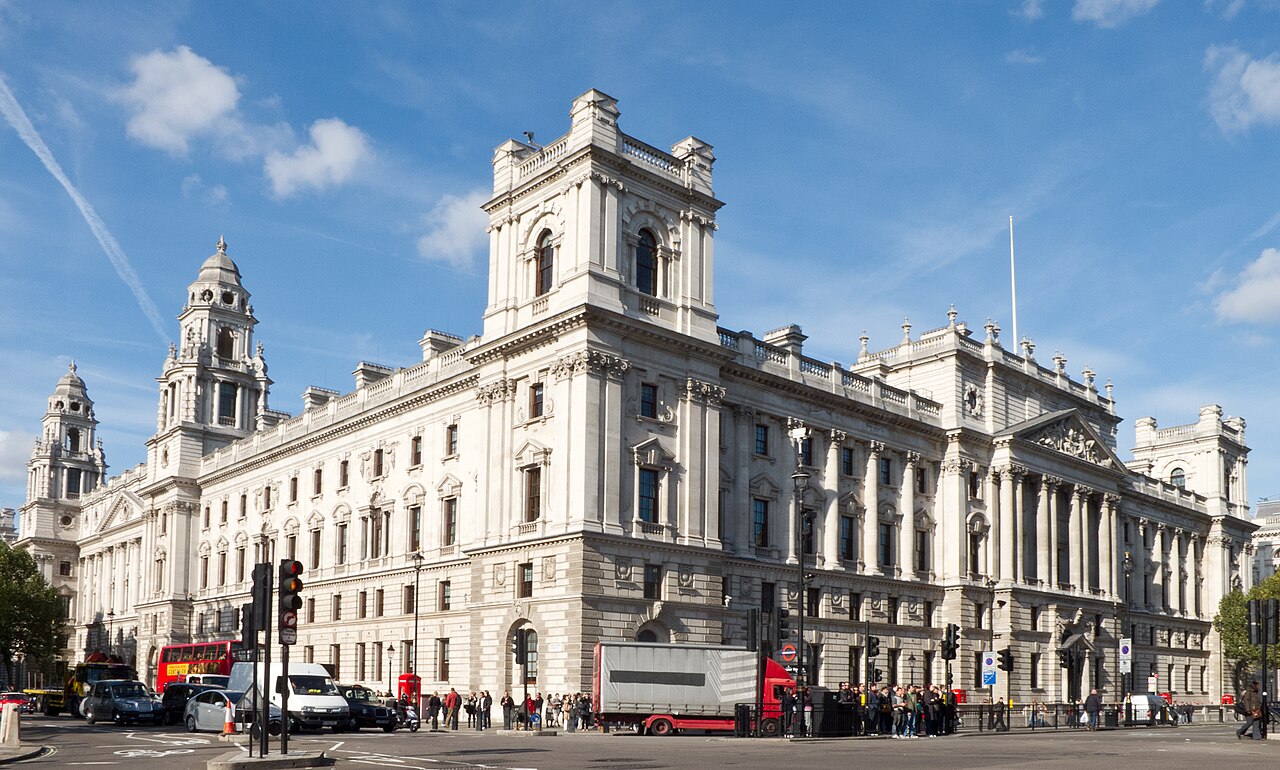
Government Offices Great George Street, London, England. File photo. Carlos Delgado · CC BY-SA 3.0
But he also ruled out doing it fast. He says cutting benefits hard right now would be a pressure too far, while people are struggling with the cost of living. In the Commons the day before, he put it this way. We can bring the benefits bill down, and we will, he said, but in that Labour way.
So instead of cuts now, there are two reviews.
One is on disability benefits. Sir Stephen Timms is co-chairing that one. The other is on young people not in education, employment or training. Alan Milburn is leading that one.
Both are due out next month. The government says it will respond by the end of the year. Legislation comes next year.
That's the plan. No detail yet. And no date for when the bill actually starts falling.
Which is exactly the gap the Treasury pushed back on. Officials told journalists John Healey made no commitment on timing, and never promised the bill would fall before the next election, which is due no later than mid-2029. Downing Street's spokesperson said the government is not setting an arbitrary target or timetable.
Andy Burnham, the Prime Minister, gave his own version a few hours later. He was visiting the Rolls-Royce factory in Derby. He said the government is working flat out to bring the welfare bill down.
But notice what he didn't say. He did not repeat John Healey's words about timing. And he did not repeat the Treasury's denial either.
Sir Ed Davey, the Liberal Democrat leader, says welfare reform needs to be done right, including cutting the bill by helping people into work.
And Helen Miller, director of the Institute for Fiscal Studies, says this decade looks set to be the worst decade for growth in household incomes on record. That's the backdrop every welfare change now lands on.
So what don't we know? Whether the Treasury knew John Healey would make this pledge before he went on air. Or whether he spoke for himself and got corrected afterwards. And whether this is a real block on welfare cuts before the next election, or just a row over how his words should be read.
For now, the Chancellor has promised a falling bill.
Nothing here was paid for by an advertiser. Members are the entire business model. This story is Silver's: it opens everything we have ever written, and our investigations first.