Iran just used asylum seekers to spy on journalists in Britain
17 hours ago · 16 November 2026Share
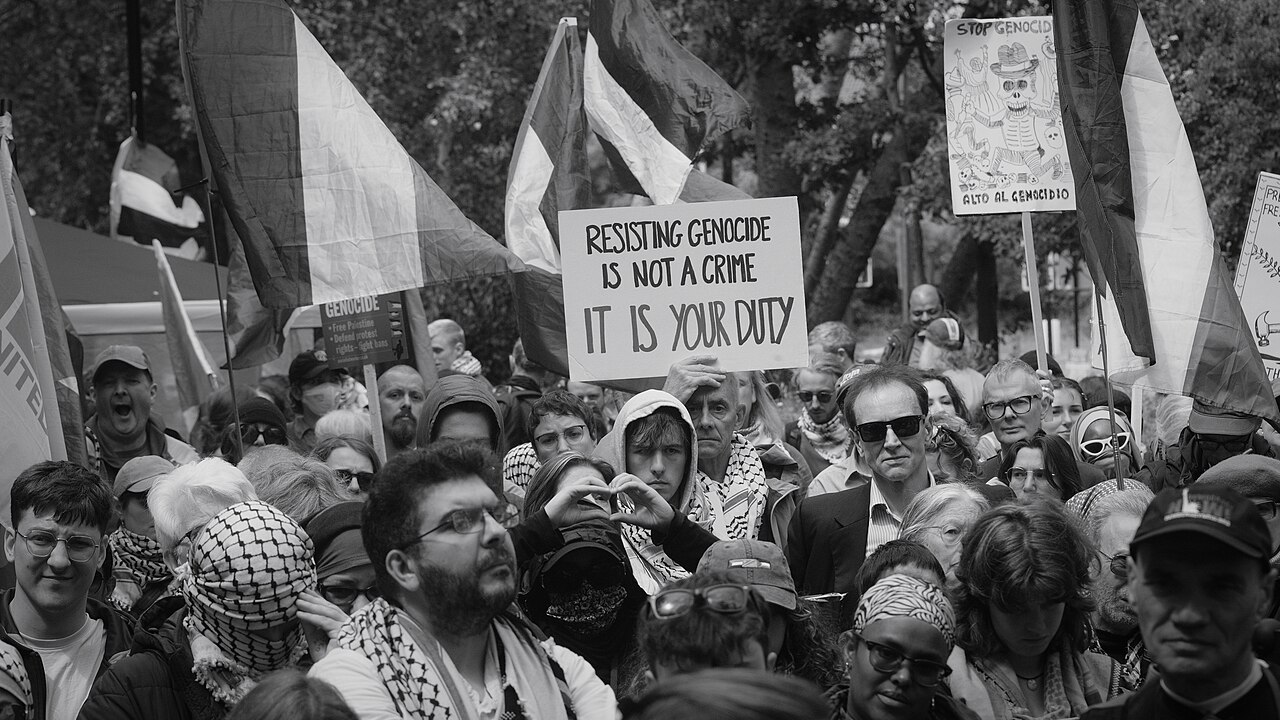
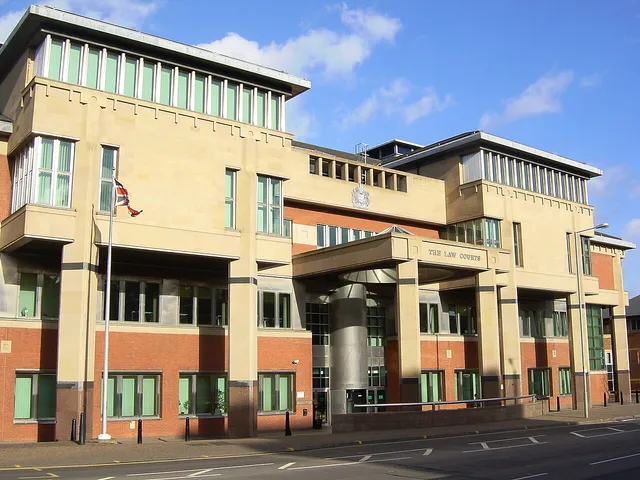
Protesters gathered outside Woolwich Crown Court during a demonstration on 12 June 2026. File photo. Alisdare · CC BY-SA 4.0
Two Iranian men have just been convicted of spying on British journalists and a lawyer for Iran's Islamic Revolutionary Guard Corps.
A jury at Woolwich Crown Court delivered the verdicts four days ago.
Mostafa Sepahvand is 41. Farhad Javadi Manesh is 46.
Both were found guilty of assisting a foreign intelligence service. That's a charge under the National Security Act 2023.
Sepahvand was also convicted of a second charge. Preparing to commit serious violence.
Manesh was cleared of that one.
A third man stood trial with them. Shapoor Qalehali Khani Noori, 57. He was acquitted of everything.
So here's why this case is different. It's the first time Iranian nationals have been convicted under the National Security Act 2023. The law built to counter hostile state activity.
So who were they watching?
Two journalists at Iran International. That's a London-based Persian-language broadcaster banned by the Iranian government.
Their names are Mojtaba Pourmohsen and Kambiz Hosseini.
And a lawyer. Jonathan Turner, a founding member of UK Lawyers for Israel.
There was a fourth target too. A media production professional. Not named.
Sepahvand carried out surveillance on them between August 2024 and March last year.
And here's the part that moves this beyond watching.
Sepahvand sent a message to his contact in Iran. He asked for £150,000 to says quote "finish [the target] off" once they had been found.
That's a man offering, in writing, to kill someone for money.
Police believe the plan involved a basic weapon. Possibly a knife. And that there was an intention to cause serious harm. That detail comes from one outlet's reporting, not the official statement.
The case was stopped before any attack happened.
The rest of this story is for members.
Greater London photographed from the air in December 2023. File photo. DiscoA340 · CC BY-SA 4.0
So how much did they actually gather? Police recovered 534 gigabytes of data on the targets. Photographs. Home and work addresses. Vehicle details. Even their pets' names.
The two men had direct contact with their Iranian handlers. Over phone and messaging apps. And some of that material went back to Iran.
They also used ChatGPT to dig up more on their targets.
Deputy Assistant Commissioner Vicki Evans leads Counter Terrorism Policing nationally. She says this is the first time ChatGPT search history has been used as evidence in a state-threat case in Britain.
So why would two men do this?
Both are asylum seekers. Both had been granted temporary leave to remain in Britain.
Sepahvand arrived in a lorry in 2016.
Manesh arrived by small boat in 2019.
Police say they were not a sleeper cell. Neither had a previous UK criminal record.
Sepahvand told the court he only acted out of fear. He said his Iranian handlers had promised to sort out a theft conviction against him back in Iran. Prosecutors rejected that account completely.
Frank Ferguson heads the CPS's Special Crime and Counter Terrorism Division. He says quote "Sepahvand and Manesh were promised rewards to send intelligence back to contacts in Iran". He says the defendants were stopped before any attack could take place.
Vicki Evans says the threat from Iran is rising. She says Tehran increasingly uses proxies. People who fly in and out of Britain. British nationals. Or Iranian nationals already settled here. She says people drawn into it are often promised money. And rarely receive it.
Here's some context. The IRGC itself was banned outright in Britain last July. Helping it now carries up to 14 years in prison.
Iran International says the convictions do not make its journalists any safer. It says Iran keeps up its campaign against them regardless.
The Committee to Protect Journalists welcomes the verdicts. But it says those who paid and directed the two men must face justice too.
Iran's Foreign Minister, Abbas Araghchi, has said he was disturbed by the arrests. Those arrests were made back in May 2025.
The Metropolitan Police say this is the fourth case in recent years involving direct threats to Iran International journalists on British soil.
Sepahvand and Manesh will be sentenced at the Old Bailey on 17 December.
And until then, nobody has said who was meant to pay the £150,000. Or whether any of it ever arrived.
Nothing here was paid for by an advertiser. Members are the entire business model. Bronze is where it starts, and it opens the last seven days in full.