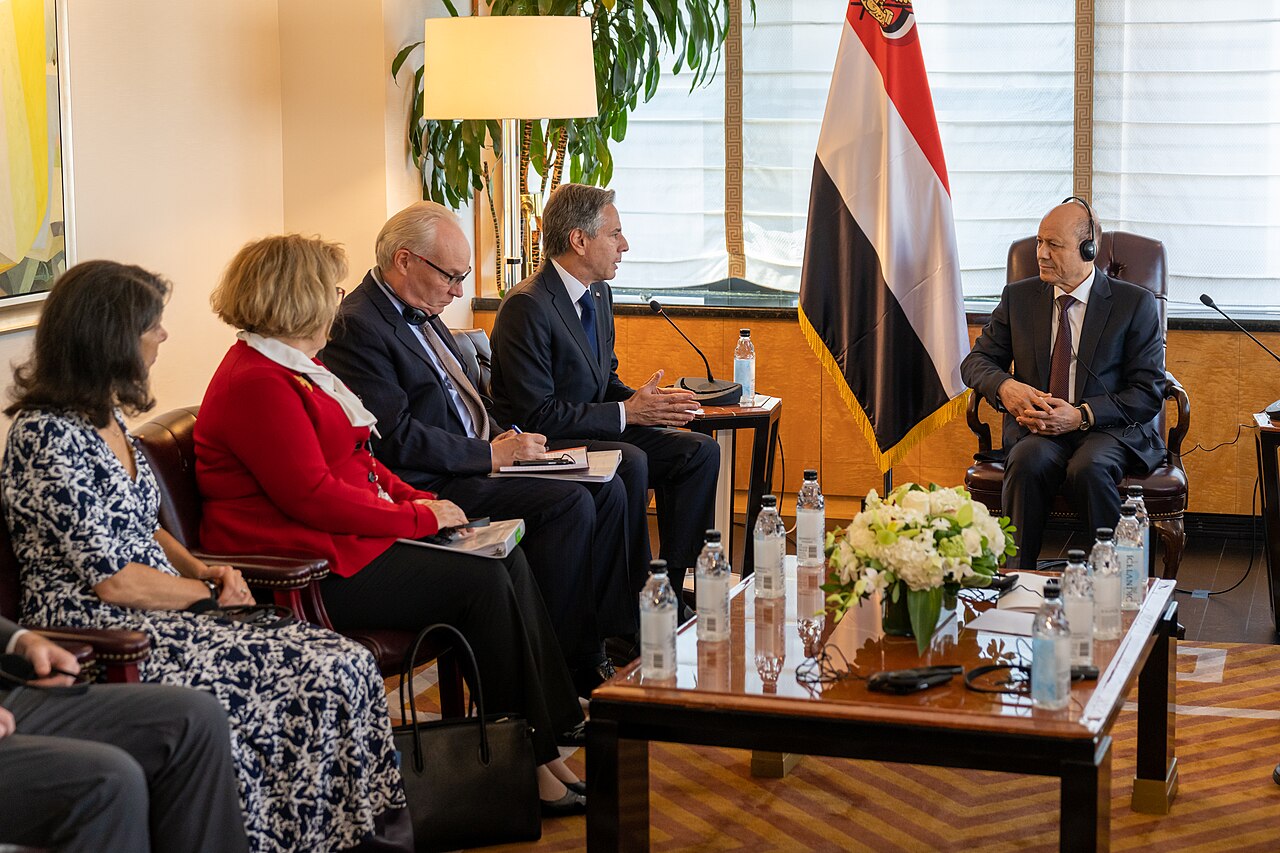
Secretary of State Antony J. Blinken meets with Yemeni Chairman of the Presidential Leadership Council Rashad Al-Alimi on the margins of the 77th Session of the United Nations General Assembly High Level Week in New York City on September 19, 2022. File photo.U.S. Department of State from United States · Public domain
Yemen's government has just declared all-out war on the Houthis.
And it's putting more than 100,000 troops into the field to do it.
Rashad al-Alimi runs Yemen's Presidential Leadership Council. He announced the offensive a few hours ago, on television.
The goal? Take back every piece of land the Houthis hold. All of it.
Al-Alimi says quote "on high alert until the mission is completed and victory is achieved."
So that's the entire Yemeni state, on a war footing, announced live.
So why now?
Well, think about what happened last month. The Houthis pushed down Yemen's Red Sea coast. They took the port city of Mocha. And they took the Bab al-Mandeb strait.
That's not a small win. That strait is one of the most important shipping chokepoints on Earth. Every ship heading into the Red Sea has to sail through it.
And there's more. The Houthis have also been pushing to cut the road between Taiz, Yemen's third-biggest city, and Aden, where the government is based.
Cut that road, and the government's own forces get split apart.
So here's the plan. Yemeni troops fight on the ground. Saudi Arabia backs them from the air and oversees the whole operation. Saudi Arabia has been fighting the Houthis, on and off, since 2015.
And here's why Saudi Arabia wants this fight now instead of talks. As long as the Houthis hold Bab al-Mandeb, they hold leverage over global shipping. Leverage Riyadh does not want them bringing to any negotiating table.
The rest of this story is for members.
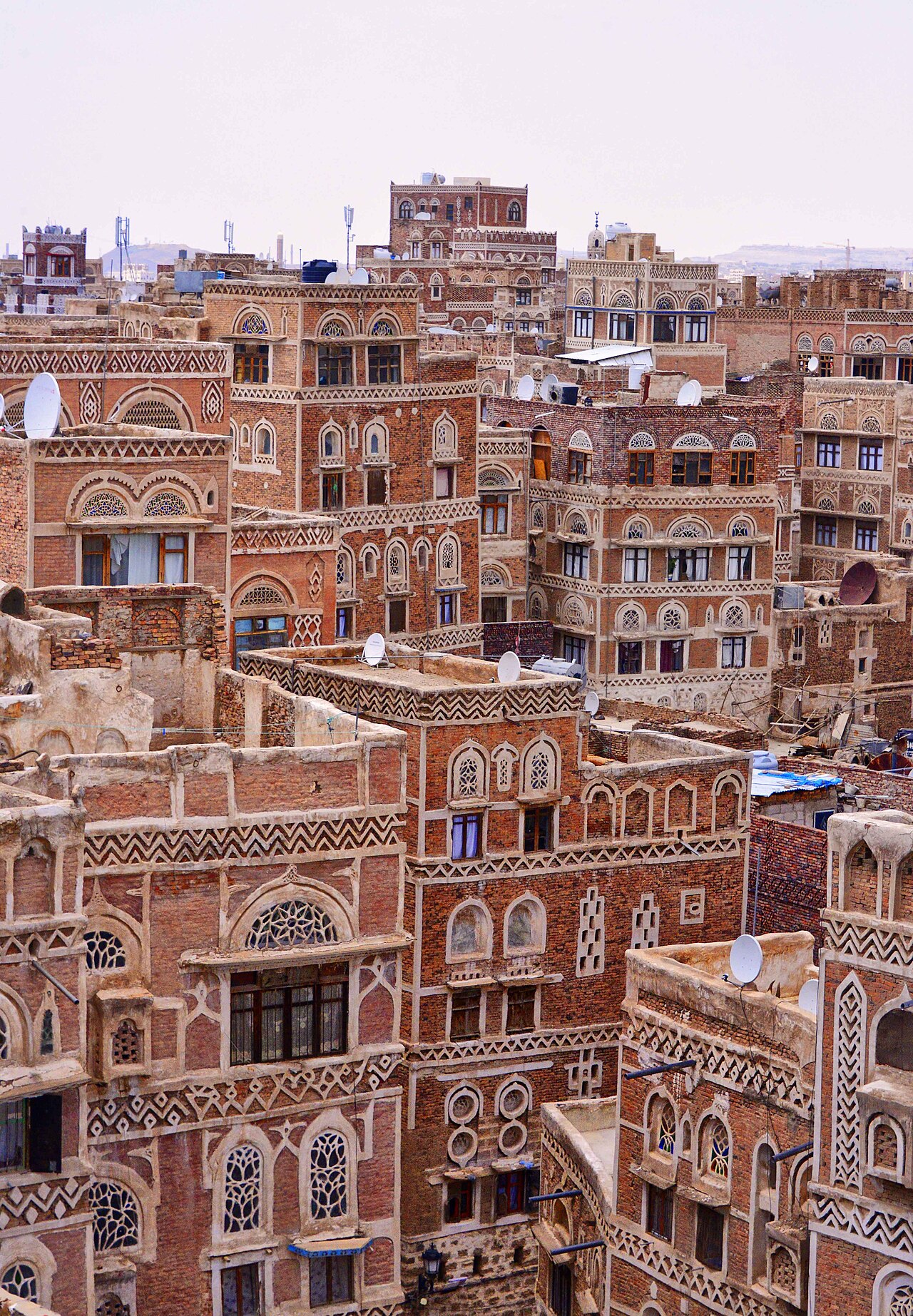
Buildings of Old Sana'a. File photo. Rod Waddington from Kergunyah, Australia · CC BY-SA 2.0
Now, America. It's involved, but only partway.
Donald Trump has turned down two Saudi requests for direct US air strikes on the Houthis. The first about three weeks ago. The second about two weeks ago, after the Pentagon had already drawn up options.
Instead, America is giving Saudi Arabia intelligence and targeting data. Not bombs.
So that's the US helping Saudi Arabia aim, without pulling the trigger itself.
The Houthis say they've already hit back. They say they struck two Saudi Aramco sites. One in Riyadh. One at Khurais, about 150 kilometres north-east of the capital. They say both caught fire.
Saudi Arabia has not confirmed either strike happened.
The Houthis also say Saudi jets bombed Sanaa, Yemen's capital, twice in the past two days. The Saudi-led coalition has not confirmed that either.
Both sides are also giving their own figures for how many fighters have been killed or wounded so far. Neither set of numbers has been confirmed independently.
And the Houthis haven't responded to the offensive announcement itself. Not yet.
This war goes back a long way. The Houthis seized Sanaa in 2014 and forced the government out to Aden. A truce held from 2022 for years. It collapsed three months ago, in July, and the fighting has been getting worse since.
So what don't we know?
Nobody has said which front gets hit first — the Red Sea coast, Taiz or al-Jawf. It isn't clear if Pakistan or any other ally sends its own troops, or just keeps advising from the side. Nobody knows if Trump changes his mind on US strikes.
And nobody knows if Yemen's own forces, untested at this size, can actually hold together long enough to finish what al-Alimi just promised on television.
Nothing here was paid for by an advertiser. Members are the entire business model. Bronze is where it starts, and it opens the last seven days in full.