Turkey is still deciding whether to defend Saudi Arabia at all
1 hour ago · 5 October 2026Share
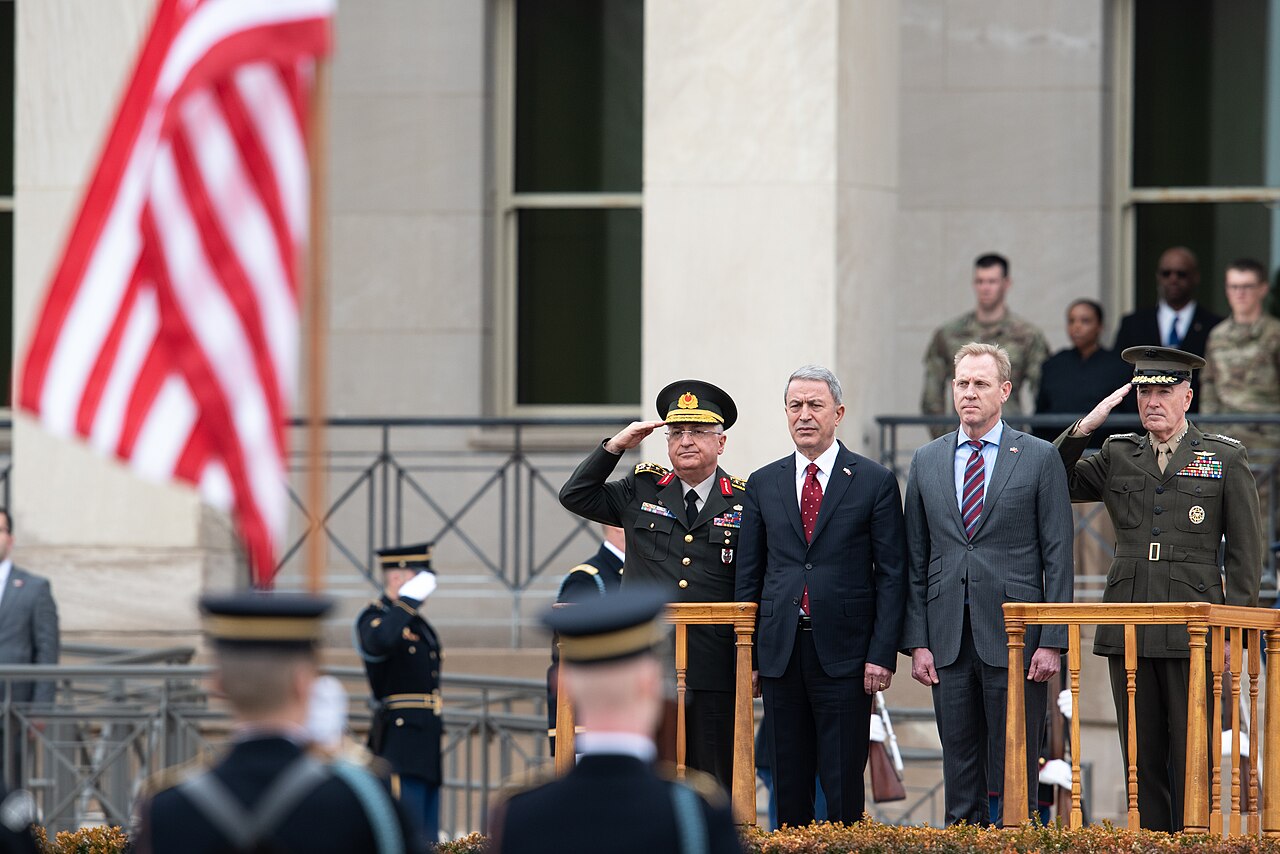
Turkish military and defence officials stand at an official ceremony at the Pentagon, showing high-level Turkish and U.S. defence leadership. File photo. Chairman of the Joint Chiefs of Staff from Washington D.C, United States · CC BY 2.0
A committee from the Mecca defence pact has just met in Riyadh.
And it's the first real test of whether Turkey will actually send military help to Saudi Arabia, not just promise it.
The talks happened earlier today. Turkey sent its Foreign Minister, Hakan Fidan, its Defence Minister, Yasar Guler, and its chief of general staff, General Selcuk Bayraktaroglu.
This is the second meeting of the pact's Strategic Political and Defence Committee. The first was in Istanbul, in late August.
So how old is this pact? Less than two months.
Turkey's president, Saudi Arabia's crown prince and Pakistan's prime minister signed it in Mecca on 7 August.
The promise is simple. An armed attack on any one of the three countries gets treated as an attack on all three.
But here's the thing. A promise on paper is not troops, missiles or money.
And that's exactly what today's meeting was meant to settle.
Saudi Arabia needs the help. It keeps facing missile and drone attacks from Yemen's Houthi movement, which Iran backs.
A day before the Riyadh talks, the head of Yemen's Saudi-backed government announced a major military operation to try to take back Houthi territory.
Now, Pakistan has already said the words Turkey hasn't.
Khawaja Muhammad Asif, Pakistan's Defence Minister, says quote "whatever means are available" to defend Saudi Arabia — he said it a week ago.
Turkey has been more careful.
Hakan Fidan says quote "may have some military needs, especially on some technical issues" — that's what he said Saudi Arabia might need, last month.
That's not a promise to send troops. That's a promise to help with air defence, drones and radar.
Ismail Numan Telci, a professor at Ibn Haldun University in Turkey, said Fidan's comments point to where Turkey's real strengths are. Air defence. Counter-drone systems. Electronic warfare. Radar. Surveillance. Maritime security.
But he also flagged something important. Turkey faces limits on taking a direct combat role.
So what's stopping Turkey going further? Partly, the law.
The rest of this story is for members.
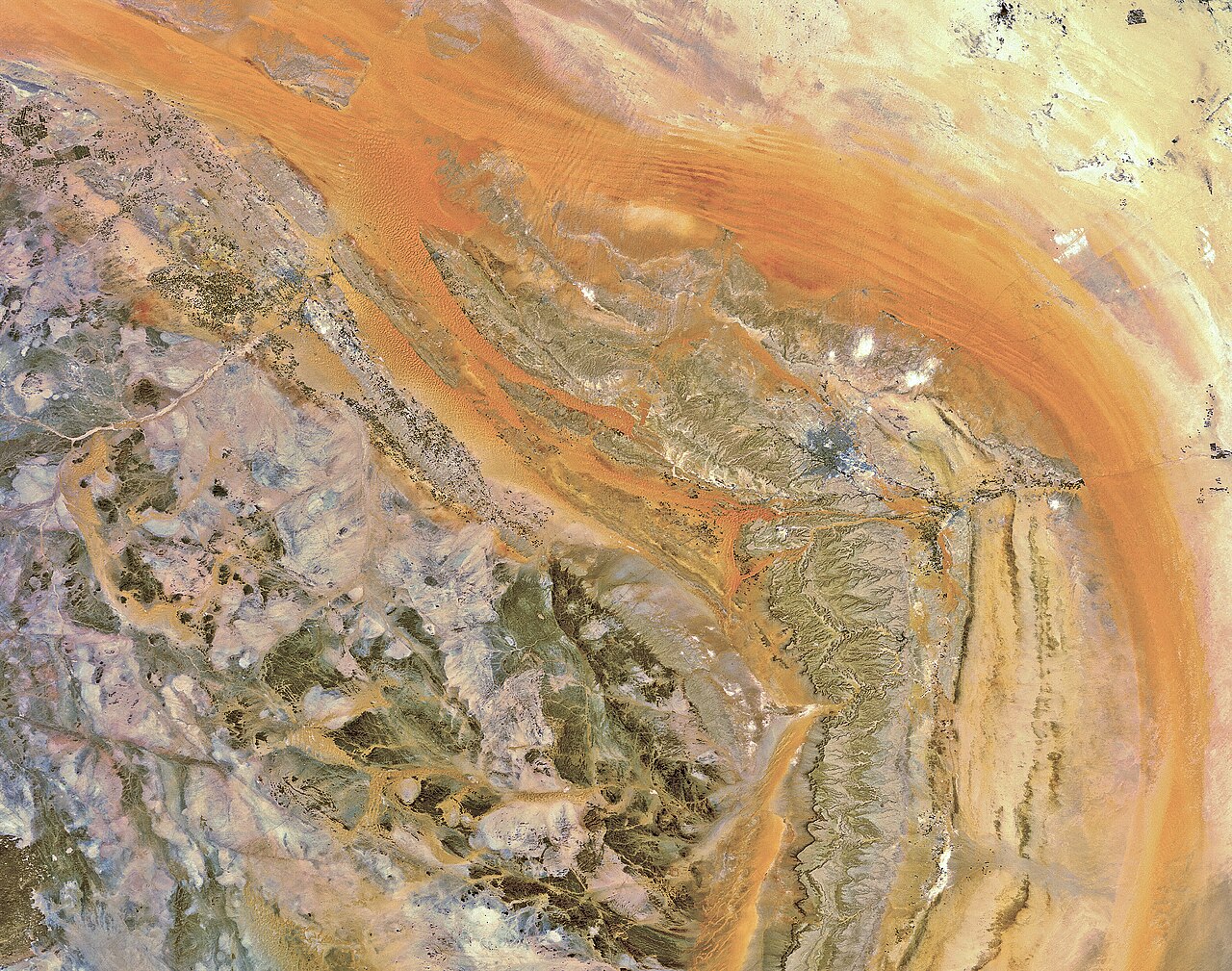
This image, acquired by Envisat, shows central Saudi Arabia on the arid Arabian Peninsula with the Nejd plateau visible. File photo. European Space Agency · CC BY-SA 3.0 igo
Meliha Benli Altunisik, a professor at Middle East Technical University in Ankara, said three days before the Riyadh talks that Turkey is unlikely to automatically use force if Saudi Arabia is attacked.
Why? Because the pact hasn't entered legal force in Turkey yet. It still needs the Turkish parliament to approve it.
Telci says the same problem exists in Pakistan's parliament.
And here's the part that matters most. Neither Turkey nor Pakistan has actually been asked yet.
When the Houthis took the port of Mocha and tightened their grip around the Bab al-Mandab strait, Saudi Arabia didn't call its new pact partners.
It called the United States. Mohammed bin Salman went straight to Washington instead.
That's the gap this meeting was meant to close.
Alfirraz Scheers, a defence analyst, said two weeks ago it would be premature to talk about the pact being activated at all. No published strategic concept. No clear trigger threshold. No activation protocol.
There's also a separate diplomatic track running alongside this.
Pakistan's Foreign Minister, Ishaq Dar, said Iran has proposed talking to the Houthis politically — and that this was expected to come up in Riyadh too.
The alliance is also starting to build permanent machinery. Its secretariat will sit in Riyadh. Pakistan has nominated a retired general, Lieutenant General Nauman Mahmood, as its first secretary-general.
What the pact badly needs, says Merve Suna Ozel Ozcan, an academic at Kirikkale University, isn't just goodwill. It's hardware Saudi Arabia can actually afford to fire.
Cheaper systems that can counter large drone swarms, instead of expensive Patriot and THAAD interceptors every time.
Turkey and Saudi Arabia already have one such deal running. The Bayraktar Akinci combat drone, with Turkey's Baykar and Saudi military industries working on building it locally.
No joint statement had come out by the time of writing.
None of today's attendees has said whether Turkey committed to specific weapons systems, or just agreed to keep talking.
So where does that leave the Mecca pact? Right where it's been since August.
A promise on paper. Two of its three members not yet legally bound to it. And a war next door that keeps testing whether anyone will actually act on it.
Nothing here was paid for by an advertiser. Members are the entire business model. Bronze is where it starts, and it opens the last seven days in full.