Saudi Arabia just launched its biggest attack on the Houthis in years
1 hour ago · 5 October 2026Share
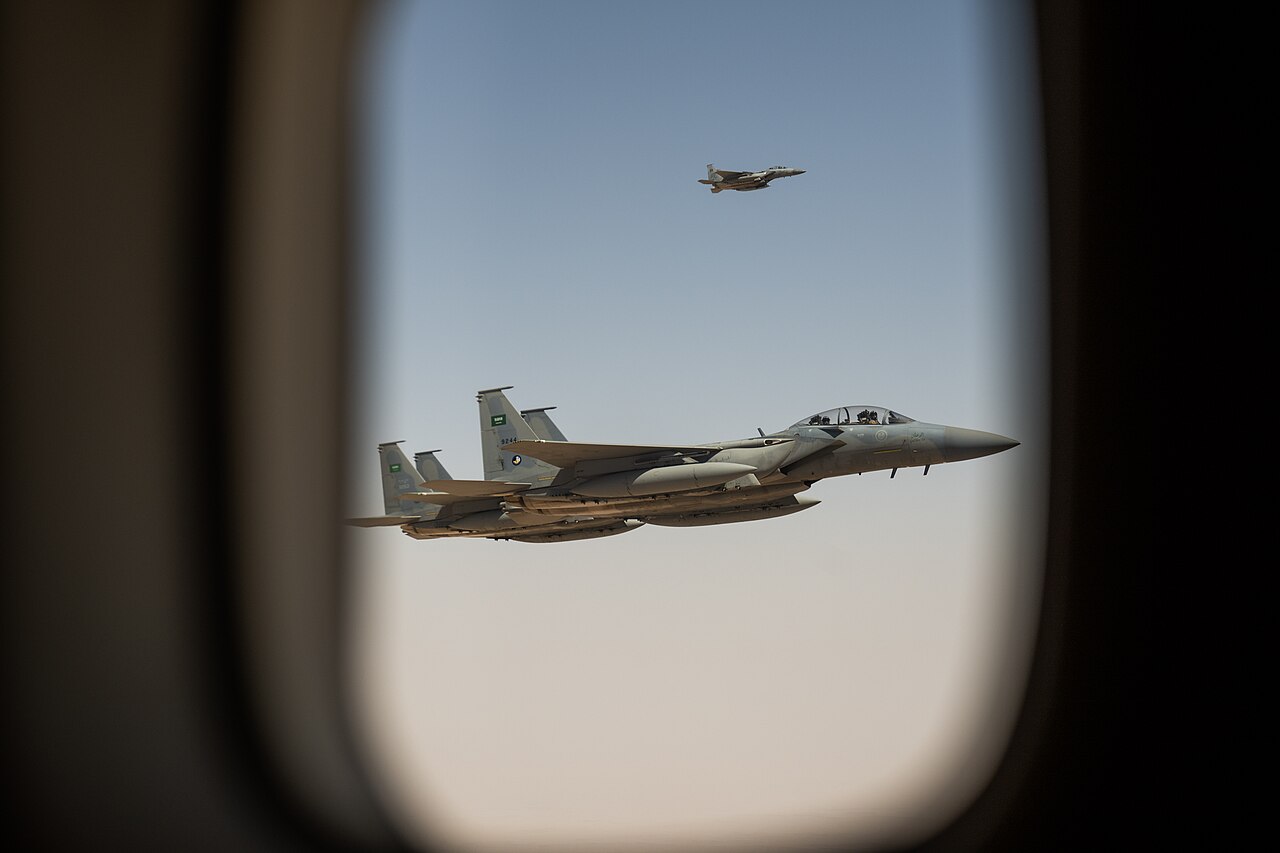
Royal Saudi Air Force F-15SA fighter jets escort Air Force One before landing at King Khalid International Airport in Riyadh, Saudi Arabia, May 13, 2025. File photo.The White House · Public domain
A Saudi-led coalition and Yemen's internationally recognised government just launched their biggest joint attack on the Houthis in years.
And both sides are reporting huge gains.
So here's what happened. The operation kicked off at dawn today. It's called Operation Dawn of Yemen.
Major General Turki Al-Malki is the Saudi-led coalition's spokesman. He says 100 fighter jets took part in the launch. He says 324 high-value Houthi targets have been destroyed since it began.
He also says the coalition is now giving round-the-clock air support to Yemeni government troops on the ground. And that coalition aircraft are working to secure the Bab al-Mandeb Strait.
Yemen's own military has its own numbers. It says it carried out 1,122 precision operations against Houthi positions. And that 1,747 Houthi fighters have been put out of action.
Colonel Majed Al-Nuzaili is the Yemeni armed forces spokesman. He says quote "the operations targeted artillery and rocket-launcher positions, defensive fortifications, supply routes, reinforcements and command-and-control centres". Across fronts including Saada, Al-Jawf, Taiz and the western coast.
Now here's the problem. Nobody outside the two militaries has confirmed any of these numbers. And the Houthis have not given their own tally of dead and wounded.
So what is this actually about? Taking back what the government lost last month.
In early September, the Houthis pushed down Yemen's Red Sea coast. They captured the city of Mokha, several islands, and around 150 kilometres of coastline. That gave them control of the Yemeni side of the Bab al-Mandeb Strait. That's the chokepoint around 12 per cent of all the world's shipping trade passes through.
Government forces say they've taken some of that ground back. They say they control Dhubab and the high ground overlooking the strait, plus Dhubab's airport. They say they've cut the road linking Dhubab to Mokha.
The rest of this story is for members.
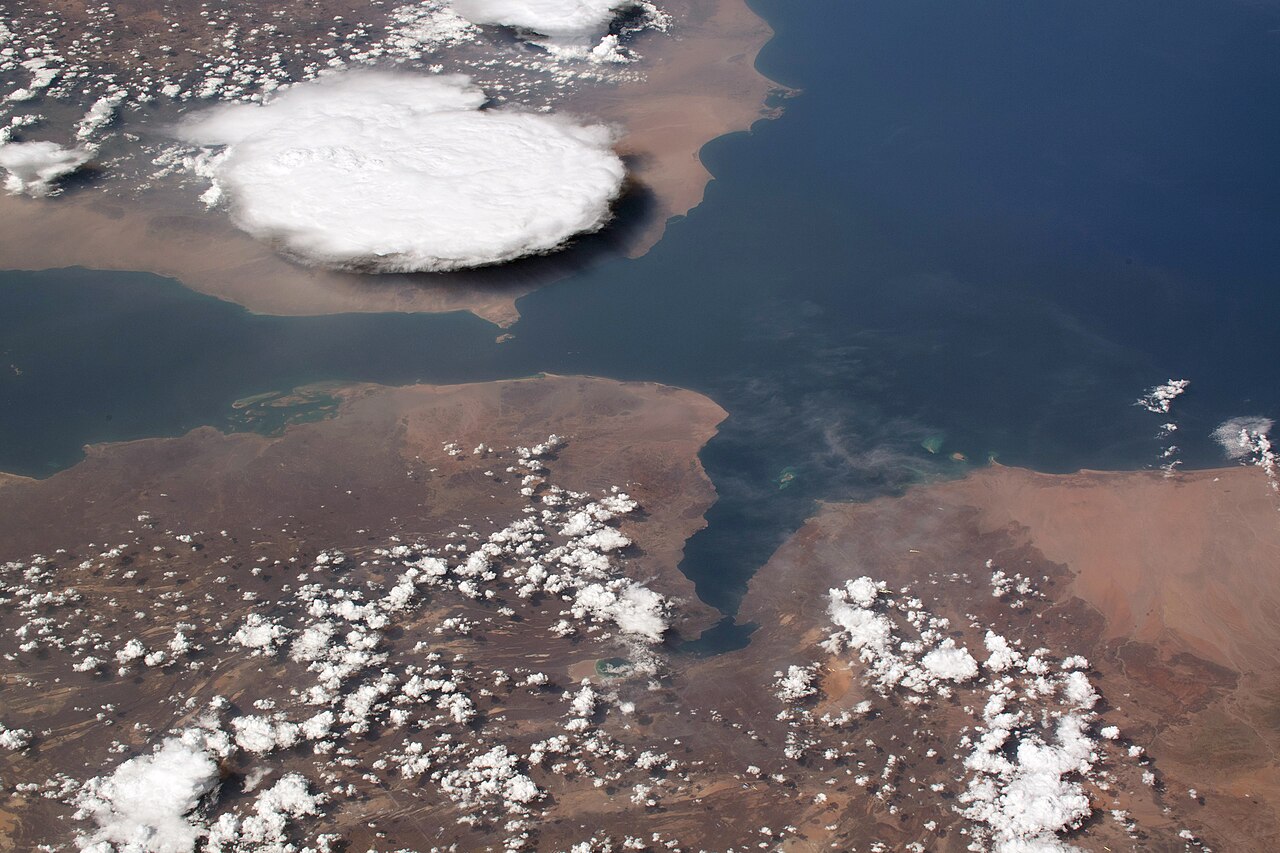
Storm clouds are seen on the southwestern coast of Yemen as the International Space Station was about to fly 254 miles over the Bab al-Mandab Strait between the Gulf of Aden and the Red Sea. File photo. NASA · Public domain
Colonel Al-Nuzaili says hundreds of Houthi fighters were surrounded in Dhubab and told to surrender. Some fled by boat, he says. None of this has been confirmed by the Houthis or by anyone independent of the government.
Yemen's armed forces have also started what they call a strategic offensive on Sanaa. That's the capital the Houthis have held since 2014. Houthi-run Al Masirah TV has confirmed strikes hit the city. But it has said nothing about how the wider battle is going.
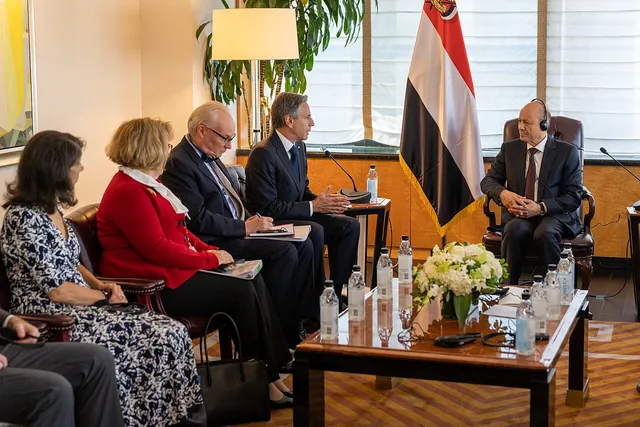
Rashad Al-Alimi is the Chairman of Yemen's Presidential Leadership Council. He ordered the operation after what he called the exhaustion of every chance to de-escalate. He says the campaign is not a war against people living under Houthi control. He says it's a battle for the state and its citizens. And he says success won't be measured by how many cities get retaken, but by how many citizens get their security back and return home.
And the timing matters here. A few days before the operation, the Houthis seized the town of Turbah, on the road linking Taiz to Aden. Military sources say that threatened to cut Taiz off from resupply and put the city under effective siege. Many see that as the trigger for the government's response.
This fighting sits inside a much longer war. The Houthis, formally called Ansar Allah, captured Sanaa in 2014 and forced the government into exile in Saudi Arabia. Saudi Arabia stepped in with an air campaign in 2015. A ceasefire held for roughly four years before this year's fighting broke it.
More than 150,000 people have died in the war overall. The World Health Organization says the latest flare-up alone has killed at least 959 people and wounded more than 4,200. Over 145,000 people have fled their homes inside Yemen. More than 3,000 have crossed into Djibouti, according to the UN's migration agency.
And the Houthis are hitting back away from the front line too. They say they fired missiles and drones at Saudi Aramco sites in Riyadh and at Khurais, and say the strikes caused major fires. Saudi Arabia has not confirmed this.
Separately, an energy-sector worker told AFP that Saudi Arabia's East-West oil pipeline was suspended again. An attack damaged a pumping facility near Khurais that had not been targeted before. The same pipeline was already shut for about ten days in September, according to the tracking platform Kpler.
The United States is giving intelligence support to the coalition's operations. Some other regional and European governments are giving Saudi Arabia mainly defensive military help.
So what don't we know? Whether any of the figures either side is giving can be trusted. Whether the government's claimed territorial gains will hold. Whether this offensive can actually push the Houthis out of the coast they took last month. And what Iran, the Houthis' main backer, does next.
The Houthis have not said anything yet about how the ground battle is going for them.
Nothing here was paid for by an advertiser. Members are the entire business model. Bronze is where it starts, and it opens the last seven days in full.