Russia and Ukraine just resumed peace talks and the two sides want opposite outcomes
3 days ago · 9 November 2026Share
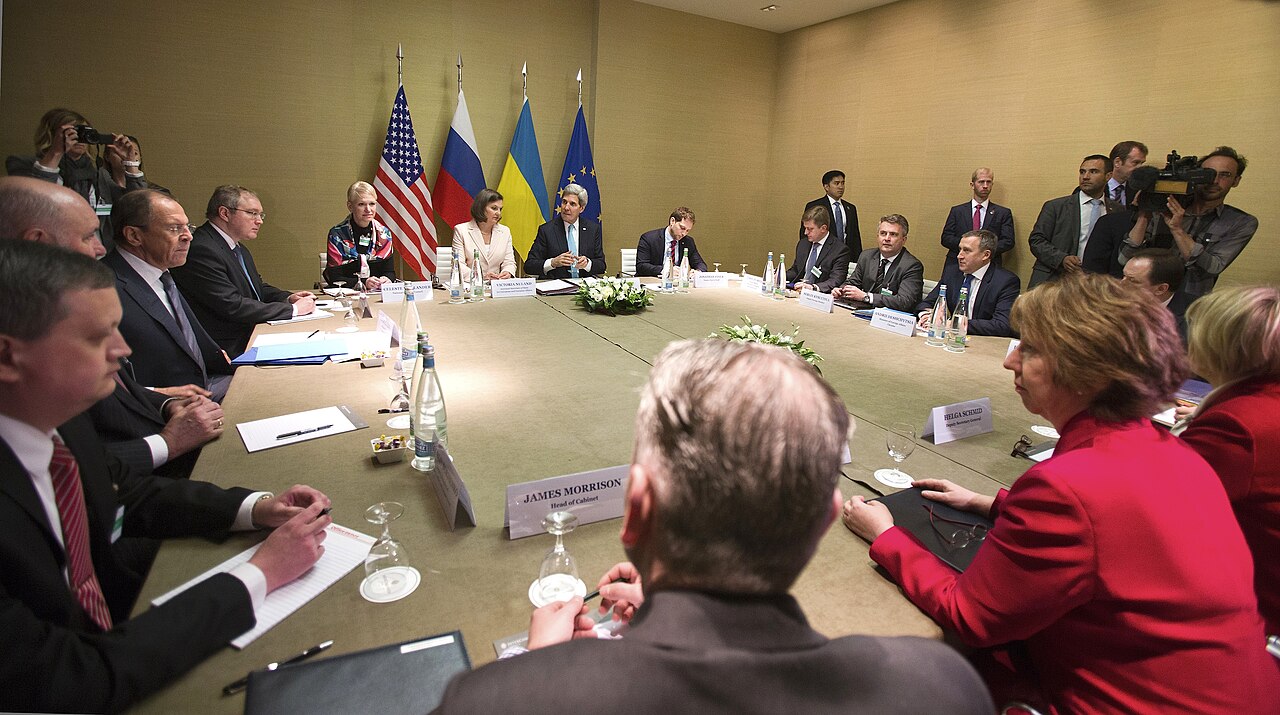
U.S. Secretary of State, Russian Foreign Minister Sergey Lavrov, Ukrainian Foreign Minister Andrii Deshchytsia, and European Union High Representative Catherine Ashton sit across from one another in Geneva, Switzerland, on April 17, 2014, before a quadrilateral meeting focused on Ukraine. File photoU.S. Department of State · Public domain
Russia, Ukraine and America are sitting down together tomorrow.
First time since February.
It's happening in Abu Dhabi, over two days, November 10 and 11. Steve Witkoff, the US special envoy, announced it on X about a week ago. He says the talks will cover what happens after the war — security arrangements, de-escalation, help for civilians, and the next steps toward a deal.
So why does that matter? Because this is round four.
Round one and two were in Abu Dhabi, back in late January and early February. Round three was in Geneva, in mid-February. None of them produced a full agreement. Prisoner exchanges moved forward. That's it.
Then everything stopped. Days after Geneva, war broke out between Israel and Iran, and the Ukraine talks just never picked back up. Until now.
But here's the thing. Russia's delegation just got bigger.
For the first time, Sergei Ryabkov is joining. He's a deputy foreign minister, and he handles Russia's relations with the Americas, arms control and Iran's nuclear programme. Mikhail Galuzin, another deputy foreign minister, is on the list too. So is Igor Kostyukov, who runs the GRU, Russia's military intelligence agency. And Yuri Zhigarlovsky, a deputy operations chief on Russia's General Staff.
So why now?
Because Steve Witkoff flew to St Petersburg three weeks ago and sat down with Vladimir Putin in person. After that meeting, Kremlin aide Yury Ushakov said Moscow was ready to restart trilateral talks around November 10. Steve Witkoff had also met Volodymyr Zelensky, Ukraine's President, in Oslo and in Kyiv that same month.
The rest of this story is for members.
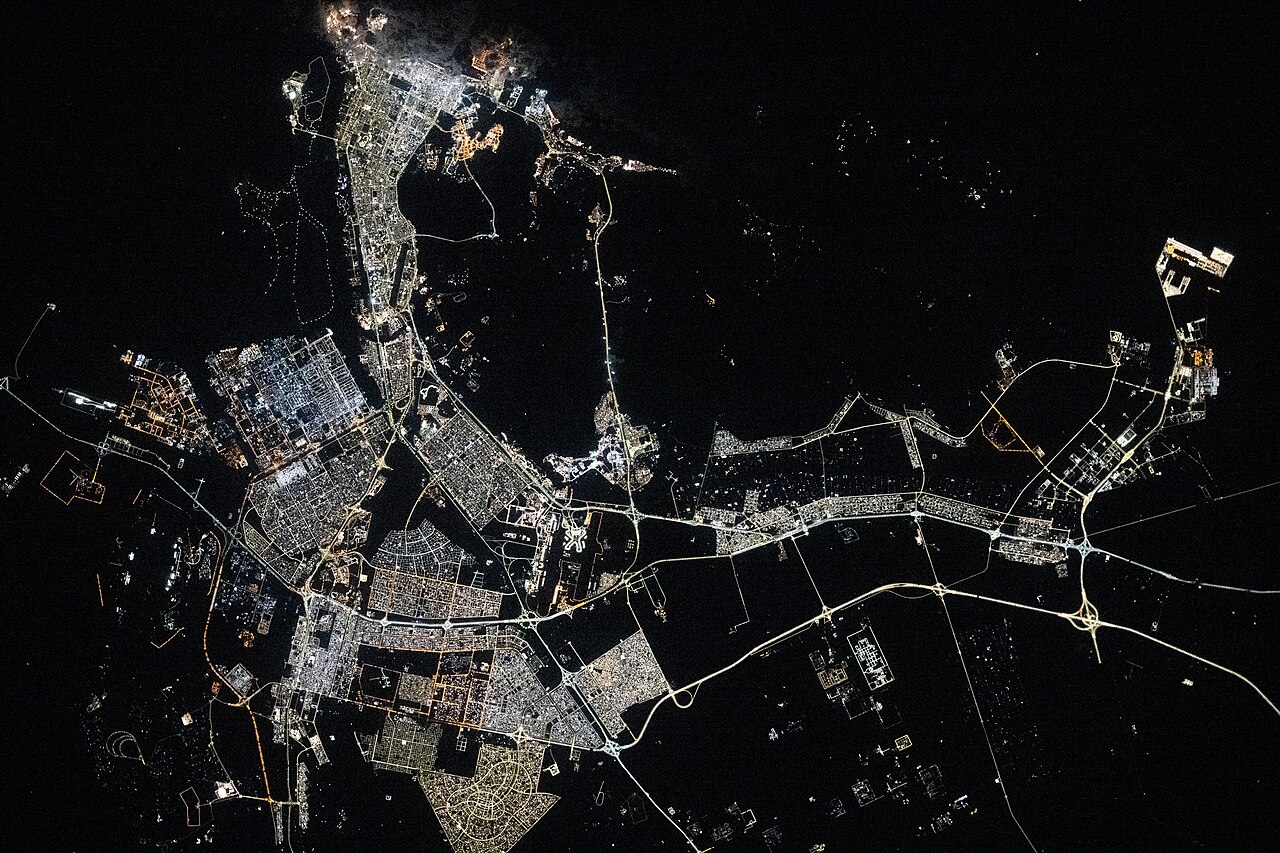
Contains modified NASA data showing Abu Dhabi, capital of the United Arab Emirates, at night from the International Space Station. NASA Johnson Space Center · Public domain
The agenda goes further than security. Reports say Abu Dhabi will also cover a possible energy and maritime ceasefire, prisoner exchanges, and getting Ukrainian children back from Russia.
But the two sides are nowhere near agreement.
Zelensky wants American security guarantees modelled on NATO's Article 5. That means an attack on Ukraine gets treated as an attack on everyone. He says any guarantee has to be backed by a vote in the US Congress, not just a promise from the president. He's also laid out three possible frameworks — NATO membership, bilateral US guarantees, or a European-led coalition backed by Washington — and wants them working together, built around a Ukrainian army of up to 800,000 troops.
Russia wants the opposite.
Alexander Grushko, a Russian deputy foreign minister, says any post-war deal should include Ukraine giving up on NATO membership completely, and a ban on foreign troops anywhere on Ukrainian soil.
So one side is asking for the alliance's protection. The other is demanding Ukraine never gets it.
And even Europe's role isn't settled. One report, citing Yury Ushakov, says European countries won't be part of the trilateral talks themselves. Another says Zelensky is hoping the EU gets a seat. Either way, American officials are meeting France, Germany, the UK, the EU and NATO in Brussels this week, to talk through security guarantees and rebuilding support for Ukraine.
And this is all happening against a brutal backdrop.
Hours before Steve Witkoff's announcement last week, Russian forces bombed an aid centre at a school in Komyshuvakha, in Ukraine's Zaporizhzhia region. The death toll has since climbed to 55. Zelensky said Ukrainian intelligence also picked up signs Russia is preparing a large-scale strike on the country's energy and logistics infrastructure.
Every previous round ended the same way. American officials called it constructive. No full agreement. Steve Witkoff says he wants Abu Dhabi to build on what he calls the progress made in Kyiv, Oslo and St Petersburg — toward what he describes as a comprehensive and lasting peace agreement.
Whether this round breaks that pattern, or just extends it, nobody at the table can say yet.
Nothing here was paid for by an advertiser. Members are the entire business model. Bronze is where it starts, and it opens the last seven days in full.