Israel just banned France's next possible president from entering the country
11 hours ago · 12 November 2026Share
Jean-Luc Mélenchon speaks at a public event in 2027. File photo. jlm2017 · CC BY 4.0
Israel just said no to France's next president.
Israel's Foreign Ministry says it will bar Jean-Luc Mélenchon from entering the country. Mélenchon founded La France Insoumise. He's a leading candidate for France's 2027 presidential election.
The ban hits someone else too. Mathilde Panot. She chairs La France Insoumise's group in the French National Assembly.
So who made this call? Gideon Sa'ar. He's Israel's Foreign Minister, and he also runs the interior ministry. He ordered this a few hours ago.
Why? Israel's Foreign Ministry points to what it calls the anti-Israel policy of La France Insoumise. It says Mélenchon and Panot made statements that amount to blood libels against Israel.
And there's one specific thing driving this.
Mélenchon wants French warships escorting aid flotillas to Gaza.
He said it a few days ago, at a rally near Paris, laying out his presidential platform. His words: "French ships will escort, if necessary, the flotillas of citizens mobilised."
Israel's Foreign Ministry says it will respond firmly to anyone who harms it, and won't let in people who act and incite against it and its citizens.
Think about that for a second. Israel just named a man who could be France's next president as a security threat.
Now here's where it gets messier.
The Jerusalem Post calls this a retaliatory move. Why? France had just refused entry to Yossi Dagan. He heads the Samaria Regional Council in the West Bank. He was turned away at a Paris airport a few days earlier. A French Foreign Ministry source said Dagan was banned over his active role in settlement policy there.
The rest of this story is for members.
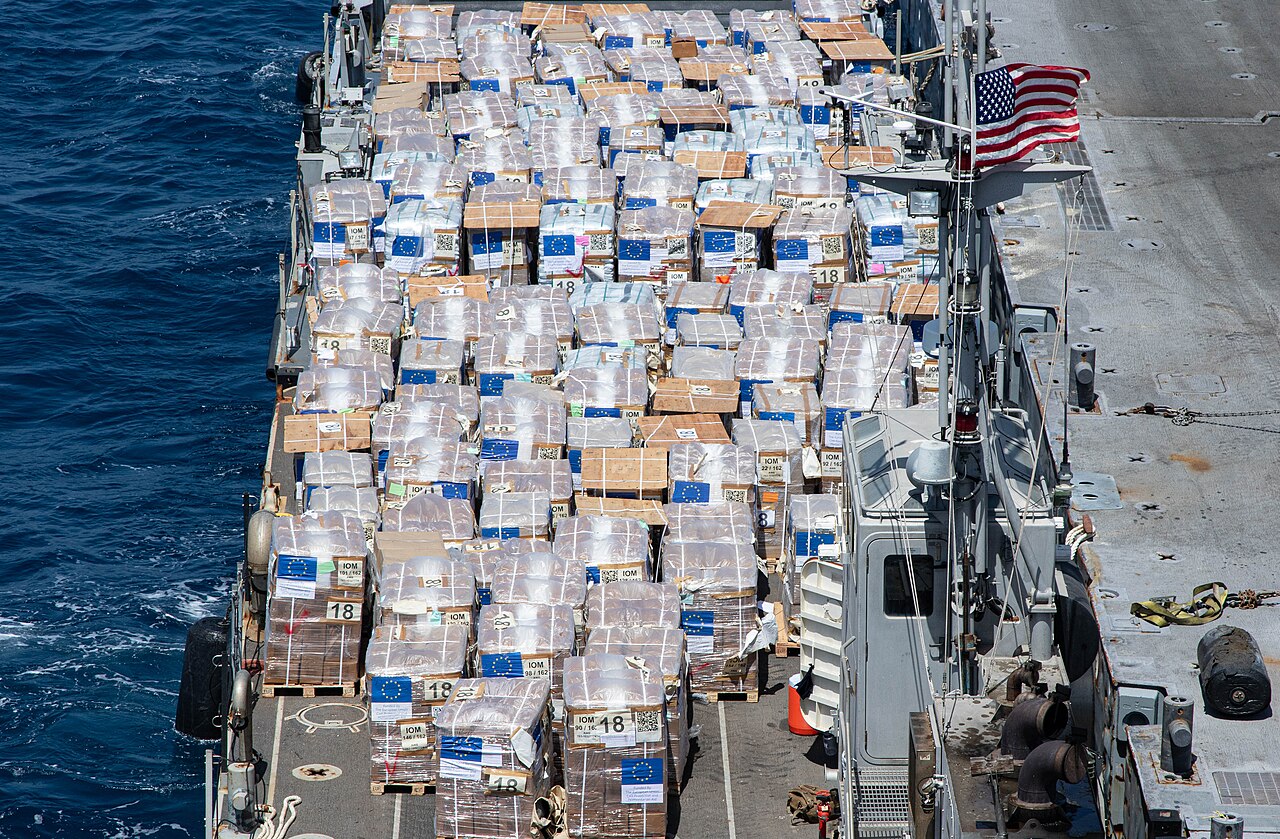
U.S. Army soldiers move pallets of humanitarian aid aboard the MV Roy P. Benavidez near the Port of Ashdod, Israel on June 6, 2024, part of the Joint Logistics Over-the-Shore operation delivering aid to Gaza. File photo. U.S. Army photo by Staff Sgt. Malcolm Cohens-Ashley · Public domain
But the Times of Israel is more careful. It says it's not clear whether anything specific, beyond the Dagan case, triggered the timing of this ban.
Mélenchon has already hit back. He told French radio he regrets Israel's government pursuing him this way, and said he'd been kept out of a country he hadn't asked to visit.
Panot hasn't said anything yet. Neither has the French government.
And this isn't new territory for Israel.
It's barred British left-wing lawmakers before, including Jeremy Corbyn, after Britain sanctioned settlement products.
Mélenchon has history here too. His party faced criticism over how it responded to the Hamas-led attack on Israel in October 2023 — it didn't designate Hamas a terrorist organisation at the time. His presidential platform now calls for sanctions on Benjamin Netanyahu's government and for suspending the EU's deal with Israel.
So what does this ban actually mean in practice? Less than it might sound like.
Israel hasn't said how long it lasts. It hasn't pointed to any specific law behind it either. Mélenchon wasn't trying to travel to Israel right now anyway — this is a declaration aimed at the future, not a border stop happening today.
But the signal is bigger than the paperwork.
France and Israel are supposed to be allies. One of them just told the other: your possible next president isn't welcome here.
And with Mélenchon's platform already calling for sanctions on Netanyahu's government and a suspended EU deal, this is not the last clash between these two if he wins in 2027.
Nothing here was paid for by an advertiser. Members are the entire business model. Bronze is where it starts, and it opens the last seven days in full.