Russia just quarantined hundreds after a plague lab death
2 hours ago · 6 October 2026Share
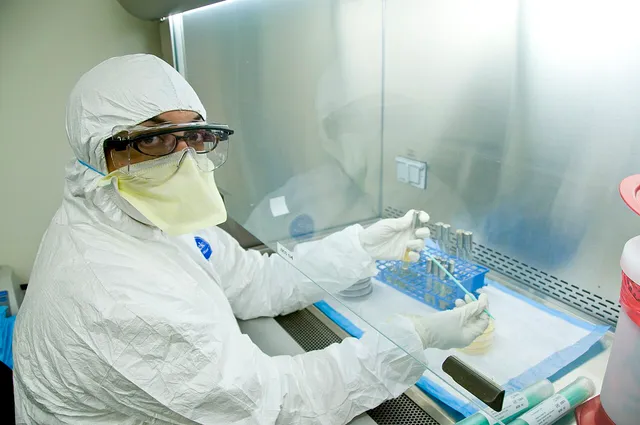
A scientist works at a CDC Maximum Containment Cabinet Lab using protective airtight gloves to handle infectious pathogens, 1978. File photo. CDC/Betty Partin · Public domain
A 28-year-old lab technician in Russia is dead.
She worked with live plague bacteria. Now hundreds of people she may have crossed paths with are under watch.
Her name was Darya Shipilova. She worked at the Irkutsk Anti-Plague Research Institute, in a town called Shelekhov, near the city of Irkutsk in Siberia.
Four days ago she went into hospital with severe pneumonia. She was put on a ventilator. She died overnight between 1 and 2 October.
So here's where it gets serious. The independent outlet Lyudi Baikala reported that ten days before she died, she broke a test tube. Inside it was pneumonic plague.
Pneumonic plague comes from a bacterium called Yersinia pestis. It spreads between people through the air, through breathing. Left untreated, it kills within days. Caught early, antibiotics can stop it.
So did the lab leak kill her? Russia says no.
Igor Kobzev, the governor of the Irkutsk region, says she died of pneumonia of undetermined origin. He says expanded testing found no microorganisms linked to her job at all. Rospotrebnadzor, the national health watchdog that runs these anti-plague institutes, says there was no lab accident, and the region is stable.
But one official broke ranks.
Alexei Tsydenov runs the neighbouring region of Buryatia. He posted online that she died, in his words, maybe of the plague. He had actually written first that she died of plague, then edited it.
That gap, between what the official line says and what a sitting governor typed with his own hands, is the whole story here.
And here's the response that followed. Anna Popova, the head of Rospotrebnadzor, flew to Irkutsk for an emergency meeting over the weekend. Investigators have opened a criminal case for sanitary violations causing death by negligence.
Now the numbers. Around 197 of Shipilova's contacts are under medical watch, according to Russian broadcasters REN TV and Izvestia. About 189 of them have been hospitalised, split across three facilities. Testing found a couple of cases of Covid-19 and a couple of rhinovirus. No plague. Nothing else.
More than 60 staff at the institute itself were locked inside the building from 2 October, according to RFE/RL's Siberia.Realities. A relative of one worker told the outlet they are sleeping on the floor and on chairs inside. No beds.
The rest of this story is for members.
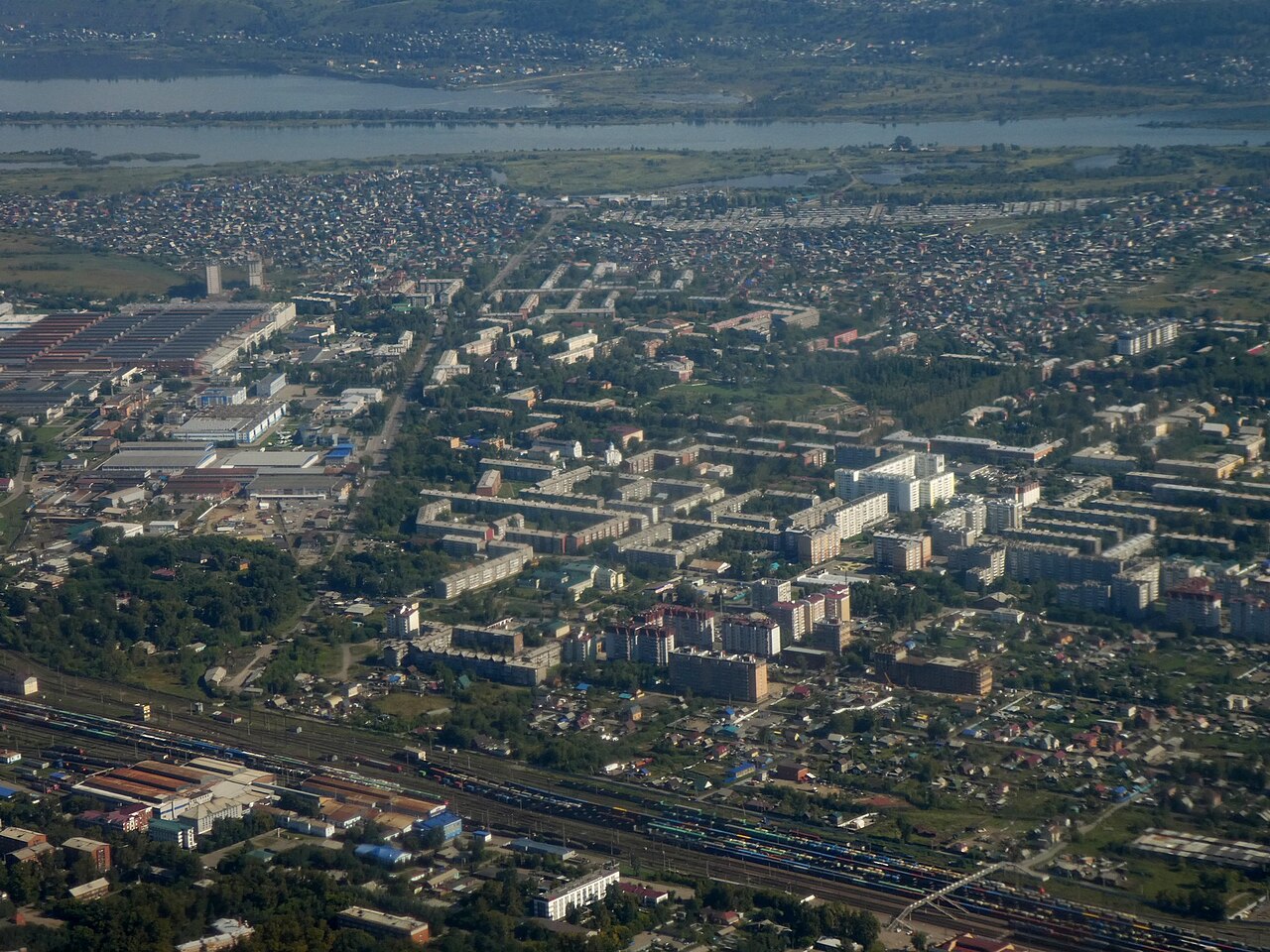
A residential district of Irkutsk, Russia. File photo. ithilion · CC BY-SA 3.0
And here's the part that tells you how Russia is really treating this. Lyudi Baikala, citing a source close to law enforcement, reported that FSB units started riding along in the ambulances carrying Shipilova's contacts, from 1 October. That has not been officially confirmed.
Think about that. Security officers, not just health workers, escorting potential plague contacts. That is not how a routine health scare gets handled.
So what is this institute, exactly? It was founded in 1934. It is one of five national anti-plague centres in Russia, and the only one covering all of Siberia and the Far East. It works with plague, cholera, anthrax and tularemia.
Dmitry Peskov, the Kremlin's press secretary, says people should trust Rospotrebnadzor's official statements, not rumours.
But the story has already reached Washington.
Marco Rubio, the US Secretary of State, says it seems a worker at the lab was infected, and there is concern it could have spread, at least inside the institute, which is why the quarantines happened. He called it, in his words, quote "cause for focus", not cause for alarm. The State Department says it is aware of reports of a fatal case of suspected pneumonic plague in Irkutsk, and is tracking it with the Centers for Disease Control and Prevention.
Donald Trump, the US President, says the US is looking at it very strongly. He says he has not spoken to Vladimir Putin about it. He says America is ready to help if asked.
The World Health Organization says it is in contact with Russian authorities to check the facts. It says that, based on unofficial information, the risk to the public looks low right now.
But on the ground, people aren't waiting for that reassurance.
Pharmacies in Irkutsk and Shelekhov have sold out of antibiotics. The Irkutsk Aluminium Plant has told its staff to wear masks at work. And Kyrgyzstan, far to the south, has put quarantine checks on its border crossings.
This isn't Russia's first brush with plague. A child in the Altai Republic caught it from marmots some years back, and survived.
There's a bigger backdrop too. The US State Department has assessed that Russia is in violation of the Biological Weapons Convention. Russia denies running any offensive biological weapons programme, and says its anti-plague institutes are purely defensive public-health work. Right now, there is no public evidence linking Shipilova's death to weapons work of any kind.
So here's where this stands. A trained plague researcher is dead, after symptoms that match the disease she studied for a living. Russia's institutions say one thing: pneumonia, no accident, nothing to see. A sitting regional governor's own words, even edited afterwards, suggested something else entirely.
Nothing here was paid for by an advertiser. Members are the entire business model. Bronze is where it starts, and it opens the last seven days in full.