Russia just got exposed over a bomb plot on a Ukrainian plane in Germany
1 hour ago · 2 October 2026Share
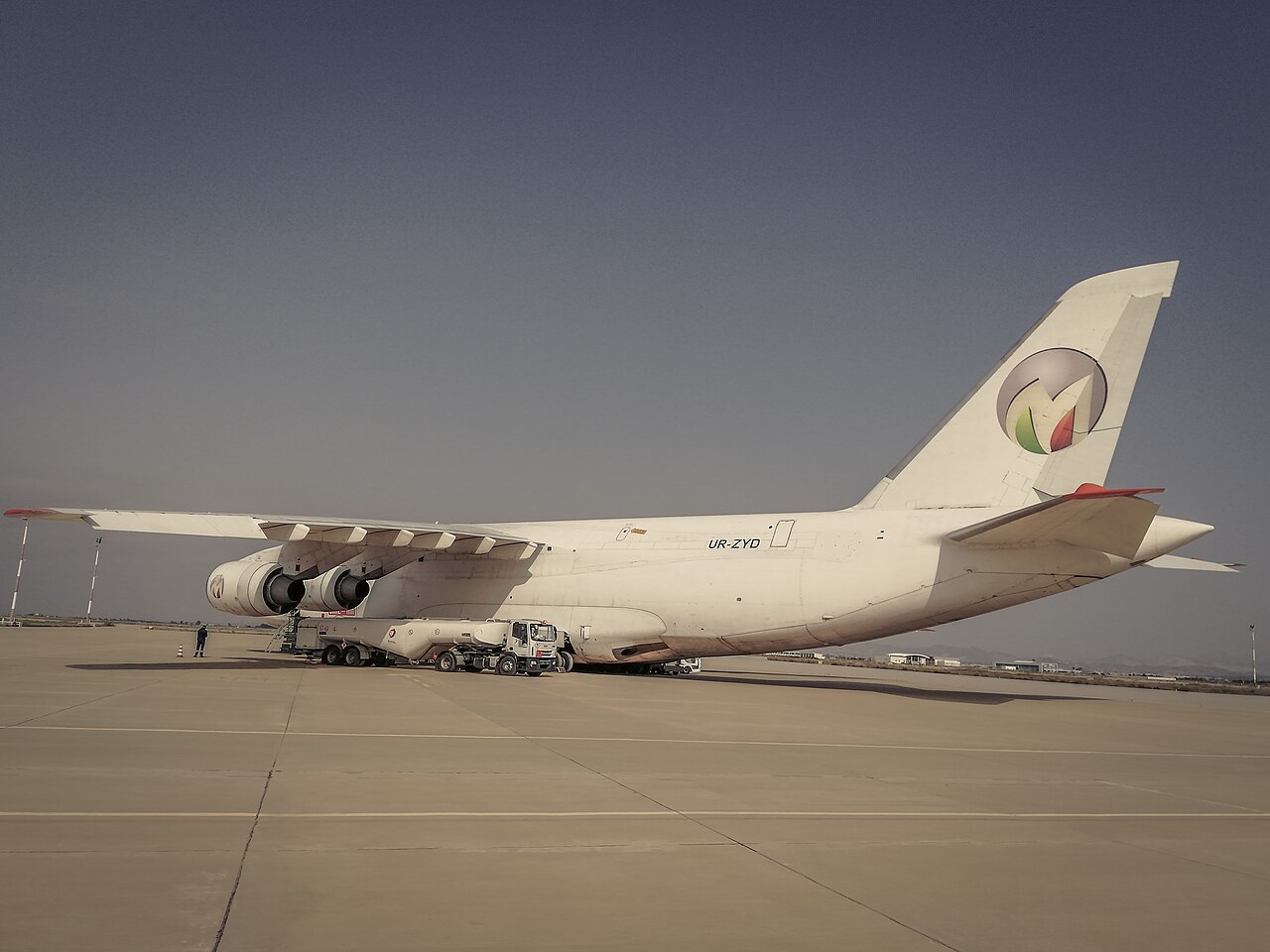
Maximus Air Cargo Antonov An-124 cargo aircraft. File photo. Monaam Ben Fredj · CC BY-SA 4.0
The Telegraph and the German paper Welt am Sonntag have named the man they say organised a sabotage attack at Leipzig-Halle Airport in Germany.
His name is Oleg Levushkin.
And investigators are linking the whole operation to the same Russian military intelligence unit blamed for poisoning Sergei and Yulia Skripal in England.
So here's what actually happened. About two months ago, overnight on 4 to 5 August, a drone carrying a tin container packed with explosives hit the wing of a parked Ukrainian cargo plane, an Antonov An-124, sitting at the airport.
The explosives didn't go off.
And that plane was holding around 25,000 litres of jet fuel at the time.
Now, who is Levushkin? Reports don't agree. Some call him a Russian passport holder. Others say he also holds Latvian citizenship. That part isn't settled yet.
But here's what investigators do say about his movements. He flew into Germany through Türkiye, then rented a car at Berlin Brandenburg Airport on 27 July. That car's location data allegedly put him near Leipzig-Halle Airport on 31 July. Investigators believe that was reconnaissance, scoping out the terminals. And according to preliminary findings, he left Germany two days before the attack happened.
So Levushkin didn't carry out the attack himself.
Investigators say that job went to Andrei Karshakov, a Belarusian national who also holds a Russian passport, acting on Levushkin's instructions. Karshakov got into the Schengen Area on a tourist visa issued by the Italian mission in Minsk.
And investigators have DNA. A glove fragment was found on an improvised antenna array near the airport, believed to be a drone control relay, and it matches Karshakov. His DNA was already sitting in Finnish and Lithuanian criminal databases.
There's more on Karshakov too. Polish prosecutors have separately tied him to a fire two years ago at a hardware store in Łódź, an attack they say Russia paid for.
The rest of this story is for members.
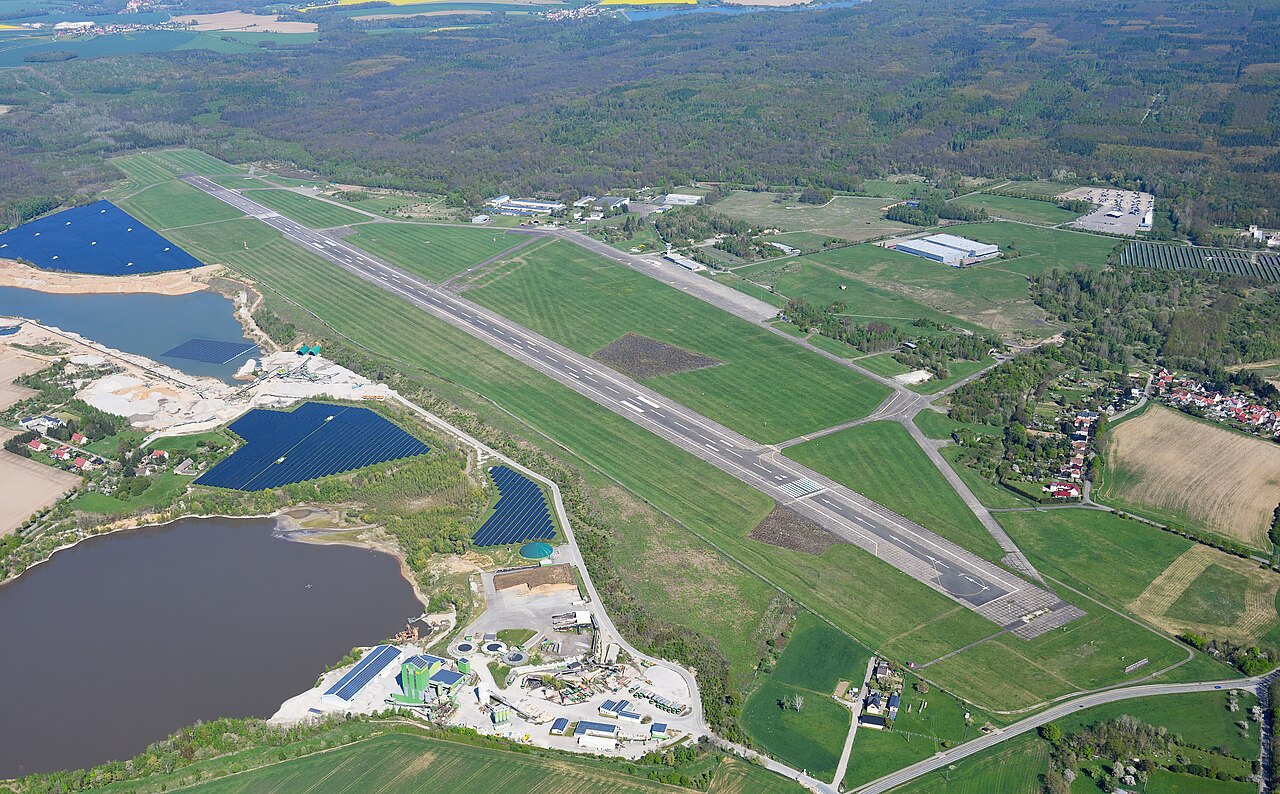
Aerial image of the Leipzig-Altenburg airport viewed from the west. File photo. Carsten Steger · CC BY-SA 4.0
Now, the explosives themselves. Investigators say around 1.8 kilograms of Semtex was smuggled into Germany, hidden in truck compartments, routed through Bulgaria and Serbia. And the device — tin cans fitted with metal plates bearing circular indentations — resembles other devices already found in weapons caches in Lithuania.
Here's the GRU connection. The investigation links the Leipzig operation to GRU Unit 29155. Two former officers from that unit, Anatoly Chepiga and Alexander Mishkin, used the cover names Ruslan Boshirov and Alexander Petrov when they poisoned Sergei and Yulia Skripal in England in 2018.
But investigators have not established that Levushkin himself belongs to that unit.
What they do say is that Levushkin has known Denis Smolyaninov for close to two decades, since they first met in 2007. Smolyaninov is a colonel in the GRU. A Lithuanian intelligence report from December last year says he heads the unit's Ukraine department, running psychological operations and sabotage campaigns through Telegram. Britain's Foreign Office sanctioned Smolyaninov last year.
And here's a loose end. One of the two suspects was tracked to Finland. Local police did not detain him before he left the country.
The Russian Embassy in Berlin has denied any Russian involvement in the Leipzig attack, or in any other sabotage in Europe, and called the allegations baseless. Levushkin has not responded to requests for comment.
Germany's government formally accused Russia of being behind the Leipzig sabotage attempt on 1 September, a month after it happened, and shut the Russian Consulate General in Bonn in response. At the time of the attack itself, Alexander Dobrindt, Germany's Interior Minister, said a foreign state could have been involved.
A Federal Criminal Police Office report cited in the investigation puts the number of suspected sabotage acts in Germany since the start of this year above 165.
Ursula von der Leyen, the European Commission President, described the Leipzig attack as an operation by Russian intelligence officers using military-grade materials on EU territory. She said it had strengthened European resolve to back Ukraine.
A senior German intelligence official put it plainly. Germany says quote "operational theatre" for what Russian intelligence services are now doing there, with activity once considered isolated now happening on a wider scale.
So what don't we know? Investigators have not confirmed Levushkin's own membership of Unit 29155. He has not answered questions from journalists. And nobody has explained why Finnish police let a tracked suspect leave the country before any decision to detain him was made.
Nothing here was paid for by an advertiser. Members are the entire business model. Bronze is where it starts, and it opens the last seven days in full.