North Korea just got formally accused of breaking the Korean War ceasefire
1 hour ago · 7 October 2026Share
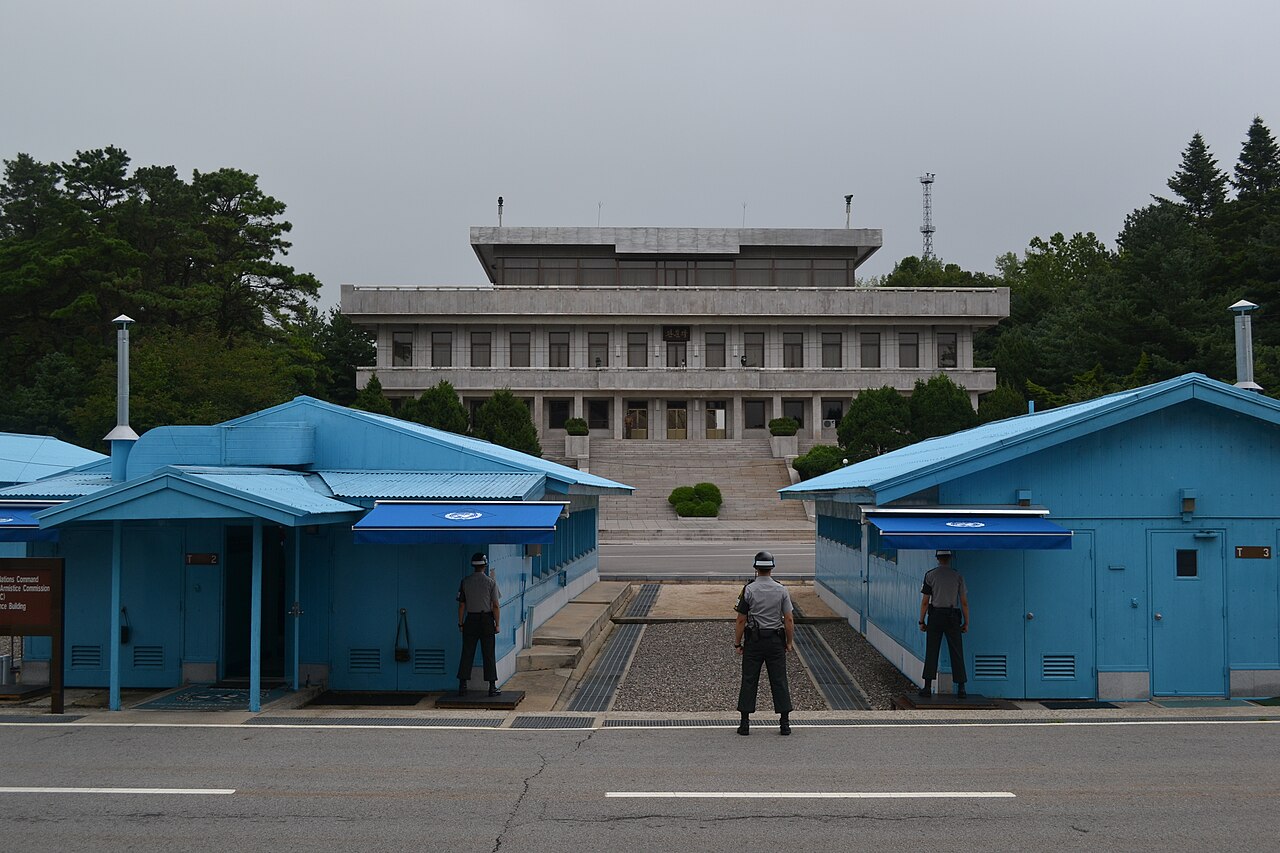
Korean Demilitarized Zone from the South Korean side. File photo. Daniel Oberhaus · CC BY-SA 4.0
South Korea just said North Korea broke the 1953 ceasefire deal.
That's the agreement that ended the Korean War. It's the only thing keeping the two sides from being at war right now.
So what happened? Sixteen days ago, two landmines went off in the DMZ. Three South Korean soldiers got hurt. Two of them badly. One lost a foot.
South Korea's military and the United Nations Command looked into it together. And their answer is: North Korea planted those mines on purpose, on the South's side of the border.
Here's how they know. GPS readings put both blast sites, plus a third unexploded mine found eleven days ago, about ten metres south of the line. South Korea's National Forensic Service checked the fragments pulled out of the wounded soldiers. They matched North Korean plastic mines collected before from the Imjin River.
The UN Command ran its own check too. It says it found a live North Korean mine sitting on the South Korean side. And it's calling that an armistice violation.
So today, South Korea's Defense Ministry sent lawmakers a document. It says South Korea will formally declare the violation. It wants the border breaches stopped right now. And it wants the DMZ put back the way it was.
South Korea's Ministry of National Defense says quote "strongly demand an immediate halt to border breaches".
Seoul also wants military talks with the North. It wants the old hotlines switched back on. And it wants both sides to agree on where the actual border markers are.
And here's the problem behind all of this. Only about 200 of the 1,292 marker posts put down in 1953 can still be found today.
So nobody fully agrees where the line even is. South Korea's own maps and the UN Command's 2016 survey differ on around 60 per cent of the coordinates. North Korea has its own version again.
The rest of this story is for members.
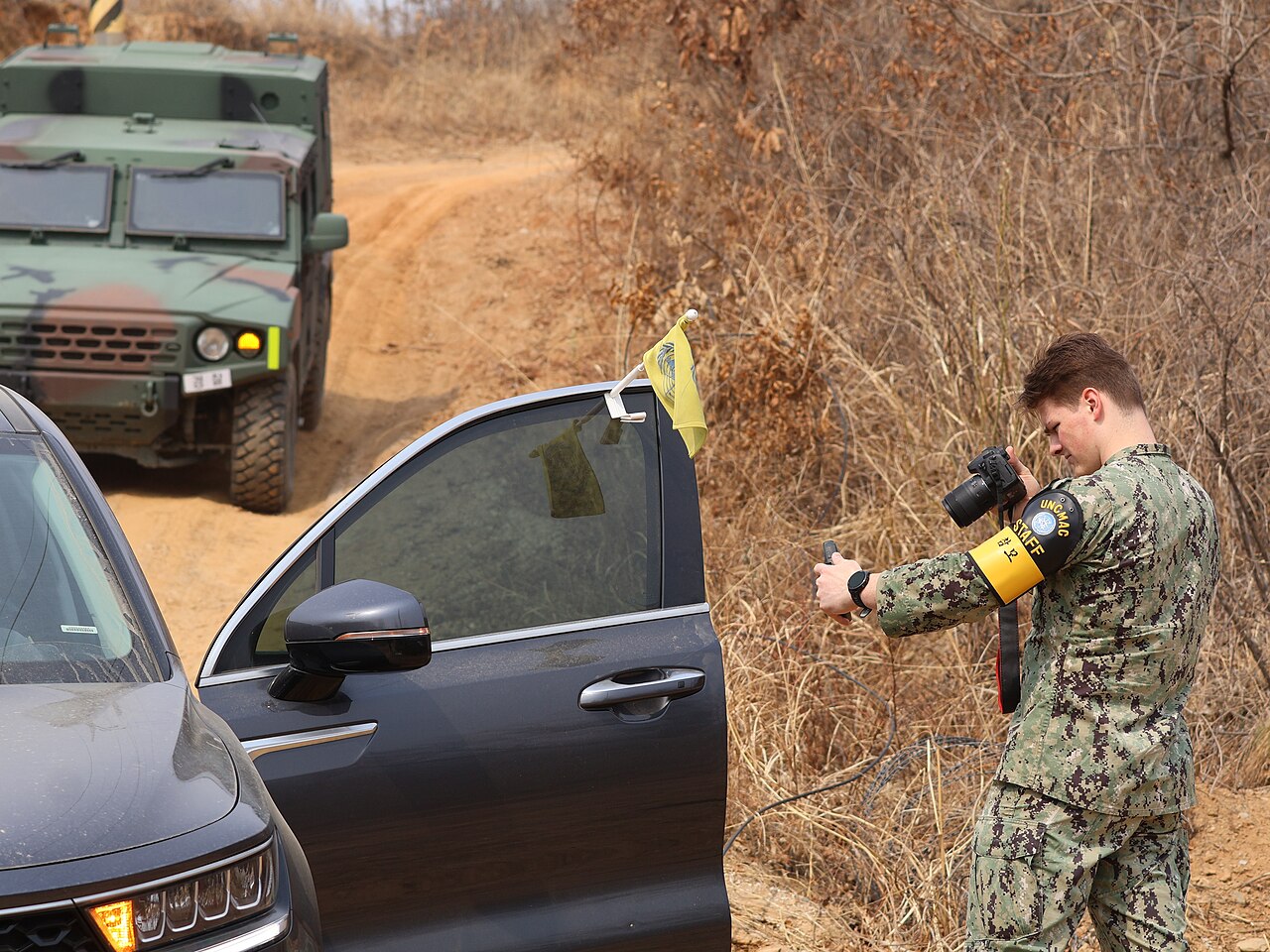
A United Nations Command Military Armistice Commission staff member uses a handheld Global Positioning Satellite device to confirm a location in the vicinity of the DMZ on April 2, 2025. File photo. Lt. Brendan Trembath · Public domain
South Korea's Unification Minister, Chung Dong-young, suggested five days ago that both sides resurvey the border together.
Kim Yo Jong, sister of the North Korean leader, shut that down straight away. She called it a wild dream. She said North Korea will decide where its border is by force, not by talking.
So that's North Korea saying it won't even discuss where the line is. It'll just enforce wherever it wants the line to be.
South Korea's Defense Minister, Kang Shin-chul, told parliament today the military has now cleared every mine from the blast site. But he warned hundreds more North Korean mines could still be sitting south of the border. Several spots still need checking with the UN Command.
North Korea rejects all of it. Its government is calling this blame shifting. It says South Korea is dressing up its own border fortifications as a military invasion. Pyongyang says the blast was South Korea's own accident, and Seoul is trying to pin it on the North instead.
And this isn't North Korea's first reaction. A week before that, Kim Yo Jong called the whole investigation a conspiratorial farce. She said Seoul invented a pretext to cause trouble. She also warned that if South Korean troops fire anything beyond warning shots at North Korean soldiers, border units will hit back with immediate and merciless retaliation.
But here's the thing. Kang Shin-chul told lawmakers North Korea's denial this time came a day later than usual. He says the ministry thinks Pyongyang was quite flustered by South Korea's findings.
South Korea's Defence Ministry's Chung Bin-na says Seoul is not ruling out any options to force an apology out of North Korea. She gave no details. Kang Shin-chul separately called the military's response to the blast unprecedented in history, and said all responsibility lies with North Korea.
And there's more happening alongside this. South Korea's Defense Ministry is working with Washington on a plan to hand full wartime control of South Korea's own military back to South Korea. That includes certifying South Korea has full operational capability. Seoul also plans to talk to Washington about permanently setting up a combined special operations command by the end of this year. That's one of six such commands planned before the handover. Four are already running.
North Korea named South Korea its principal enemy back in 2024. Since then it's laid mines and built anti-tank barriers along a border it used to call temporarily divided land. The two Koreas are still technically at war. There's no peace treaty, only this armistice. And an estimated two million mines already sit in and around the DMZ, which runs 248 kilometres long and four kilometres wide.
What countermeasures South Korea actually takes, nobody has said yet. What's clear is a dispute over one minefield has turned into a formal international finding, backed by the UN Command. And North Korea is standing alone, denying all of it.
Nothing here was paid for by an advertiser. Members are the entire business model. Bronze is where it starts, and it opens the last seven days in full.