Kuwait just accused Iran of killing two Italians and is threatening self-defence
6 hours ago · 27 November 2026Share
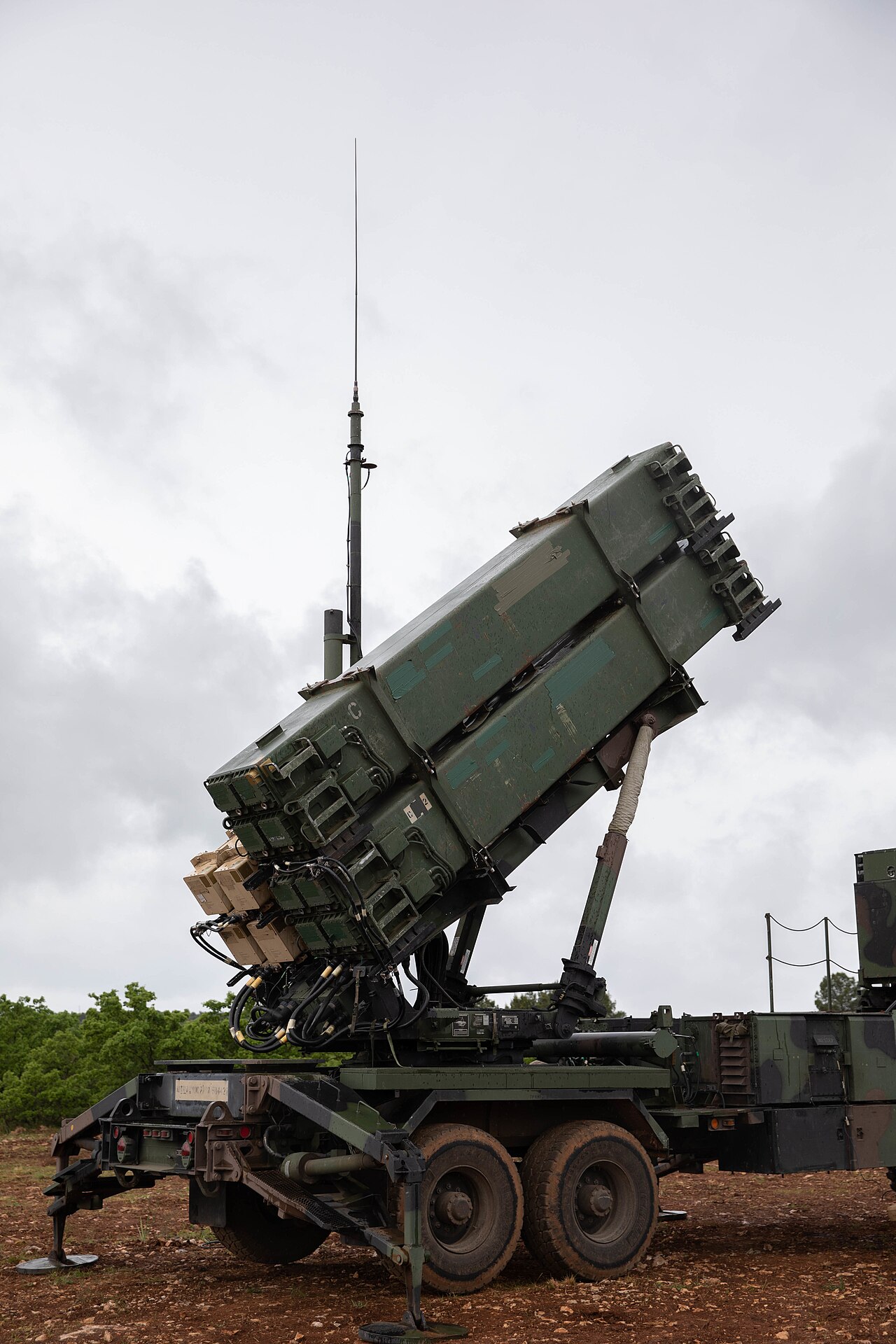
A U.S. Army Patriot Missile System in Croatia. File photo. Sgt. Alexandra Shea · Public domain
Two Italian nationals are dead after an Iranian drone attack on a Kuwaiti air-defence facility.
And now Kuwait has summoned Iran's ambassador over it.
So here's what happened. Two days ago, at around 2pm local time, drones hit a facility running Kuwait's Skyguard air-defence system.
The two men killed were Antonio Saccoccio, 65, from Formia, and Emanuele Lo Russo, 36, from Rome. Both worked for Rheinmetall Italia, the Italian arm of the German defence company Rheinmetall. They were maintaining detection antennas for the Skyguard system when the drones hit.
A Kuwaiti national and a Pakistani national were also wounded, by falling debris. Kuwait's foreign ministry says the attack caused material damage. It hasn't said what.
And here's why this matters so much. This is the first time European civilians have been killed since the war between America, Israel and Iran started nine months ago.
Antonio Tajani, Italy's Foreign Minister, told the Senate that several Iranian-made drones hit Kuwaiti military facilities, including the station where the two technicians worked. He said the drones were made in Iran, and that pro-Iranian militias operate across the region.
One day ago, Kuwait's Foreign Ministry summoned Iran's ambassador, Mohammad Totonji, and handed him a formal protest note. It called the strike part of continued Iranian attacks.
Hamad Al-Mashaan, Kuwait's Deputy Foreign Minister, says Kuwait holds Iran fully responsible. He says Kuwait reserves its right to self-defence under Article 51 of the UN Charter. Kuwait's foreign ministry says the attack breaches the UN Charter and UN Security Council Resolution 2817.
So think about that. A Gulf state that has mostly stayed out of this war is now accusing Iran directly, in writing, of attacking it.
Iran says it had nothing to do with it.
The rest of this story is for members.
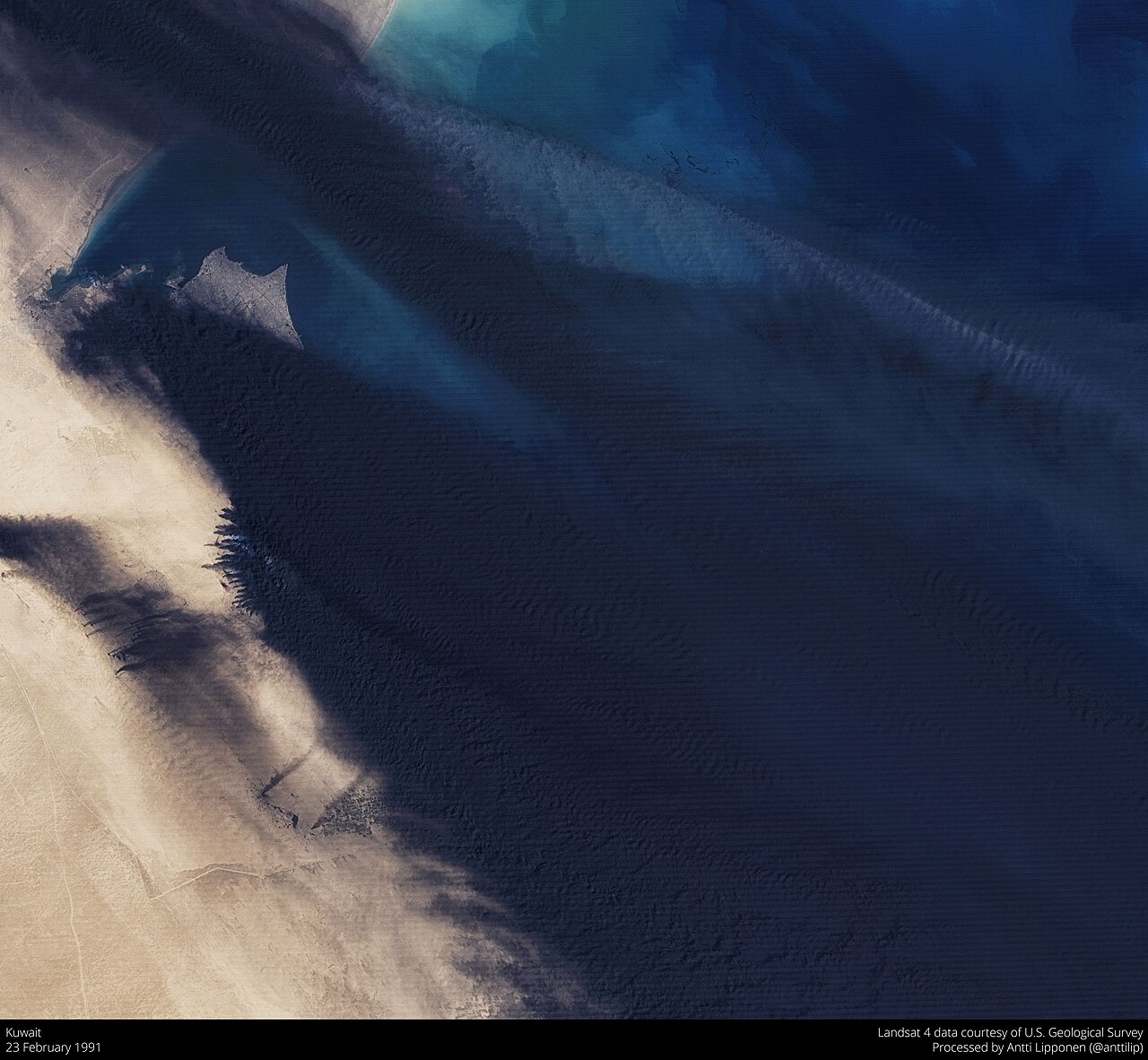
Contains Landsat-4 satellite imagery of Kuwait from February 23, 1991. File photo. Antti Lipponen · CC BY 2.0
Brigadier General Abolfazl Shekarchi, the spokesperson for Iran's armed forces, says quote "no military or offensive operations whatsoever have been conducted by the Armed Forces of the Islamic Republic of Iran in the region". He says Israel and America are the ones running false-flag operations, to destabilise the region.
Abbas Araghchi, Iran's Foreign Minister, wrote on X that the incident looks suspicious. He called his Kuwaiti counterpart, Sheikh Jarrah Jaber Al-Ahmad Al-Sabah, and Antonio Tajani in Italy, to deny Iran was involved. He's offered a joint investigation.
But here's the part that stands out. Iran usually claims its strikes in this war. It says it has carried out five strikes on Bahrain and Kuwait this month alone, mostly calling them self-defence against American bases. One of those was earlier this month, on American drone and missile sites at Kuwait's Ali Al Salem Air Base, after America hit Qeshm Island in the Strait of Hormuz.
This time, Iran is denying everything.
One analyst, Muhanad Seloom, points out that drones being made in Iran doesn't mean Iran launched them, or ordered the strike. That question is still open.
António Guterres, the UN Secretary-General, condemned the attack through his spokesperson, Stéphane Dujarric. He warned that renewed hostilities would have serious consequences for the region and beyond.
Ursula von der Leyen, the European Commission's President, wrote on X calling for more pressure on Tehran. She says Gulf security concerns everyone. Giorgia Meloni, Italy's Prime Minister, says she learned of the deaths during a European Council meeting. She has offered condolences to the victims' families.
And the attack has already changed how people fly. Since the war began, most flights between Europe and the Gulf have used a corridor through Turkish, Iraqi, Kuwaiti and Bahraini airspace. Airlines are now routing around Kuwaiti airspace entirely, and carrying extra fuel in case they need to divert.
This is also the first fatal drone strike inside Kuwait in months. Kuwaiti defences intercepted drones the week before, with no one hurt.
So what happens now? No Iranian diplomatic statement accepting or rejecting Kuwait's summons has come yet. Whether Iran accepts the joint investigation it's offered, or whether Kuwait goes further under Article 51, is still unanswered.
Two technicians went to work on an air-defence system on an ordinary afternoon. Now a Gulf state that stayed out of this war is accusing Iran directly. And Iran is denying it harder than it has denied anything else in nine months of fighting.
Nothing here was paid for by an advertiser. Members are the entire business model. Membership opens everything we have ever written, our investigations first, the guides and the films, for $4.99 every 28 days or $19.99 a year.