Iran just staged a tanker convoy and threatened to bomb Gulf oil facilities
1 day ago · 20 November 2026Share
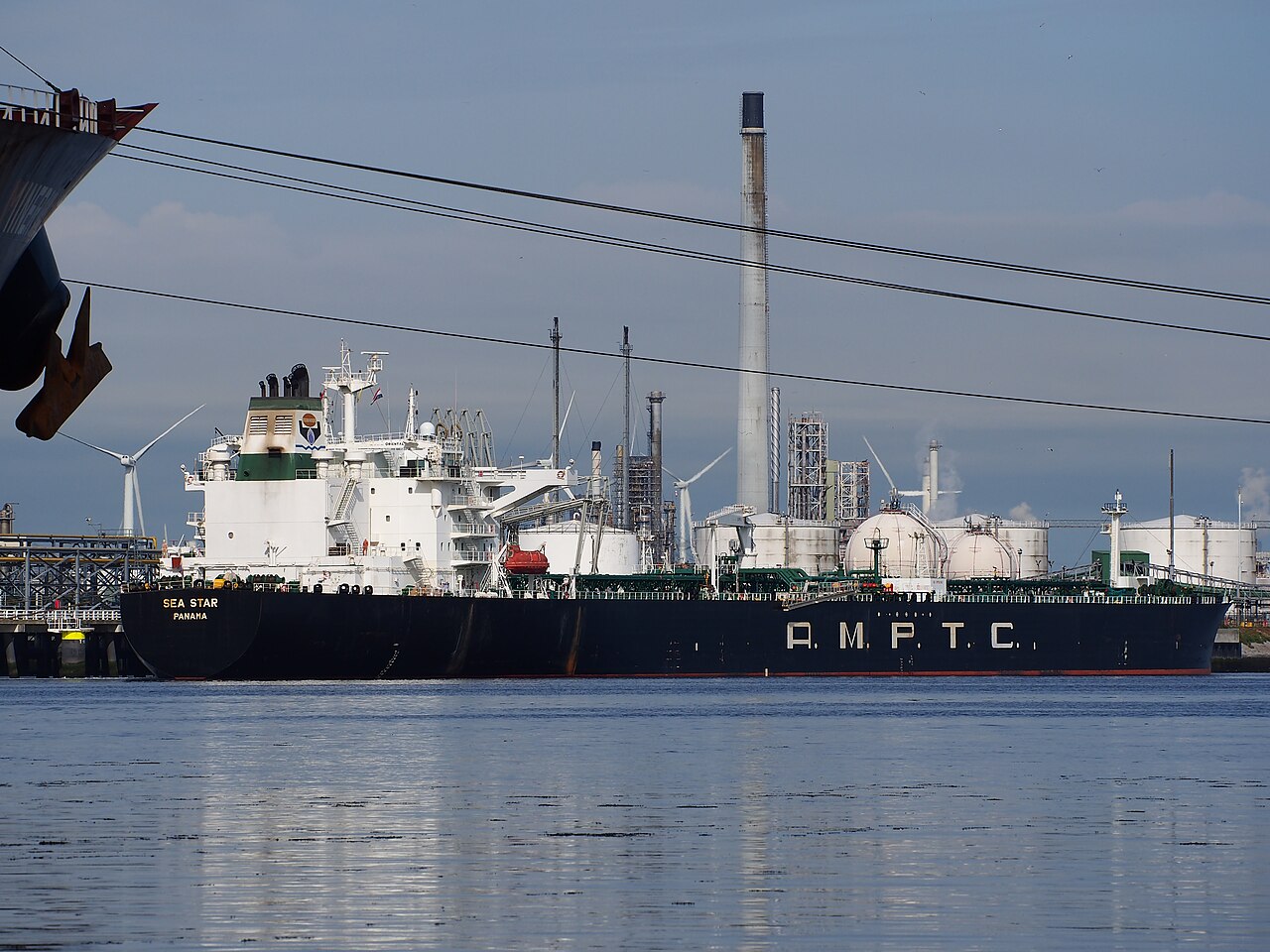
An oil tanker sits at a dock at Port of Rotterdam. File photo. Alf van Beem · Public domain
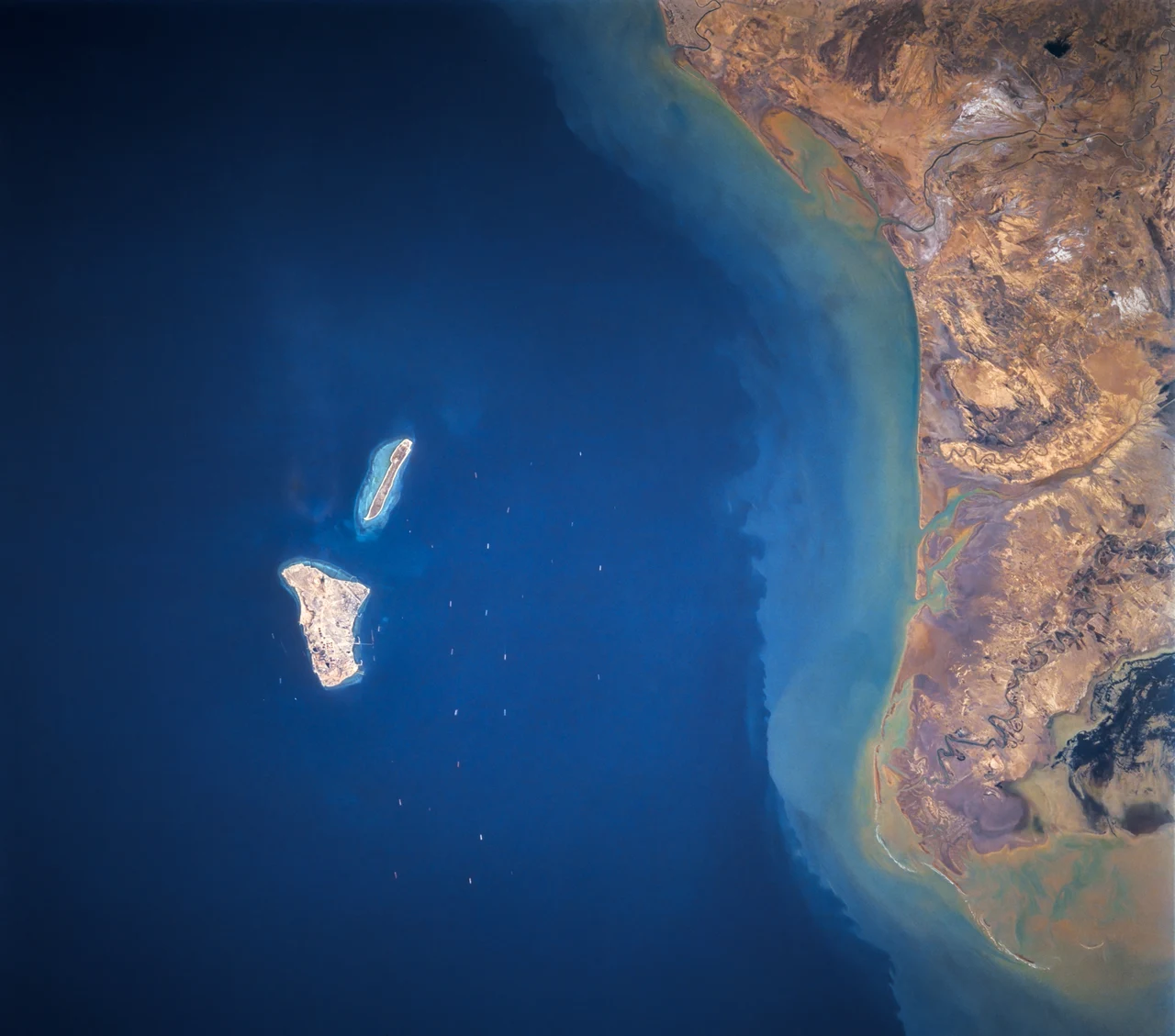
Iran just parked more than 14 oil tankers at Kharg Island.
They've got crews on board. They're flying Iranian flags. And Iran's own officials say this is about breaking the US naval blockade.
So how do we know? Not from Iran. Satellite images and ship-tracking data spotted it.
Kharg Island matters. It's where Iran loads 85 to 90 per cent of its crude oil. It can store around 30 million barrels.
Has the convoy left? No. Nobody's confirmed that yet. Reports say it might head for the Sea of Oman in the next few days.
Here's what led to this.
Three days ago, there was a ship-to-ship oil transfer. The first one spotted since the blockade came back in mid-July.
A sanctioned tanker called the Olym handed about 200,000 barrels of crude to another tanker, the Hao Fan, south of Kharg Island. Both ships had their tracking switched off. The Hao Fan had also been faking its position, pretending to be near Oman when it was really near Kharg.
That's not much oil. One Kpler analyst, Homayoun Falakshahi, says it might just be a technical problem, not a deliberate test of the blockade.
Other tracking data backs up the doubt. United Against Nuclear Iran says only 8 of 58 Iranian oil loadings since mid-July went through Kharg. No crude tanker has been confirmed to have broken through the blockade zone in the Gulf of Oman.
There's even disagreement on how big this convoy is. House of Saud and other outlets say more than 14 tankers. Falakshahi counts around 20 near the island — but says most are already loaded and just sitting still.
The US had already moved before any of this made the news.
Two days ago, CENTCOM closed a loophole. Any ship that takes oil from a blockaded tanker at sea can now be stopped, boarded, diverted, captured, or forced to an Iranian port. By force, if needed.
So America is saying the transfer itself is now a target. Not just the original tanker.
Iran's response so far has come from its officials, not its state agencies.
Abbas Araghchi, Iran's Foreign Minister, told the ILNA news agency that the blockade must be broken. Araghchi says quote "the blockade must be broken". He said Iran will keep trying to export its oil while still pursuing negotiations.
The rest of this story is for members.
Contains NASA satellite imagery of Kharg Island.NASA · Public domain
Mohammad Bayat, a lawmaker on parliament's Internal Affairs Committee, said a very important decision had been taken to break the siege, and that tankers would soon sail from Kharg for China.
Bayat also carried a warning from Iran's military: if a single shot is fired at the tankers, it said, every oil centre in the Gulf becomes a legitimate Iranian target.
That's a threat against every oil hub in the Gulf, not just an answer to the blockade.
It gets louder. Two days ago, a commentary in the Guards-affiliated Fars news agency urged Tehran to send the convoy through anyway. It warned that any attack on it would bring strikes on the region's energy infrastructure, naming the UAE's oil facilities specifically.
A post shared by Fars went further, naming the UAE, Saudi Arabia, Qatar, Kuwait, Oman and Bahrain as targets if an Iranian tanker's route gets disrupted. Its author called it his own analysis, not a government position.
But here's the thing. No formal Iranian government statement — not IRNA, not Tasnim, not Press TV — has addressed the convoy or the CENTCOM advisory. CENTCOM hasn't said a word about the convoy at Kharg either.
This isn't the first time force has been used in this standoff. Two and a half months ago, CENTCOM hit three tankers linked to Iran's Revolutionary Guard, off Kharg Island, near Jask, and in the Gulf of Oman, after Guard missiles hit two US Navy warships.
The blockade itself has gone back and forth all year. The US imposed it in April, lifted it in June after a draft deal with Tehran, then reimposed it in July once talks collapsed.
Since then, Iran's crude loadings have fallen from around 2 million barrels a day in March to zero in September. CENTCOM says 135 ships have been turned back since the blockade began.
Andreas Krieg, a security studies academic at King's College London, calls this one of the most dangerous escalation points in weeks. He says Iran can get around parts of the blockade but can't break it militarily in any lasting way, given America's naval strength. He's warned that a test of American resolve could end up triggering a full regional war.
Another King's College London academic, Rob Geist Pinfold, says oil makes up around 30 per cent of Iran's economy, and that the blockade is Washington's chosen way of pressuring Iran back to the table without going further with military force.
The oil markets are already reacting. Brent crude was trading at $90.49 a barrel today. Down 1.6 per cent on the day. Down more than 20 per cent for the month.
So what happens next?
Nobody has confirmed the convoy has even left Kharg. Nobody knows how many tankers can actually sail. Nobody knows if China will take the oil if it gets there. Nobody knows if the US will try to stop it.
And if America does try, nobody can say yet whether Iran will follow through on its threat to hit oil facilities across the Gulf.
Nothing here was paid for by an advertiser. Members are the entire business model. Bronze is where it starts, and it opens the last seven days in full.