Germany just threatened to block the EU budget over Ukraine funding
3 days ago · 10 November 2026Share
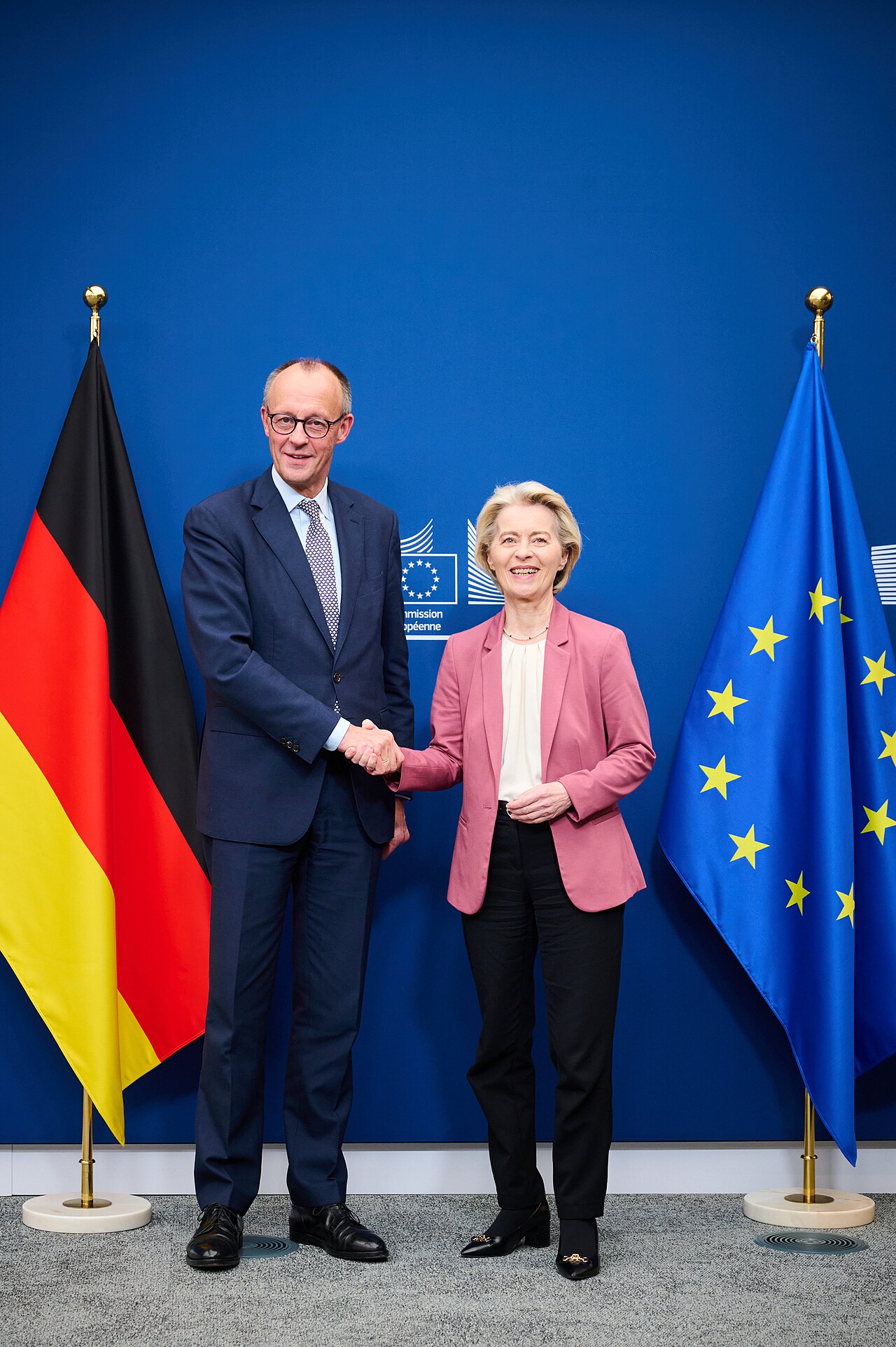
Friedrich Merz, Federal Chancellor of Germany, visited the European Commission on 5 December 2025. File photo. Dati Bendo / European Union, 2025 / EC - Audiovisual Service · CC BY 4.0
Germany just told the whole EU: fund Ukraine, or I'm blocking the budget.
Friedrich Merz, Germany's Chancellor, says he will block the EU's entire seven-year budget unless every member state agrees to keep paying for Ukraine.
He put it in a letter to António Costa, the European Council President. Dated 9 November, about a day ago. The Financial Times says it has seen the letter. Everyone else reporting this is working from the FT's account. Nobody has independently verified the original text.
So what's the money problem? Ukraine is short about €70 billion for 2027. The EU has already said it'll cover roughly two-thirds of that, around €45 billion. But four countries — Hungary, Slovakia, Bulgaria and Czechia — have said they won't put in any more.
And that's exactly who Merz is going after.
Here's the twist. Germany pays more into the EU budget than it gets back. Hungary, Slovakia, Bulgaria and Czechia all get more out than they put in. So the biggest payer in the room is threatening to freeze the whole budget from the four countries that need it most — unless they help pay for the war next door.
The budget on the line is the EU's 2028 to 2034 long-term budget. It needs every single member state to agree before it can pass.
Merz wrote that help for Ukraine right now "is distributed unevenly and carried mostly by only a few member states". He also wrote that backing Ukraine is a matter of Europe's own security, calling it indivisible.
Merz says quote "an essential prerequisite for resolving this issue" — his description of what a collective commitment from every member state would be.
So translate that. Germany is saying nothing else on the budget gets talked about until Ukraine funding is locked in.
There's more. Merz wants a proper multiyear funding plan for Ukraine starting in 2028, and he wants it to cover the interest already piling up on Ukraine's debt. And Germany wants future Ukraine funding votes to pass by majority, not unanimous agreement. That would kill any single country's power to block it.
The rest of this story is for members.
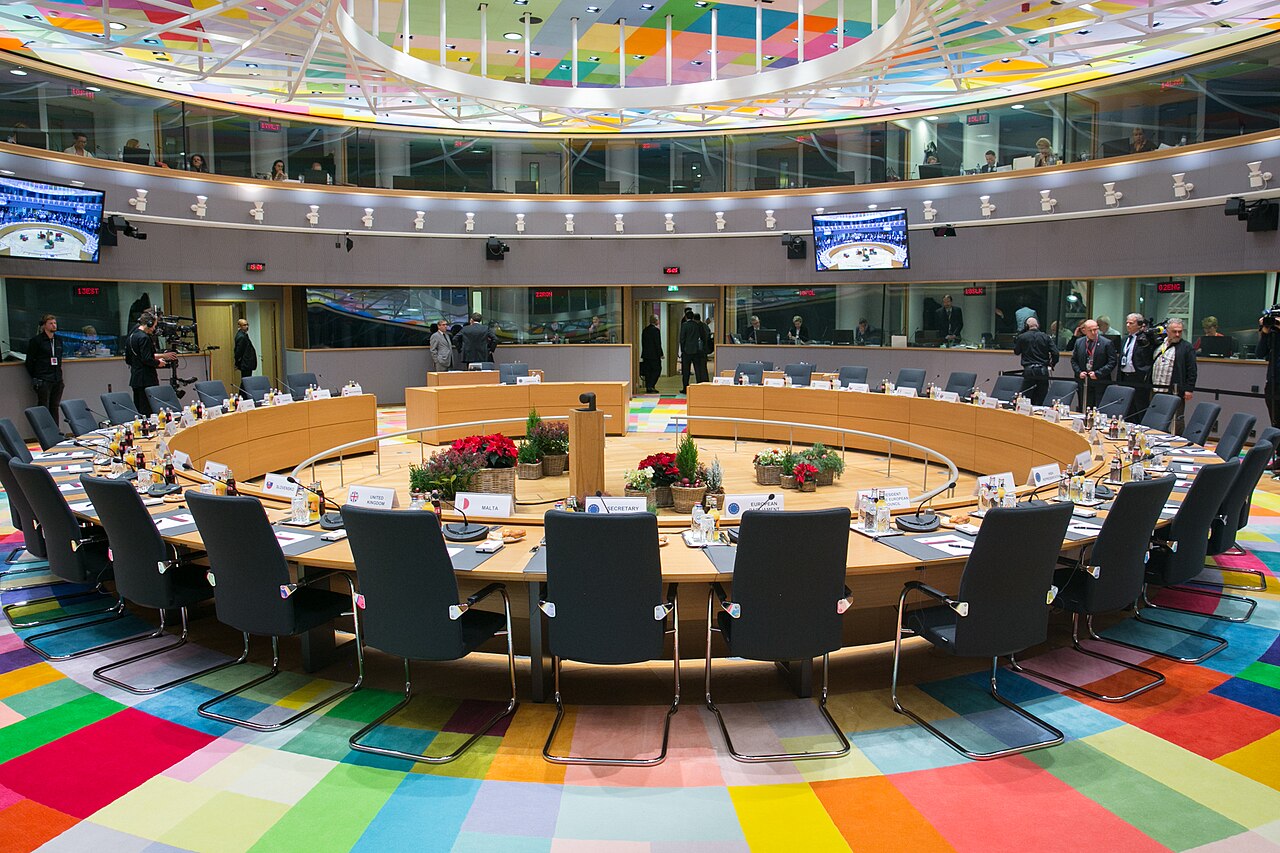
The European Council meeting room. File photo. EU2017EE Estonian Presidency · CC BY 2.0
So here's what's really going on. Germany is using its veto right now to make sure nobody else gets to use one later.
The four holdout countries have their own reasons. Hungary, Slovakia and Czechia already got themselves exempted from paying interest on the EU's existing €90 billion Ukraine loan. Reports disagree on when that loan was approved — December last year, or this spring.
Robert Fico, Slovakia's Prime Minister, said last month that Slovakia and Hungary plan to sit out future funding rounds. He called it dangerous to tie Ukraine funding to the EU's long-term budget at all.
Andrej Babis, the Czech Prime Minister, is reported to have said Ukraine funding shouldn't be part of the long-term budget at all, because member states don't have the money. Only one outlet carries that line.
Germany's government says every member state chipping in is essential if the budget talks are going to succeed.
None of this started with Merz's letter. In the middle of October, EU leaders told the European Commission to come up with proposals for covering Ukraine's 2027 shortfall. The Commission's early budget plan talks about mobilising up to €100 billion for Ukraine, with separate military support running through the European Peace Facility. Brussels is also trying to get Britain and Canada to pay more in.
EU leaders are meeting in Dublin on 12 and 13 November. Merz wants Ukraine's funding gap top of the list there.
And here's the thing — Merz is doing all this from a weak spot at home. A poll out four days ago found just 12 per cent of Germans happy with how he's doing, and 85 per cent unhappy. His party, the CDU, has just lost elections in Mecklenburg-Western Pomerania and in Berlin.
So what happens now? Nobody knows if the four holdout countries will cave, or go looking for allies. France, Italy and Poland all have elections next year, and nobody knows how that changes their position on Ukraine either — in France, the polling frontrunner for president has reportedly pledged to end French support for Ukraine. And nobody knows if Merz can hold this line against pressure from inside his own coalition, which is pro-Ukraine.
Right now, Germany holds the pen on the EU's next seven-year budget. And it's saying it won't sign unless everyone else pays up for Ukraine too.
Nothing here was paid for by an advertiser. Members are the entire business model. Bronze is where it starts, and it opens the last seven days in full.