Australia just built itself into a four nation coordination hub against China
43 minutes ago · 13 November 2026Share
Official portrait of Prime Minister Hon Anthony Albanese. David Foote (AUSPIC/Department of Parliamentary Service) · CC BY 4.0
Australia and the Philippines are about to sign a major new defence deal.
It's happening within the next day or two, on the sidelines of the ASEAN Summit in Manila.
So what's actually in it? It's called a Defence Cooperation Arrangement. It replaces an old agreement from 1995. It gives each country's military more access to the other's territory, more shared information, and it's meant to help build up the Philippine Navy and coastguard.
And here's a detail worth knowing. It's not the two leaders signing this.
The Philippines' Defence Secretary, Gilbert Teodoro Jr., and Australia's ambassador to the Philippines, Marc Innes-Brown, are the ones putting pen to paper. Anthony Albanese, Australia's Prime Minister, is there as a witness.
Earlier reports, from late October, said President Ferdinand Marcos Jr. and Anthony Albanese would sign it themselves. The newest reports say otherwise. Gilbert Teodoro Jr. says the two countries first discussed this deal three months ago, at a defence ministers' meeting in Darwin.
But this isn't just one deal between two countries. It sits inside something much bigger.
Australia, the United States, Japan and the Philippines already work together informally. People call it the 'Squad'. Defence ministers from all four countries met in Cebu in late October.
Then, a few days ago, those four governments said in a joint statement that they'd agreed to build a Combined Coordination Center in the Philippines. Gilbert Teodoro Jr. says a coordination mechanism is already running. But no government has said where the centre will be, what it will cost, or who will staff it.
That centre builds on something else too, a Defense Cooperation Council the same four countries' military chiefs set up in Singapore back in May.
So why now? Because of what's been happening to the Philippines.
David Dutton, a senior fellow at the Australian Strategic Policy Institute, says the Philippines has become the country facing the most pressure from China anywhere in the region. He calls this new deal quote "a milestone in the transformation of the relationship into a genuinely strategic partnership".
He's also recommended Australia go even further, upgrading the relationship to what's called a Comprehensive Strategic Partnership. That hasn't been announced. Right now it's only his recommendation.
And the pressure he's talking about is real, and it's frequent.
The rest of this story is for members.
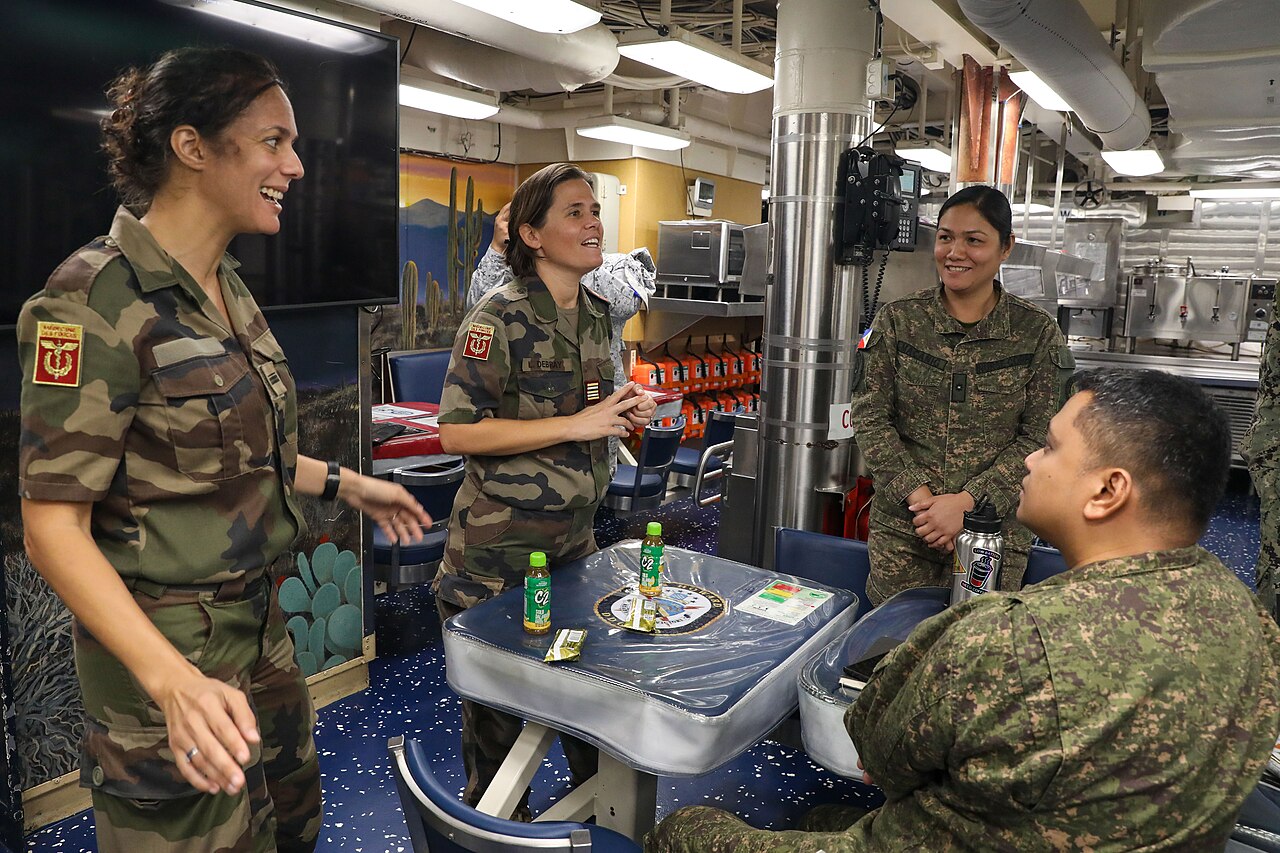
Military personnel from participating nations pose aboard the Arleigh Burke-class guided-missile destroyer USS Howard during Sama Sama 2024. File photo.U.S. Navy photo by Petty Officer 3rd Class Alexandria Esteban · Public domain
Philippine and Chinese coastguard ships clash often, especially around the Spratly Islands and Scarborough Shoal. A decade ago, an international tribunal at The Hague ruled that China's claim to most of the South China Sea had no legal basis. China rejected that ruling. It hasn't changed its position since.
Gilbert Teodoro Jr. has called China's conduct in the South China Sea his country's greatest traditional security challenge. He's described it as irresponsible, escalatory and provocative.
President Ferdinand Marcos Jr. says China's ambassador to Manila, Jing Quan, made a threat, after the ambassador said Beijing could easily win in a conflict with the Philippines. The Philippines summoned the ambassador over it. He denied it was a threat. China's foreign ministry says Philippine politicians have repeatedly attacked and smeared China.
Australia has been building toward this for a while now.
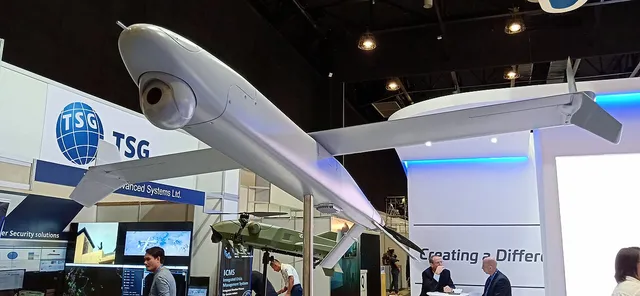
It's given the Philippine Coast Guard more than $13 million since last year, mostly drones and training to fly them. It's helped build up defence infrastructure at five Philippine military bases on Luzon.
Jennifer Parker, a maritime security expert, says this new agreement basically bundles together things Australia was already doing, letting its navy work more closely with the Philippines.
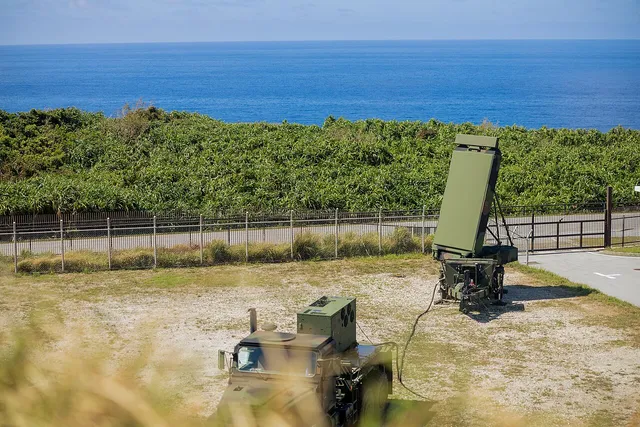
Japan is moving too. Five days before this deal, Japan said it would give the Philippine military a radar system and surveillance drones worth about $27 million.
China hasn't commented on the Australia-Philippines deal itself. But it has responded to the wider Squad plan. Its state-run Global Times called the Philippines the most convenient tool for the United States, Japan and Australia to stir up trouble over the South China Sea.
Australia's Foreign Minister, Penny Wong, said in July that Australia was concerned about what she called China's aggression and destabilising conduct, after a clash between Chinese and Philippine vessels at the Spratly Islands. China's foreign ministry told Australia to stop exaggerating tensions and inciting confrontation.
And there's a gap this deal might be filling.
Jennifer Parker says the US Navy is under serious pressure in the region right now, because of the conflict in the Middle East. She says China has stepped up its operations around the Philippines and pushed further east, toward Taiwan, over the past six months.
South-East Asian leaders are meeting this week at the ASEAN Summit, where the South China Sea is a central topic. ASEAN and China have been negotiating a code of conduct for the sea for more than eight years. Philippine officials say they can't yet confirm whether it'll be finished by the end of the summit.
No government has said whether this new agreement includes any permanent positioning of military equipment in the Philippines, or any shared command structure. China hasn't issued a statement on the deal itself.
What's certain is this. A four-country coordination hub is forming in the Philippines, and Australia is now writing itself into its foundation.
Nothing here was paid for by an advertiser. Members are the entire business model. Bronze is where it starts, and it opens the last seven days in full.